Climate Change: Butterflies, game birds and game animals threatened

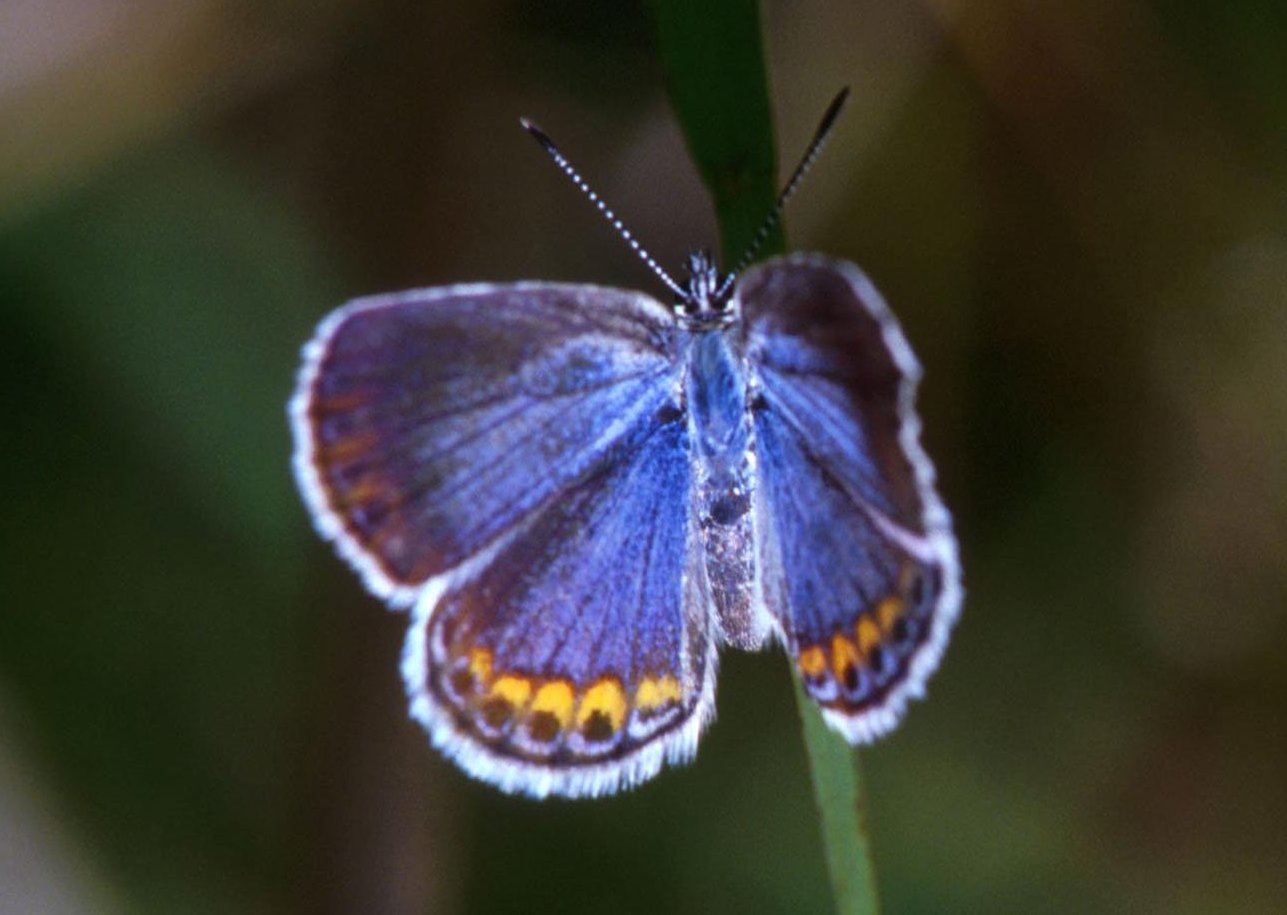
Midwest Karner Blue Butterfly populations have crashed and the effects of climate change are suspected to be the cause. Photo: U.S. Fish & Wildlife Service

Midwest Karner Blue Butterfly populations have crashed and the effects of climate change are suspected to be the cause. Photo: U.S. Fish & Wildlife Service

By Howard Meyerson

We hear a lot about the effects of climate change these days. Polar ice caps are melting. Polar bears are threatened as a result. The Minnesota Star Tribune recently published an extensive report on how it will affect Minnesota’s forests called: “Saving the Great North Woods.” And then there is the new report by the National Wildlife Federation called “Nowhere to Run: Big Game Wildlife in a Warming World,” which can be found online at: nwf.org/sportsmen.

NWF said that historic restoration efforts for many game species like mule deer, moose, caribou and others are “expected to be set back by climate change.” It discusses how this will be a loss for sportsmen who have invested millions of dollars over the years in the restoration of many big game populations.

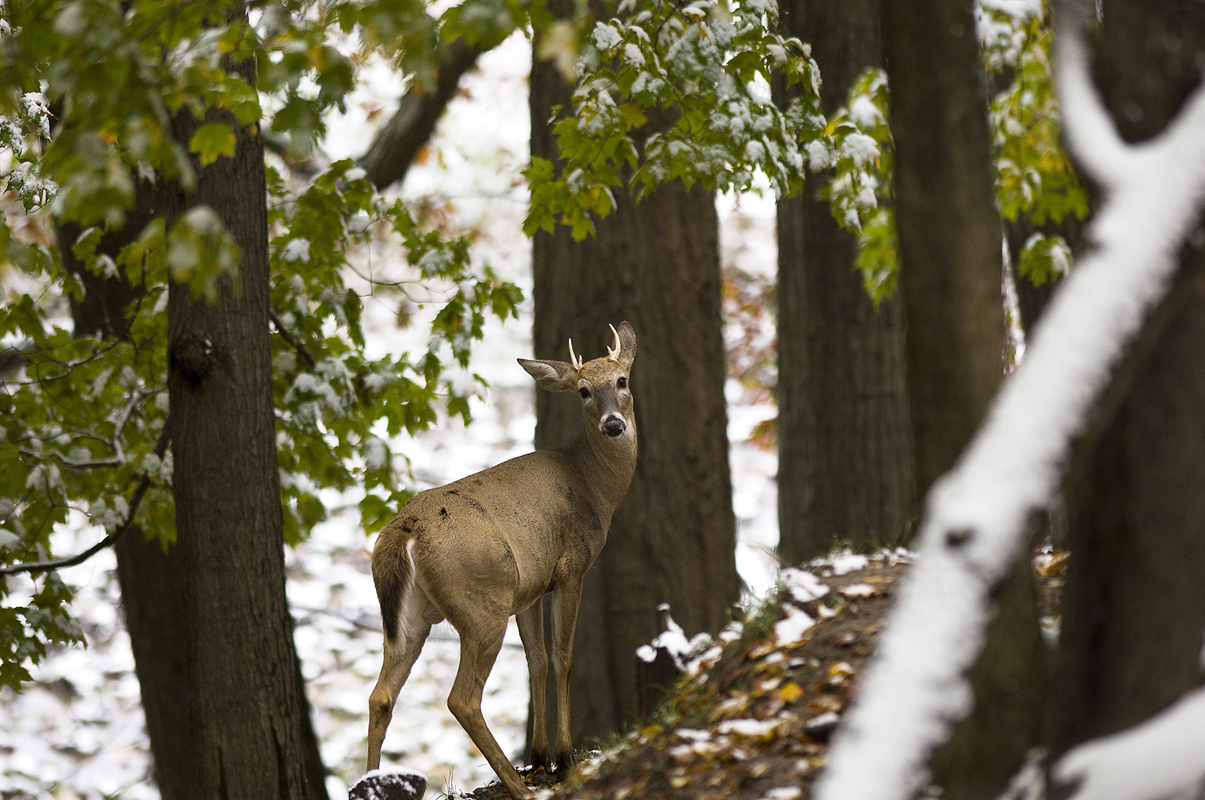
The report tells how moose can become heat-stressed by warming weather and how warmer temperatures can bolster tick and midge numbers and extend their range. Both insects are disease carriers. Deer ticks carry Lyme disease which affects humans while midges carry epizootic hemorrhagic disease that can be devastating to whitetail deer.

Here in Michigan, the effects of climate change are also being noted. An April 2013 special report by the Michigan Department of Natural Resources called “Changing Climate, Changing Wildlife: A Vulnerability Assessment of 400 Species of Greatest Conservation Need,” looked at birds, plants, mammals, reptiles, insects and amphibians. It found 61 percent of non-game species were vulnerable to climate change as were 17 percent of game species.

“It’s on our radar,” said Chris Hoving, co-author of the report and the Michigan DNR adaptation specialist. “What we found was that one fifth of the game species had some vulnerability to climate. As expected, moose was one. But one you might not expect was ruffed grouse.” Continue reading
Posted in Uncategorized | Tagged , , , , , , , , , | Leave a comment

Sportman’s 20 year opening day tradition: hunting for muskie, not deer

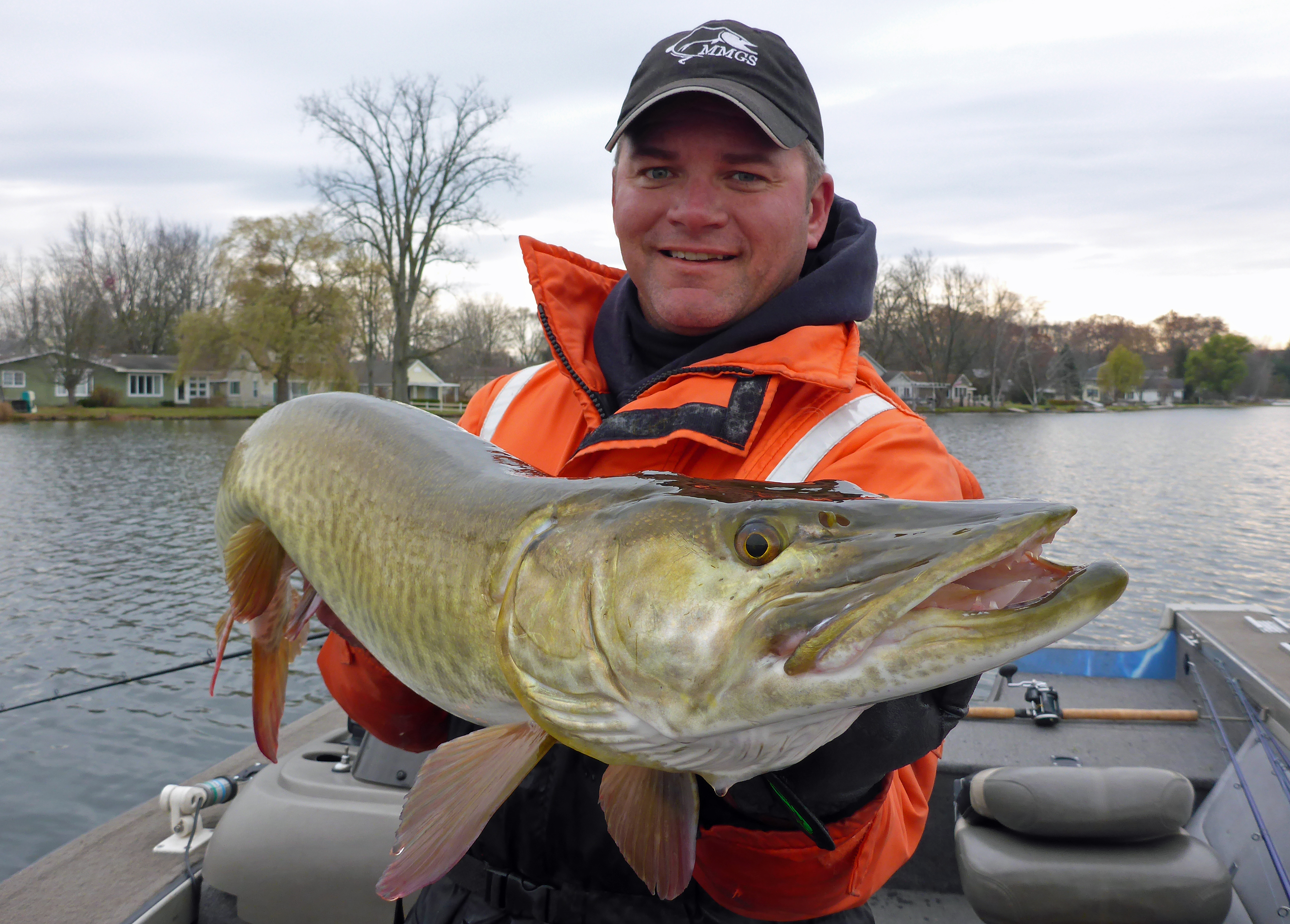
Will Schultz shows off a nice 47-inch muskie that was caught while fishing live suckers on Campau Lake in Kent County, MI. Photo: Howard Meyerson

Will Schultz shows off a nice 47-inch muskie that was caught while fishing live suckers on Campau Lake in Kent County, MI. Photo: Howard Meyerson

By Howard Meyerson

When Michigan’s firearm deer season opened last month and thousands of hunters took to the fields with their rifles and shotguns, Will Schultz went out with a different quarry in mind. The Grand Rapids sportsman planned to spend the day hunting instead for Michigan’s largest predator fish: muskellunge.

“It’s been a tradition for a long time,” said Schultz, the founder and former president of the Michigan Muskie Alliance, a non-profit organization dedicated to the restoration of Michigan’s muskellunge population. “I hunt deer with a bow now, but used to hunt with a gun. It just happened that one year I had no tags left and decided to fish instead.

“I fish for everything. You have to in order to be a good angler, but this is what I spend the majority of my time doing.”

Schultz and I met up for a cold and windy day of muskie fishing on Campau Lake, a 125-acre Kent County water known for its stocked muskies. Its shoreline is largely developed. But it is listed by the Michigan Department of Natural Resources as one of the better muskie waters in the state. Continue reading

Posted in Uncategorized | Tagged , , , , , , , , , , , , , | 2 Comments

Year 2: Lake Huron Atlantic salmon program underway

Illustration: US. Fish & Wildlife Service

Illustration: US. Fish & Wildlife Service

By Howard Meyerson

              GRAND RAPIDS, MI – Atlantic salmon will again be stocked at four Lake Huron locations in 2014. State officials are gearing up for the second round in a five-year experiment to determine if an Atlantic salmon fishery can be created there.

            Approximately 100,000 yearling Atlantics were planted in the lake during the spring of 2013, but none appeared in the catch so far, according to state fisheries officials.  

            “We expect that all that to start rolling next summer,” said Todd Grischke, the Lake Huron basin coordinator for the Michigan DNR.  “A lot can happen between now and then, but we will be evaluating the harvest each of the next two seasons and weaving that information into a long-term plan of where to go.

            “Next year we are looking at stocking 130,000 yearlings. And, if all goes well, we will look at a 150,000 more in 2015 and stick to the same study design.”

            Atlantic salmon may help fill the fisheries gap that was created in Lake Huron when Chinook salmon population collapsed in 2003 and 2004.  Grischke and others are hopeful that they will fare better being a more opportunistic feeder. Chinook salmon rely on alewives which virtually disappeared. Atlantics are also thought a good compliment to the multi-species fishery that is developing in Lake Huron now.  Walleye, steelhead, perch and some Chinooks are all being caught. Continue reading

Posted in Uncategorized | Tagged , , , , , , , , | 3 Comments

Salmon Limit: Five fish a day in ’14

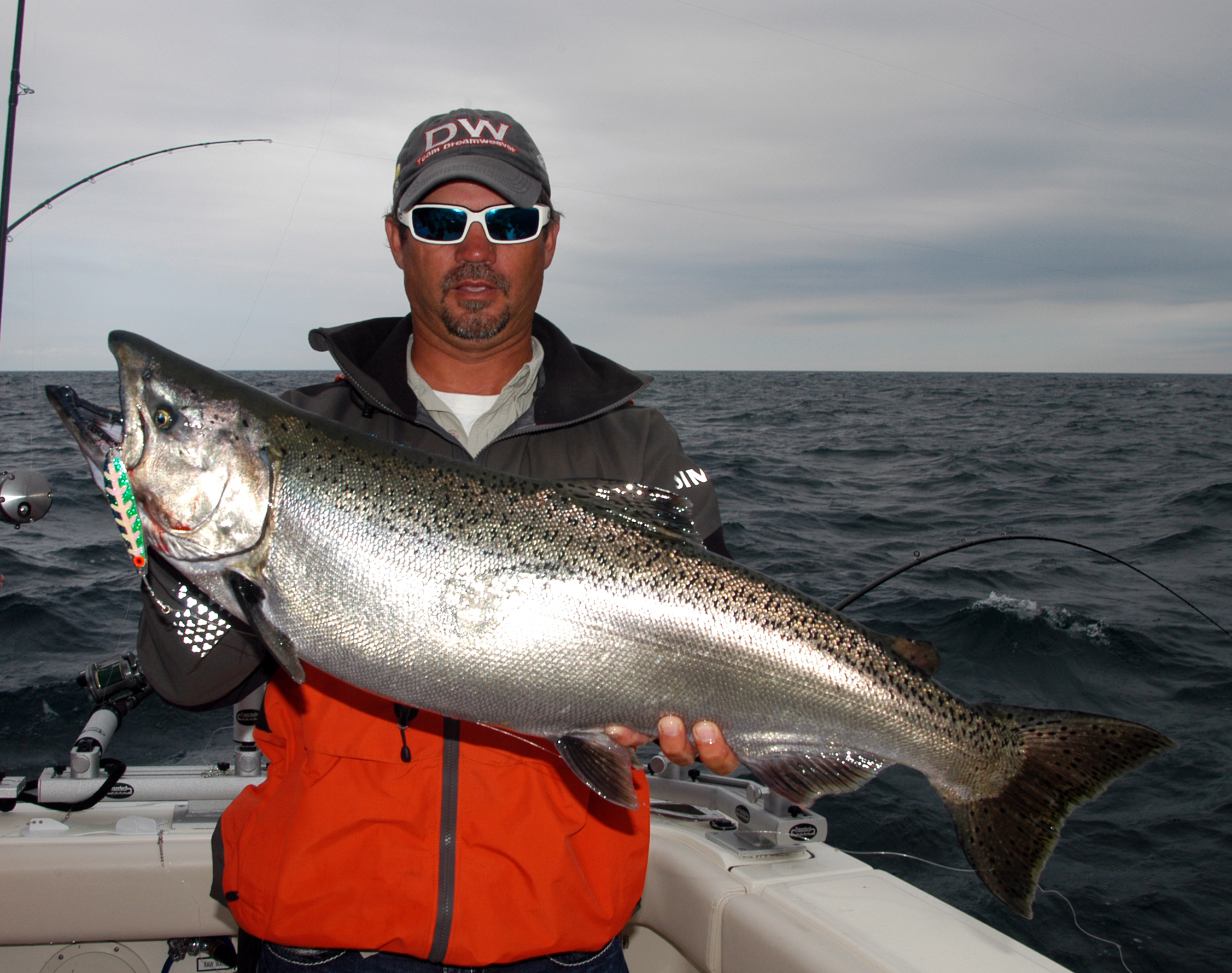
Captain Brian Butts, owner of Sea Flea Charters out of Grand Haven, MI, holds up one of the large chinook salmon caught on a summer outing in 2013. Photo: Howard Meyerson

Captain Brian Butts, owner of Sea Flea Charters out of Grand Haven, MI, holds up one of the large chinook salmon caught on a summer outing in 2013. Photo: Howard Meyerson

By Howard Meyerson

            GRAND HAVEN, MI – Salmon anglers can look forward keeping five per day again in 2014. That’s what Michigan DNR fisheries managers have concluded after reviewing 2013 catch rates and angler success for charter captains on Lake Michigan.

“Based on the decision rules we have, we are not going to change the bag limit. It will be five again,” said Todd Kalish, the Lake Michigan Basin coordinator for the Michigan DNR. Kalish was addressing members of the Lake Michigan Citizens Fisheries Advisory Committee at their recent meeting in Grand Haven.

The annual bag limit for salmon is determined on a year to year basis, Kalish said. The decision depends on catch rates (the number of salmon caught per hour), and angler success, (the percentage of charter anglers that catch three or more salmon per day). Both measures have to drop below an established threshold to lower the daily limit to three.

A staff review of both in 2013 showed only angler success fell below the benchmark of 13.1 percent. It was 2.9 percent.

Lake Michigan charter captains caught .226 fish per hour which was above the cutoff of .165 fish per hour. That caught some by surprise.

“I had the (fisheries) order set and ready to go to three (fish per day). I was stunned when they didn’t both drop,” said Jim Dexter, Michigan DNR fisheries chief. “But the catch- per-hour is on par with 2009, 2010 and 2011.” Continue reading

Posted in Uncategorized | Tagged , , , , , | Leave a comment

Michigan mountain biker takes on the toughest race in the world

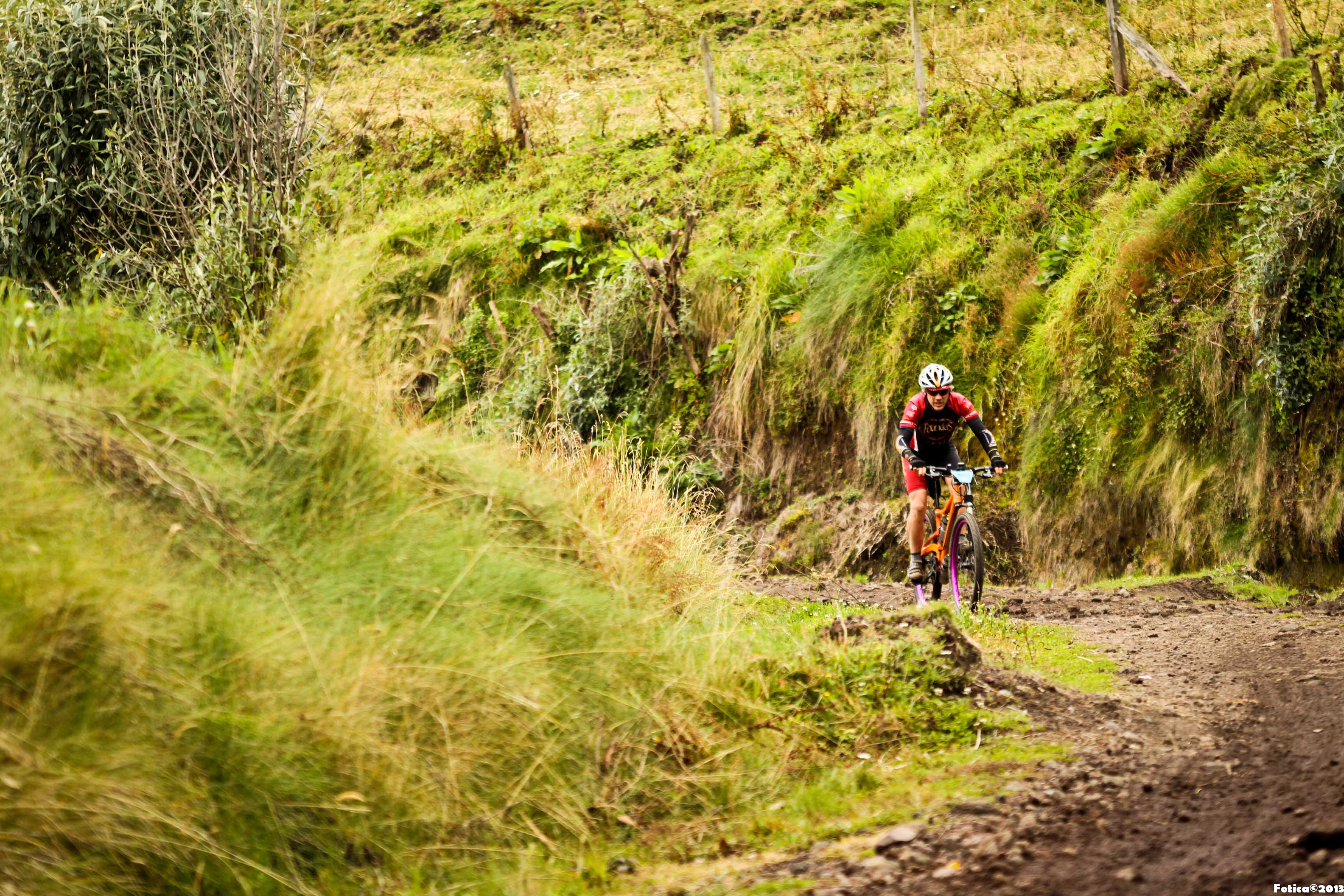
Dennis Murphy takes on one of the long climbs in Costa Rica's La Ruta. Photo: Courtesy of Dennis Murphy

Dennis Murphy takes on one of the long climbs in Costa Rica’s La Ruta. Photo: Courtesy of Dennis Murphy

By Howard Meyerson

Dennis Murphy hit a tree while riding his mountain bike back in August of 2000. He was racing at Big M in the Manistee National Forest. Murphy wasn’t watching closely and crushed a vertebrae in his back. The collision broke his bicycle and put him in a back brace for two months.

What it didn’t do was put him out of commission.

Sobering as the event was, Murphy read a magazine article during his recuperation that set his imagination ablaze. It generated a tiny spark that would smolder for 13 years until he was ready to fan its flames.

Murphy, then 40, read about a mountain bike race in Costa Rica called “La Ruta de Los Conquistadores,” the route of the conquistadors. It is billed as the “Toughest Race in the World.”

Murphy flew to Costa Rica in October and competed in the three-day race that retraces a route taken by Spanish Conquistadors in the 1560’s when they began what would become a 20-year journey through mountains of Costa Rica.

La Ruta is 193 miles long. It meanders from the Pacific Ocean to the Caribbean Sea, traversing mountainous, often muddy, jungle terrain. It winds by the domes of ancient volcanoes and along treacherous rivers.

“The exoticness of the race and the adventurousness of crossing bridges and looking down into a gorge and seeing crocodiles has been a part of my imagination ever since that accident,” said Murphy, now 53, a Grandville resident and quality engineer at Johnson Controls. Continue reading

Posted in Uncategorized | Tagged , , , , , , , , | 2 Comments

Scott Hickman: Man about Alger County

Scott Hickman scans for birds at The Face in the Rock/Scott Falls pull-off at Au Train Beach in Michigan's Upper Peninsula. Photo courtesy of Scott Hickman.

Scott Hickman scans for birds at The Face in the Rock/Scott Falls pull-off at Au Train Beach in Michigan’s Upper Peninsula. Photo courtesy of Scott Hickman.

By Howard Meyerson

Scott Hickman admits to being a rare bird enthusiast, someone who enjoys looking for the unusual find. Rare, of course, is a relative term.

For the 62-year-old retired college biology professor and member of Laughing Whitefish Audubon Society, it means rare birds for Alger County, a wild and largely undeveloped part of the northeast Upper Peninsula and home to the Pictured Rocks National Lakeshore.

“It’s amazing what you can find if you are diligent,” said Hickman, who considers himself a “home-county” lister, someone who focuses only on birds in their county, learning every nook and cranny where they might be seen.

“Past a certain point you have all the common birds,” Hickman said. “Then, what I try to do is be in the right habitat at the right time of year when something really rare shows up.”

Take, for example, the American Avocet he spotted in 2009. Hickman found it on Au Train Beach at the mouth of the Au Train River. Avocets are long-legged shorebirds that breed in the central and western U.S. and Canada, from Minnesota to Washington to

Hickman spotted American Avocets on August 20, 2009 after visiting Au Train Beach for 34 days. Photo: U.S. Fish & Wildlife Service.

Hickman spotted American Avocets on August 20, 2009 after visiting Au Train Beach for 34 days. Photo: U.S. Fish & Wildlife Service.

points south. Hickman spotted it on August 20th after visiting the beach for 34 days.

“I needed the American Avocet for my county list and knew a local stretch of beach with good habitat,” said Hickman who lives in Shelter Bay with his wife Debbie, “I went to that beach every day. One day – bang – there it was.” Continue reading

Posted in Uncategorized | Tagged , , , , , , , , , | 1 Comment

Food from the field: New women hunters take a shot at pheasant hunting

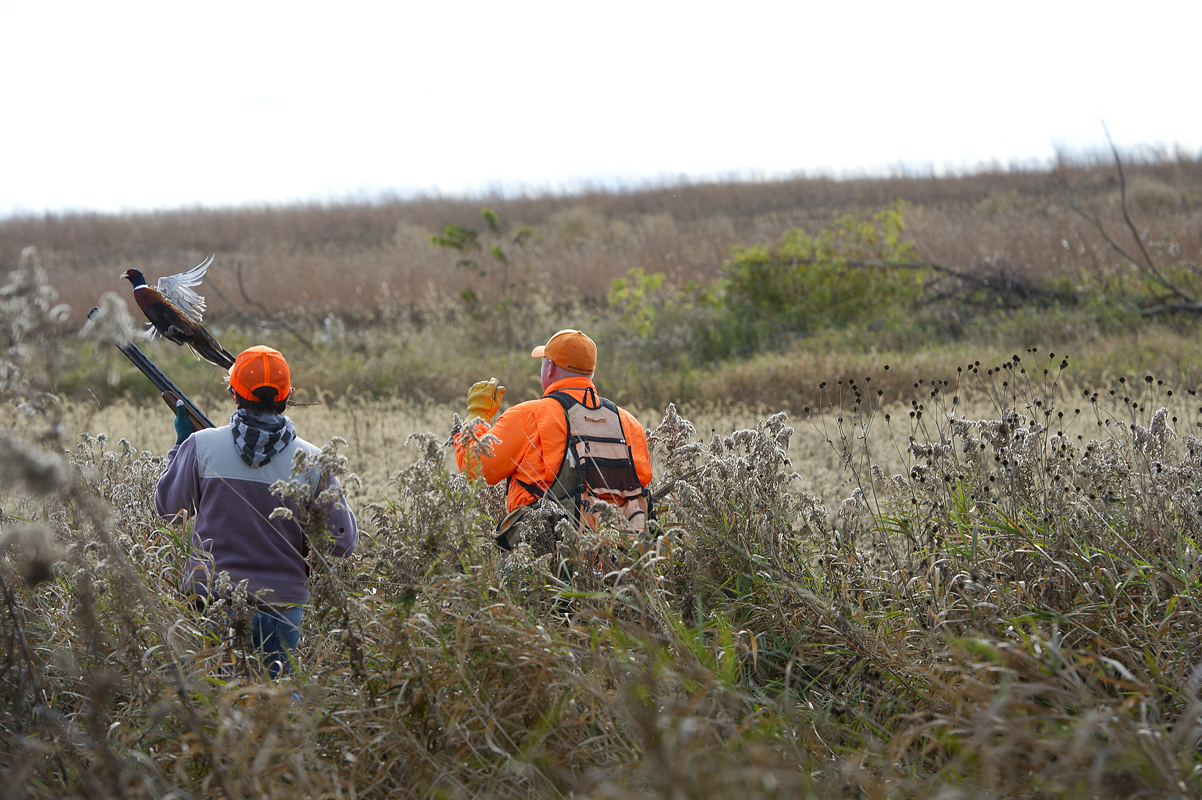
Alyssa Wethington gets some coaching from  and Scott Brosier.  Photo: Dave Kenyon, Michigan DNR

Alyssa Wethington gets some coaching from and Scott Brosier. Photo: Dave Kenyon, Michigan DNR

By Howard Meyerson

BELDING, MI — Trish Taylor had inkling that hunting would be fun. Her husband hunts. They share a bird dog too. So, when the opportunity arose, the 35-year-old public relations specialist from Allegan decided to pull the trigger.

Taylor recently joined 11 other women for a morning of clay target shooting and hunting live pheasants at a property managed by Pine Hill Kennels & Sportsman’s Club of Rockford. The Ladies Pheasant Hunt was sponsored by the Pine Hill Kennels, Pheasants Forever and the Michigan Department of Natural Resources.

“I didn’t even know how to load my shotgun,” said Taylor, who was given instruction along with the other women. This was the first time out for several of them; a chance to handle a shotgun, bust brush, and hunt behind a dog.

“It was something I have wanted to try and it was a lot of fun. They were incredibly patient,” Taylor said. “I have always cleaned and prepared the animals my husband has taken. I had the whole self-sufficient thing in my head. I’d rather eat something that came from the land and know where it came from. I thought: If I can do it myself, that’s great.”

As a 35-year old professional, Taylor fits a demographic that hunting and fishing organizations and agencies are increasingly hoping to bring into the fold in an effort to bolster sagging hunter numbers. Those numbers have declined over the last decade as older hunters have put-up their guns or passed away, and efforts to recruit young hunters have been met with modest success. Continue reading

Posted in Uncategorized | Tagged , , , , , , , | Leave a comment

Gear Review: Solo Wood Stove |

Section Hiker Gear of the Year Award: Solo Wood Stove | Section Hikers Backpacking Blog

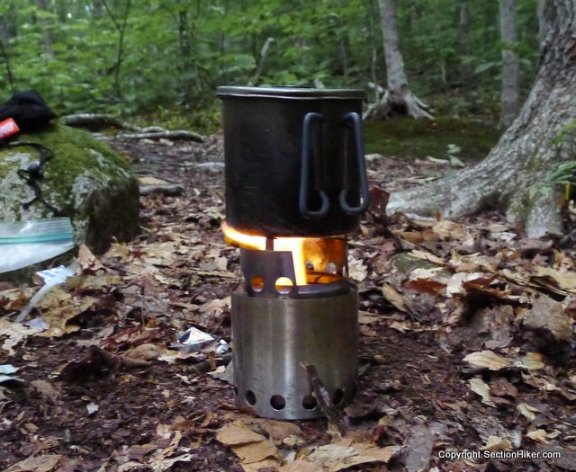
Backpacking stoves are one of my favorite pieces of gear. I have to confess to owning many, going back far too many years. But this simple approach to cooking, using nothing but twigs, has a lot of appeal.

Philip Werner offers a great review on his Section Hiker Blog. Read more: Section Hiker Gear of the Year Award: Solo Wood Stove 

Posted in Uncategorized | Tagged , , , , , | 1 Comment

Hitchin A Ride

This is a hoot.

Found on: Outside Online

Posted in Uncategorized | Tagged , | Leave a comment

2013 Deer Season: Hunting author critical of new antler restrictions

This deer would not be a legal kill where antler point restrictions are in place. Photo: Dave Kenyon, Michigan DNR.

This deer would not be a legal kill where antler point restrictions are in place. Photo: Dave Kenyon, Michigan DNR.

By Howard Meyerson

I took some time off recently to sit back with Richard P. Smith’s newest book, “Great Michigan Deer Tales, Book 6.” Firearm deer season opens Nov. 15 and I was interested to see who he had written about. I enjoy reading about Michigan hunters and their trophy kills. Smith’s book is subtitled: “Stories Behind Michigan’s Biggest Bucks.”

He writes about big Boone and Crockett Club deer killed all over the state and others poised for records. The Boone and Crockett Club is the national record’s organization for big game kills.

Living in Grand Rapids, I wondered if anyone nearby had been listed. Indeed, there was. The story of Cedar Springs’ hunter, Jim Powell, and his successful 2006 bow hunt for a magnificent Kent County eight-point buck was there. So was Allegan County’s Peter Prather, who shot a terrific 20-point buck that same year with his muzzleloader.

What struck me most, however, was Smith’s introduction. Rather than wax eloquent about DT-6 Coverthe glory of big bucks as one might expect, Smith, a long-time Marquette-based outdoor writer and ardent hunter, crafted a pointed argument against mandatory antler point restrictions which limit what deer hunters can shoot.

Their use is increasing in Michigan and that has many hunters upset. They feel strongly that they should be allowed to shoot any legal deer rather than have to pass on a smaller buck.

And, who can blame them. Deer hunting encompasses a lot of different things, not the least of which is the opportunity to get in touch with the land and to live off it independently, both in substance and spirit. Continue reading

Posted in Uncategorized | Tagged , , , , , , , | 5 Comments