Erie Outlook: Walleye, perch numbers down, fishing good

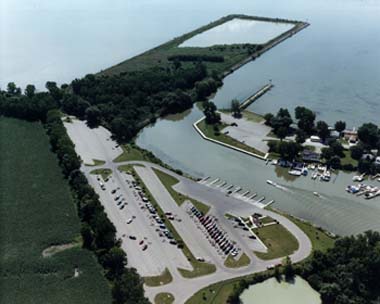
Bolles Harbor reconstruction is complete. Anglers can access Lake Erie there again. Photo: Michigan DNR.

Bolles Harbor reconstruction is complete. Anglers can access Lake Erie there again. Photo: Michigan DNR.

By Howard Meyerson

 Lake Erie’s walleye and perch populations are 20 percent smaller than in 2012, but anglers fishing Michigan waters will again be able to keep six walleye and/or 50 perch per day, according to Michigan officials.

“The news isn’t good,” said Mike Thomas, a fisheries research biologist with the Michigan Department of Natural Resources Lake St. Clair Fisheries Research Station. “We’re seen a 20 percent decline lakewide in age 2 and older perch. And, when we look at the abundance estimates over time for walleye, this is the very low-end.

“But a 20 percent change on its own for perch is not cause for big concern and fishermen are not likely to notice a difference in 2013. If there is any reason to be optimistic about walleye, it’s that this has been a pretty good, cold winter and a later spring, so we may see better year classes produced this year.” Continue reading


Posted in Uncategorized | Tagged , , , , , , , | 1 Comment

The right backpack: A good fit is essential to comfort, safety on the hiking trail

Internal frame and external frame packs both have a place on the trail. Photo: Howard Meyerson

Internal frame and external frame packs both have a place on the trail. Photo: Howard Meyerson

By Howard Meyerson

Walk into any quality outdoor gear store these days and it’s likely you will find an overwhelming selection of packs for backpacking. There are big ones, small ones and middle-sized ones, too.

Making the right choice isn’t simply a matter of size. Fit is essential; so is getting the right pack for the job. That means knowing what clothing and gear you want to haul and what type of terrain you will travel.

A winter trip has more bulky gear; a summer trip can be very lean. A four-season tent takes up more space than a tarp and trekking pole. A 3-pound solo or two-person tent falls in between.

“The most common mistake we see is that the pack was not properly fit or that someone bought the wrong size,” said Ryan Dean, hard goods manager for Bill & Paul’s Sporthaus in Grand Rapids. “A lot of people don’t know what they want, and 70 liters tends to be the default size.”

“Liters” refer to the approximate volume of the pack bag. Backpacks are made to carry 30 liters, 40 liters, 60 liters, 70 liters or more.

Ultra-light, fast-packers who want to log miles, or experienced backpackers who have refined their gear choices, are likely to get by with smaller packs on longer trips. But lux campers who prefer a few more comforts, a bottle of wine and fresh produce, or family campers with children in tow, often find a larger pack is the right choice for a weekend. A reasonable guide for beginners is to pick 30-45 liters for a minimalist overnight, 50-70 liters for two trail nights, and 60-85 liters for longer trips. Continue reading

Posted in Uncategorized | Tagged , , , , , , , , , , , , , , | 1 Comment

Helping Birds: Ann Arbor city ornithologist makes a difference

Deaver "Dea" Armstrong is the Ornithologist for the City of Ann Arbor. Photo: © City of Ann Arbor Natural Areas Preservation

Deaver “Dea” Armstrong is the Ornithologist for the City of Ann Arbor. Photo: © City of Ann Arbor Natural Areas Preservation

This is the first installment in a Michigan Audubon Society feature series about outstanding Michigan people in the world of birds and birding.

_________ 

By Howard Meyerson

Deaver Armstrong recalls the news she got in 1996.  A volunteer told her there were Bobolinks in the hayfields around the Ann Arbor landfill.

It was an exciting discovery. Bobolink numbers had been dwindling for years.

The black and buff birds breed in open grassy sites like hayfields in spring. Their decline in Michigan and across North America is the result of a changing landscape, the loss of grassland habitat along with predation, flooding and nest exposure, according to experts who have studied them.

Two weeks later, Armstrong the city ornithologist for Ann Arbor, and the only city ornithologist in the state, recalls:  “We went back (to the site) and oh my god, they had cut everything down. There was only one forlorn bobolink in that field.”

The fields had been mowed by the local farmer that cuts them in exchange for free hay. He unwittingly had destroyed the nests. Continue reading

Posted in Uncategorized | Tagged , , , , , , , , , , , , , , , | Leave a comment

Ice-out time: Anglers need to check boats and motors

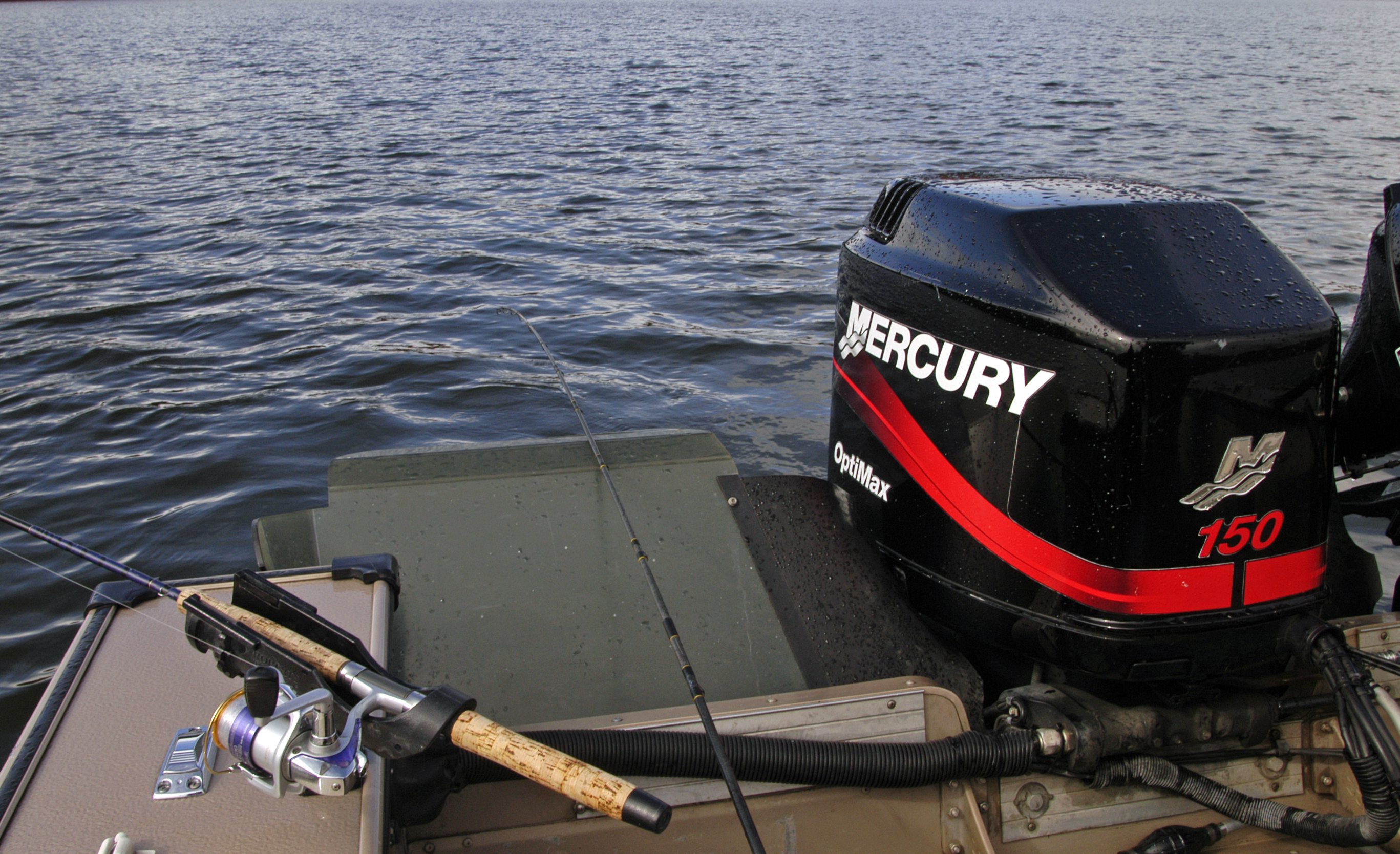
Anglers should check their oil and fuel hoses and connections before the season. Photo: Howard Meyerson

Anglers should check their oil and fuel hoses and connections before the season. Photo: Howard Meyerson

By Howard Meyerson

Ice-out fishing is an exciting time for anglers. When the ice disappears, fish go on the feed. But if you plan to fish from a boat with an outboard or sterndrive, a few pre-launch steps are in order before shoving off.

Boat mechanics see all manner of problems in spring. Fishing boats have been in storage all winter or stored on the trailer outdoors. Some anglers forget to check their engine oil. Others never notice the fishing line wound around the prop shaft line that can cut through the waterproof shaft seal, in turn ruining the bearings and gears in side.

“A lot of times, customers don’t think about their spark plugs,” said Jason Romig, service manager for D&R Sports in Kalamazoo. The company sells a variety of boats and Mercury outboards. “A misconception is that you put new ones in during the fall. Eighty percent of the time, that’s fine, but there are times when you might end up fouling the plugs.”

Romig is referring to spring fire-up, when fogging oil used to winterize the engine “can smoke like the dickens” and foul the plugs. Anglers often forget to bring a spare set of plugs along. Romig recommends getting a tune-up in spring after the first launch and packing spare plugs when the boat first goes in the water.

Take the Chill Off

Frigid waters also present a potential problem if anglers get impatient about leaving the dock. Mechanics advise letting four-stroke engines warm up for four or five minutes before accelerating out onto a lake or river at this time of year. Four stokes have an oil reservoir, whereas two-strokes are lubricated by mixing oil in with the fuel. Continue reading

Posted in Uncategorized | Tagged , , , , , , , , , | 3 Comments

Paddlers called to help map Lake Michigan Water Trail

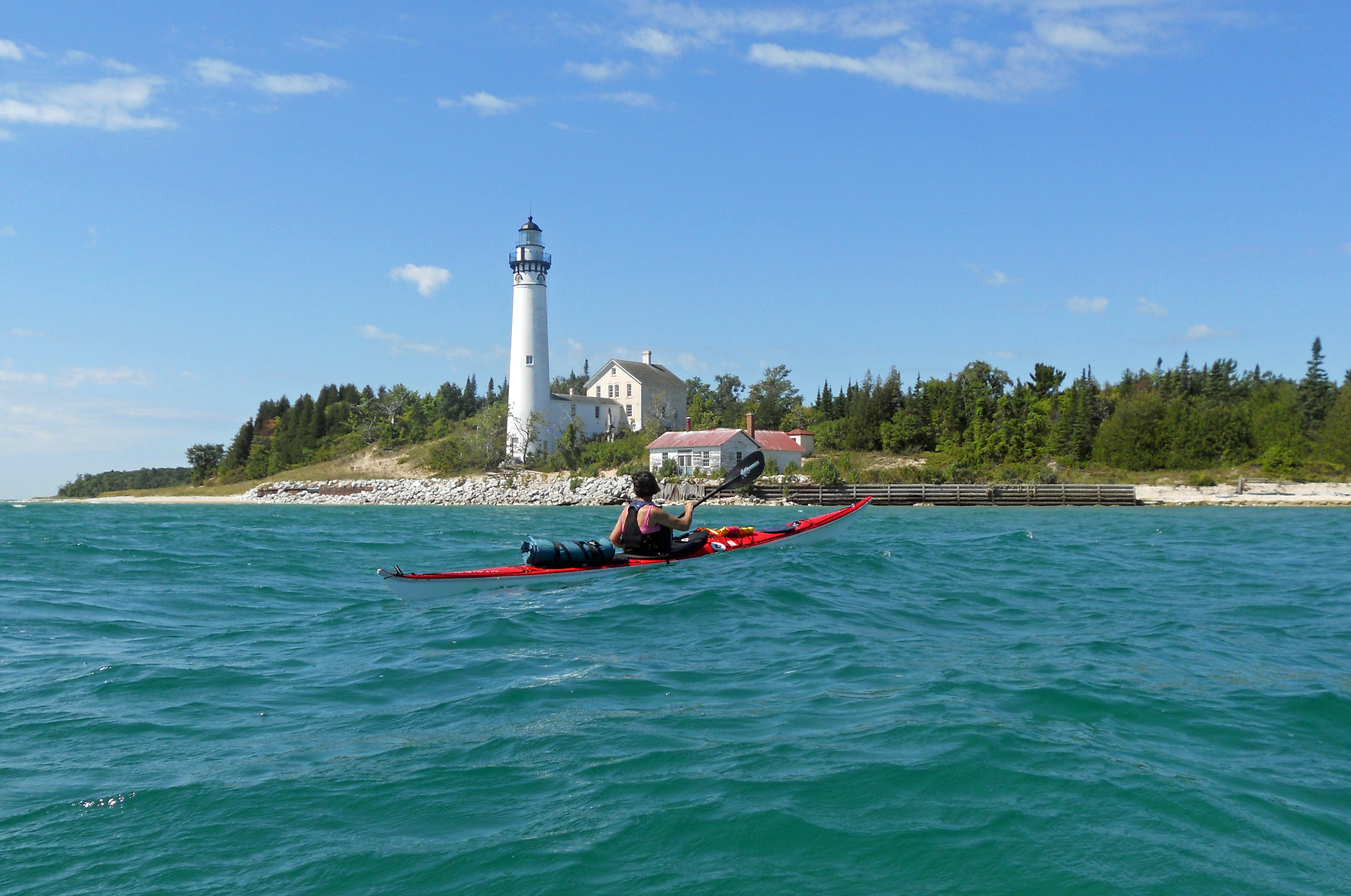
Mequon, Wisconsin paddler Mary Braband explores the waters off South Manitou Island on Lake Michigan. Photo: Ken Braband

Mequon, Wisconsin paddler Mary Braband explores the waters off South Manitou Island on Lake Michigan. Photo: Ken Braband

By Howard Meyerson

With spring just around the corner, paddlers already are making plans. And some are thinking about the waters of Lake Michigan.

This is likely to be a big year for the Lake Michigan Water Trail, the four-state project that began in 2011. Paddling groups in Michigan, Wisconsin, Indiana and Illinois, along with community, business and government organizations, have been working to identify launch sites, camping spots and other attractions.

The Michigan portion is 1,200 miles long, and paddlers are encouraged this year to get out and blaze new trail segments.

Pick up your paddles

“We’re encouraging people to pick a leg over the summer and paddle (it),” said Dave Lemberg, an associate professor with Western Michigan University and the coordinator for the Michigan segment. Lemberg spent a year on sabbatical taking inventory of what’s available along the Michigan shoreline. The project was funded by a Michigan Department of Environmental Quality Coastal Zone Management grant.

“We want people to record and photograph the put-ins and take-out points and get shots of the in-between,” he said. “We’re looking for GPS coordinates, too. Paddlers would submit all that to a website. The first would be listed as the segment trailblazer.”
That segment also would be listed on a proposed Lake Michigan water trail passport that paddlers can carry. Those who eventually complete the trail would get a certificate of completion, Lemberg said. Continue reading

Posted in Uncategorized | Tagged , , , , , , , , , , , , , | Leave a comment

Posted in Uncategorized | Leave a comment

Boundary Waters Canoe Guide Ramsey Dowgiallo Presents at Grand Rapids Ultimate Sport Show

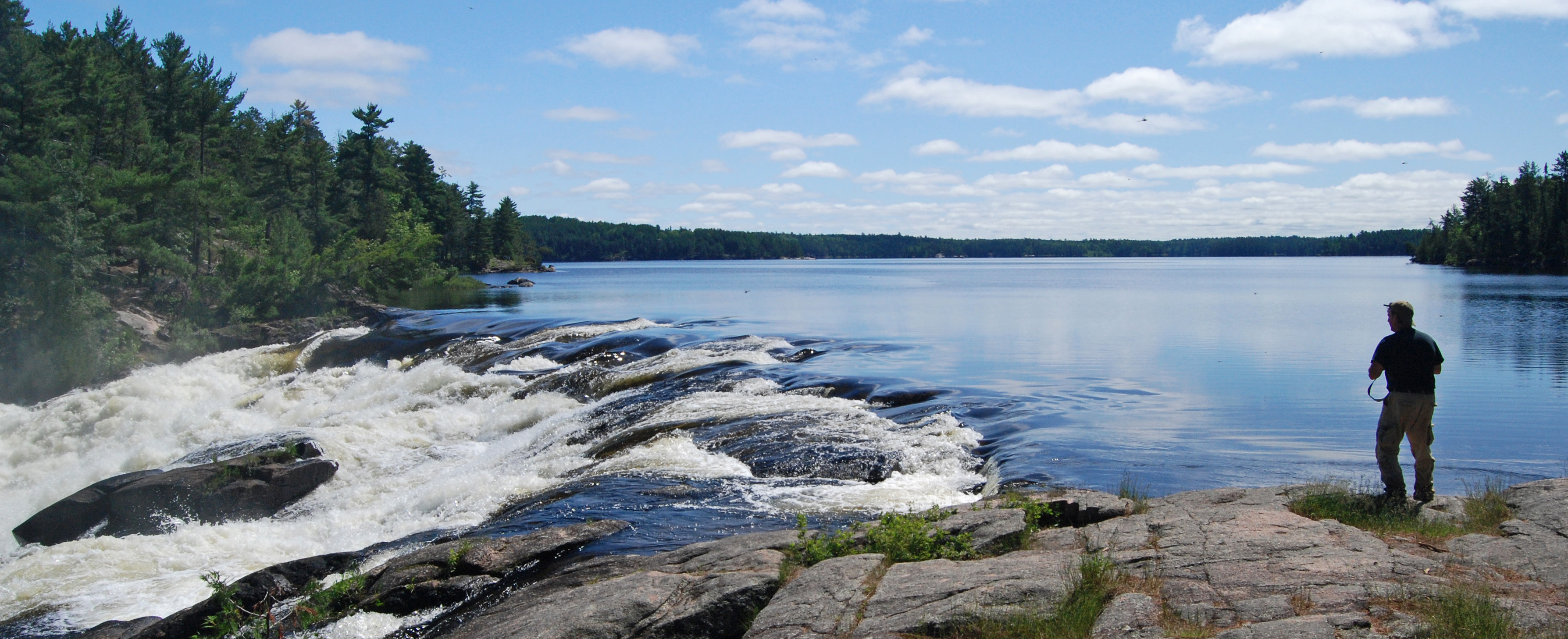
Ramsey Dowgiallo, a wilderness guide and outfitter, gazes out over Curtain Falls in Minnesota's Boundary Water Canoe Area Wilderness. Courtesy photo

Ramsey Dowgiallo, a wilderness guide and outfitter, gazes out over Curtain Falls in Minnesota’s Boundary Water Canoe Area Wilderness. Courtesy Photo.

By Howard Meyerson

Ramsey Dowgiallo was 17 years old and stricken with pneumonia when he first read about Minnesota’s Boundary Waters Canoe Area WildernessHis mother bought him a book about it. He’d long been a fisherman and outdoor enthusiast.

But it would be another 13 years, before he would get there, the result of a chance invite by a friend. Dowgiallo had long since forgotten about the book.

His trip to the 1.3 million acre wilderness region, with its boreal forests, Canadian Shield lakes, wolves, wildlife and abundant fishing, seemed to capture his imagination. One might say he heard the call of the wild.

“I fell in love with it,” said Dowgiallo, a Detroit native who lives in Novi and now spends six months a year in Ely Minnesota where he operates Wilderness Journey, an eight year old outfitting and guide service in the BWCA.

“There is a huge history in just the portages. Some are 400 to 500 years old. They were used by the natives and by the fur traders.  There are 40 different pictograph sites, major waterfalls and it’s just a gorgeous and very addicting place,” said Dowgiallo, a presenter at the Ultimate Sport Show opening at DeVos Hall in Grand Rapids Thursday. He will give two, hour-long talks about the BWCA at noon and 3:30 p.m. Saturday.

The BWCA is the historic homeland for the Ojibwa people. It has more than 1,200 miles of canoe routes and extends nearly 150 miles along the U.S/Canada border adjacent to Quetico Provincial Park to the north and Voyageurs National Park to the west. The area was set aside in 1926 by the US Forest Service which sought to preserve its wild character. Congress then added it to the National Wilderness Preservation System in 1964. It draws approximately 250,000 visitors each year. Continue reading

Posted in Uncategorized | Tagged , , , , , , , , , , , | Leave a comment

Asian Carp DNA Study Finds Other Causes than Live Fish

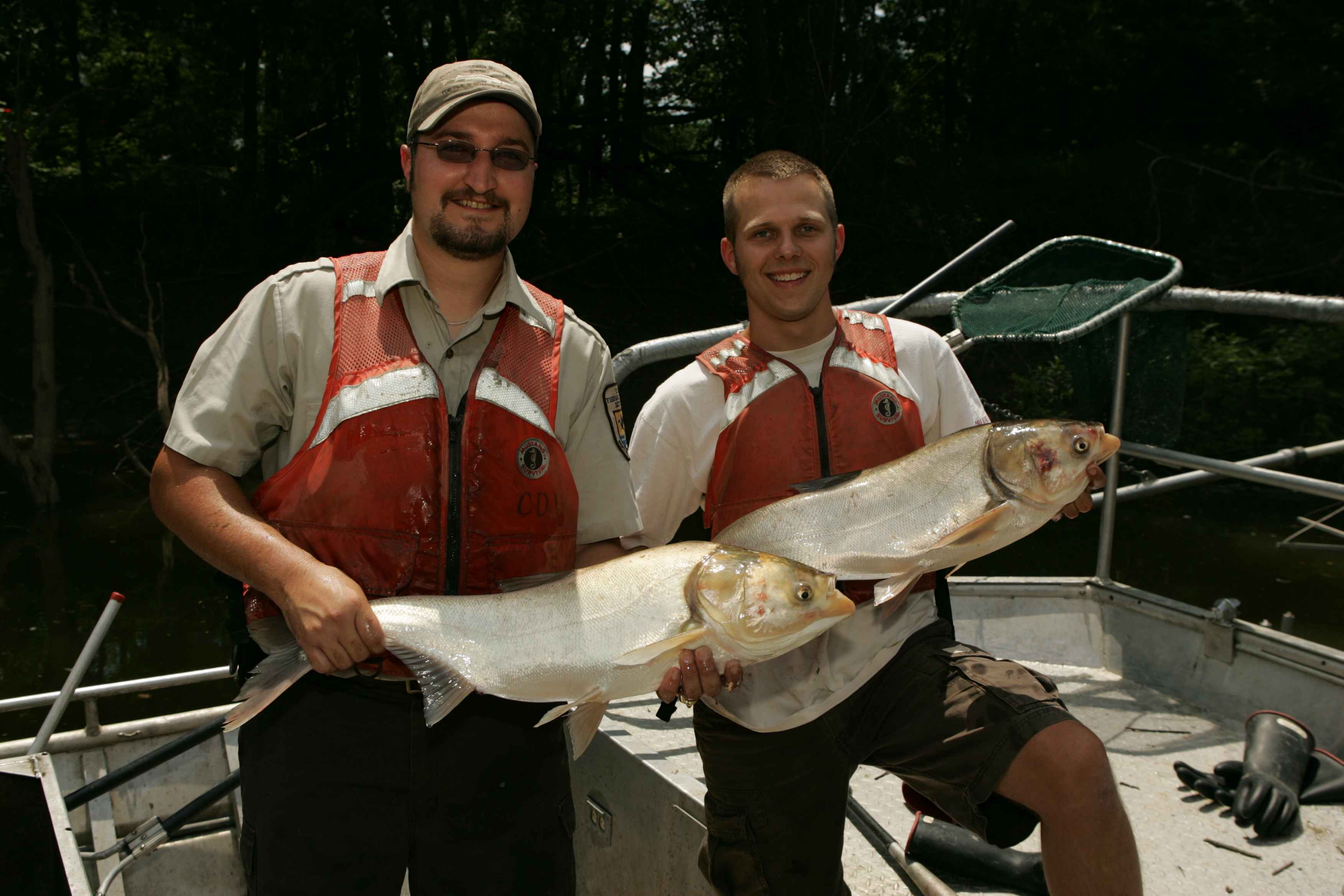
Where you find there DNA you may not find Asian Carp. Photo: US Fish & Wildlife Service.

Where you find there DNA you may not find Asian Carp. Photo: US Fish & Wildlife Service.

By Howard Meyerson

Federal scientists studying the origins of Asian carp DNA found in the Great Lakes, particularly in the Chicago Area Waterway system, ground zero in the politically heated debate about separating Lake Michigan from the Mississippi River Basin, have learned the genetic material can arrive by bird, barge, sewer or other means. Finding DNA today may not mean the dreaded fish are swimming somewhere near.

“I was surprised by how long the DNA can persist, especially in the bird droppings and how long it can persist on really hot surfaces.” said Kelly Baerwaldt, the eDNA program manager for the US Army Corps of Engineers.  “When I think about all those barges being pummeled by silver carp and that the stuff (carp slime) can stay on it for a month and still give us the same signal as a live fish, I was really surprised by that.”

Those and other findings were announced two weeks ago by the Army Corps of Engineers, the US Fish and Wildlife Service and US Geological Survey in an interim report about a three-year study underway that was funded by the Great Lakes Restoration Initiative.

The $6.15 million study found storm sewers carrying melted ice water from fish markets where carp are sold, fish eating birds leaving droppings behind, fish sampling gear and dead carcasses or slime on barges all can deliver Asian carp DNA to a waterway. Continue reading

Posted in Uncategorized | Tagged , , , , , , , , , | 7 Comments

Crash Course: Wind turbine bird, bat deaths to be monitored?

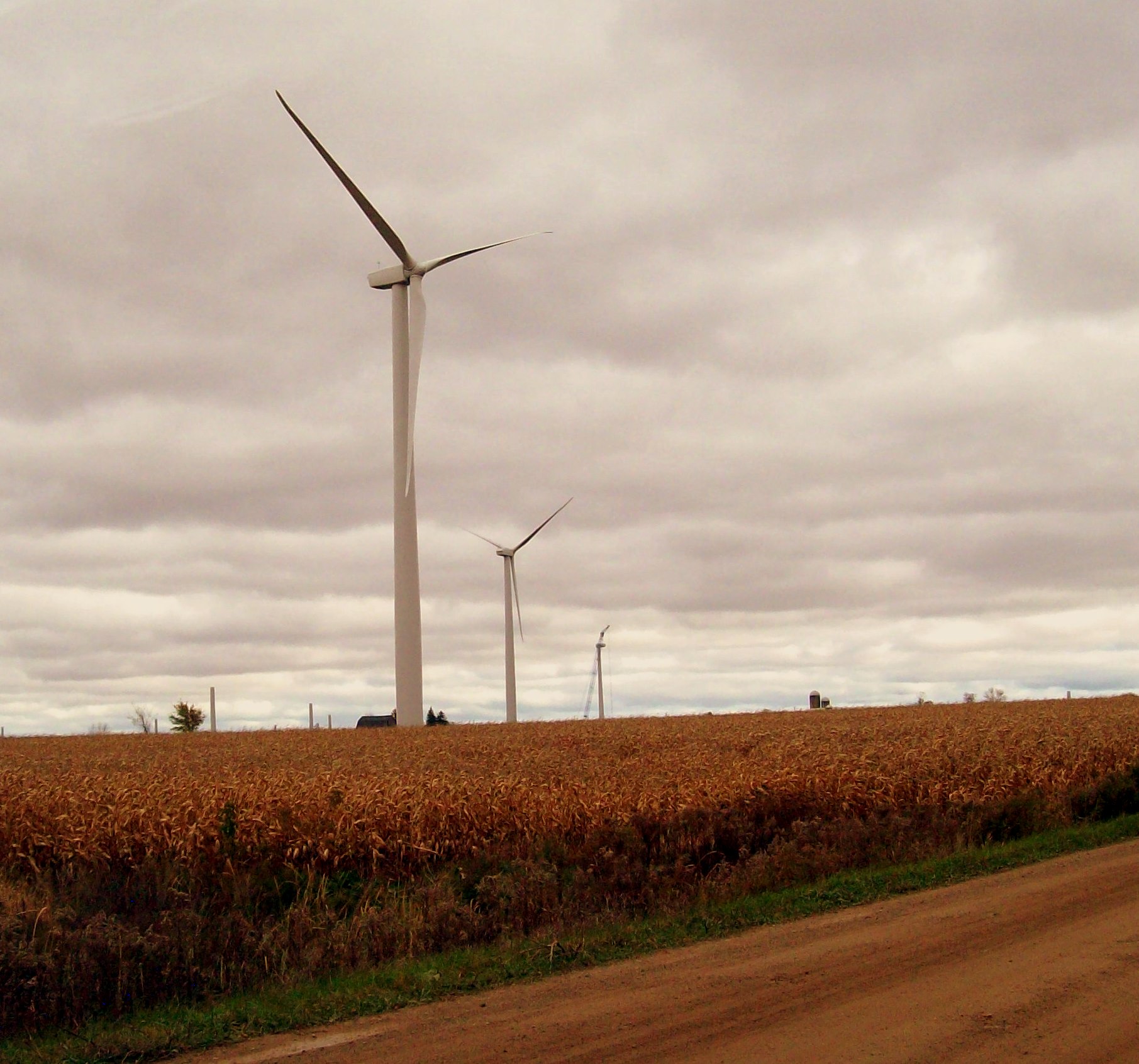
Michigan Wind 1 near Ubly is part of the former Noble Thumb Windpark (NTW), which John Deere Renewables acquired from Noble Environmental Power in October, 2008. The project consists of 46 GE Energy SLE wind turbines.Photo: Wikimedia Commons

Michigan Wind 1 near Ubly is part of the former Noble Thumb Windpark (NTW), which John Deere Renewables acquired from Noble Environmental Power in October, 2008. The project consists of 46 GE Energy SLE wind turbines.Photo: Wikimedia Commons

By Howard Meyerson

LANSING, MI – Michigan wind power operators may soon be able to get a state permit to collect and count the number of birds and bats that are injured and killed by turbines each year, but they will not be required to do so, according to state wildlife officials.

“The program will be voluntary,” said Russ Mason, chief of the Michigan Department of Natural Resources wildlife division. “We are trying to get a better handle on the wildlife impacts of Michigan wind development.”

“We would like to have pre- and post-construction monitoring because of the potential hazards. It’s important for us to know and we don’t have any authority about where they are put up.”

The decision to make the permits available to business entities that request them is scheduled for discussion today at the Natural Resources Commission meeting in Saginaw. A final decision is expected at the commission’s April meeting.

Wildlife “salvage” permits, as they are known, have been available only to scientific and educational organizations until now. Mason said the agency wants to offer them with hopes of getting better information about wildlife mortality, but adds that data may, or may not, be available to the DNR. If turbines are located on private lands, companies can refuse to give it to the state. That would not be the case for turbines built on state lands, were they to be approved, Mason said. Companies would be required to share that data.

“Wind developers want to be green and renewable. But in the absence of that mortality data, they are renewable, but there is nothing green about it.”

—Russ Mason, wildlife chief, Michigan DNR

Continue reading

Posted in Uncategorized | Tagged , , , , , , , , , , , | Leave a comment

Big Draw: Crossbow hunting increases in Michigan

More hunters took to the woods with crossbows and had a higher success rate. Photo: Dave Kenyon, Michigan DNR.

More hunters took to the woods with crossbows.Photo: Dave Kenyon, Michigan DNR.

By Howard Meyerson

For all the uncertainty and angst that surrounded crossbows in 2009 — the year the Michigan Department of Natural Resources allowed their more widespread use by hunters during the archery deer season -— it seems that only good things have come of it.

More hunters are getting out during the bow season. A good percentage said using a crossbow improved the quality of their hunt and season. Some said having a crossbow allowed them to hunt more often while others said they will hunt more often as a result.

“The outcome is pretty good,” said Brent Rudolph, the DNR’s deer program expert speaking of a recent agency report examining crossbow use from 2009 to 2011. “It provided some additional opportunity (to hunt) with no drastic negative impact of any sort.”

DNR wildlife staff promised to assess crossbow use and its impact on Michigan’s deer after three years. That was to address the concerns of some in the bow hunting community. They feared the archery season would be shortened if bow hunting ranks swelled suddenly due to an influx of gun hunters and a corresponding dramatic increase in the archery harvest.

Critics of the crossbow

Critics said the crossbow made killing deer easier and required less skill than normal bows. Crossbows can be equipped with a scope, can be cocked and do not require strength to hold a bolt back without strain. They are fired like a rifle by pulling the trigger.

They envisioned an army of crossbow-toting gun hunters invading woodlots and fields all over the state all hoping to extend their season. It was, for many, an insult to their sense of tradition and long-honed skills as an archer. Continue reading

Posted in Uncategorized | Tagged , , , , , , , | 1 Comment