Trail Towns: Communities adopting North Country Trail

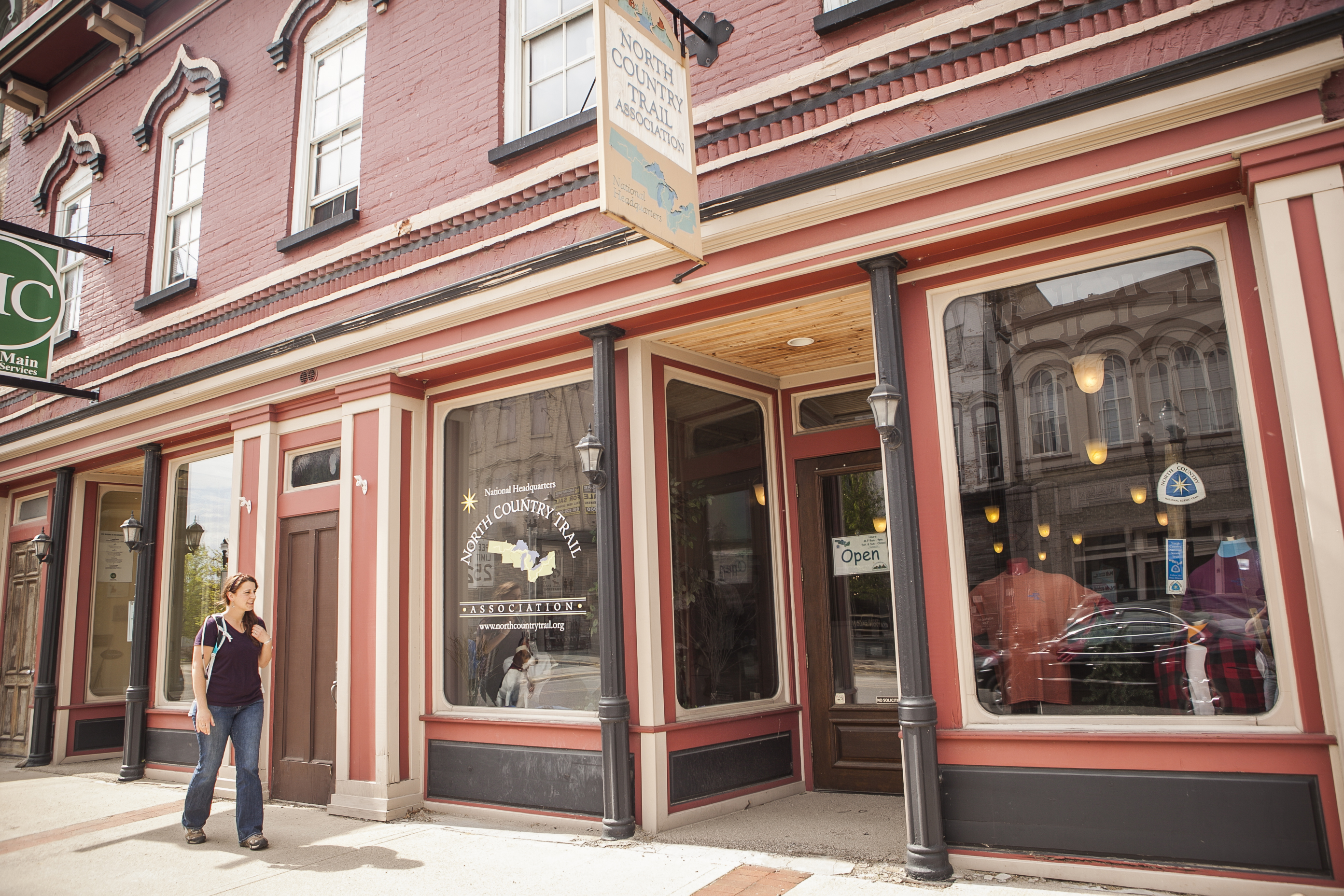
The national headquarters for the North Country Trail Association is found in Lowell. Photo Brandon Mulnix

The national headquarters for the North Country Trail Association is found in Lowell. Photo Brandon Mulnix

By Howard Meyerson

Saturday was National Trails Day, a celebration enjoyed by people all across the country. Hikers took to their favorite trails, venturing out with friends, family and organized groups.

In Michigan, of course, there is reason to celebrate trails every day. Local and state governments and non-profit groups do a terrific job developing them.

But one trail stands out as especially worthy of celebration, one surprisingly that often goes unnoticed. Its development takes place in the quiet recesses of our forests and in one-on-one meetings between landowners and well-intentioned volunteers.

More than 1,100 miles of the North Country National Scenic Trail is routed through Michigan’s Upper and Lower Peninsula. The 4,600 mile trail stretches from New York to North Dakota, making it the nation’s longest footpath.

Roughly 750 miles are on the ground in Michigan and ready to use, its route marked clearly by blue blazes; a path that meanders in and around farms and woods to the south and through state or national forests, national lakeshores and wilderness further north.

It is largely the product of volunteers, the communities of hikers who diligently carve out and maintain the route. Their efforts are creating a big economic asset for the State of Michigan.

I am old enough to remember the wilderness wars in Michigan, back in the ’80s when the late Sen. Joe Mack from Ironwood, an ardent opponent of wilderness, proclaimed to the Michigan legislature that backpackers came to the Upper Peninsula with one pair of undershorts, one five dollar bill and didn’t change either while there.

How wrong he was. But those were different times. We have learned a lot since, and the outdoor recreation landscape has changed dramatically. Continue reading

Posted in Uncategorized | Tagged , , , , , , , , , , , | Leave a comment

Wooden Boat Shows Aplenty in Michigan this Summer

Classic wood runabouts are abundant at shows like the Les Cheneaux Antique Wooden Boat Show and Festival of Arts, which is hosted in Hessel annually and this year runs Aug. 9-11. Pictured is a brass and wooden steering wheel with instruments on the dashboard in the May LaFever, built in 1912 by Fay and Bowen. Photo: Rex Larsen, MLive.

By Howard Meyerson

Michigan’s wood boat building history comes to life every summer in Great Lakes shoreline communities. 

It’s a time when quaint harbor towns celebrate the state’s boating heritage with wooden boat shows that showcase the gleaming varnish finishes of Michigan-made and other classics.

If you like antique wooden boats, consider checking one out. The shows are a perfect stop during any planned Michigan vacation, a day of fun and festivity.

“It’s a happening. People love to see them come in from the islands or watch them getting launched,” said Barb Smith, co-chair for the 36th Annual Les Cheneaux Islands Antique Wooden Boat Show and Festival of Arts on August 10. The show is held in the eastern Upper Peninsula town of Hessel.

“It’s exciting to see the old woodies come in. We had a ground fog here a few years ago and you could hear them coming, but couldn’t see them. Then they motored in out of the fog.”

The Hessel show is Michigan’s largest wooden boat show with 130 or more boats on display, most of which float at docks that can be toured. The show is sponsored by the Les Cheneaux Historical Association.

More shows listed below. See calendar.

Continue reading

Posted in Uncategorized | Tagged , , , , , , , , , , , , | 4 Comments

State recreation areas add handicap canoe, kayak launches

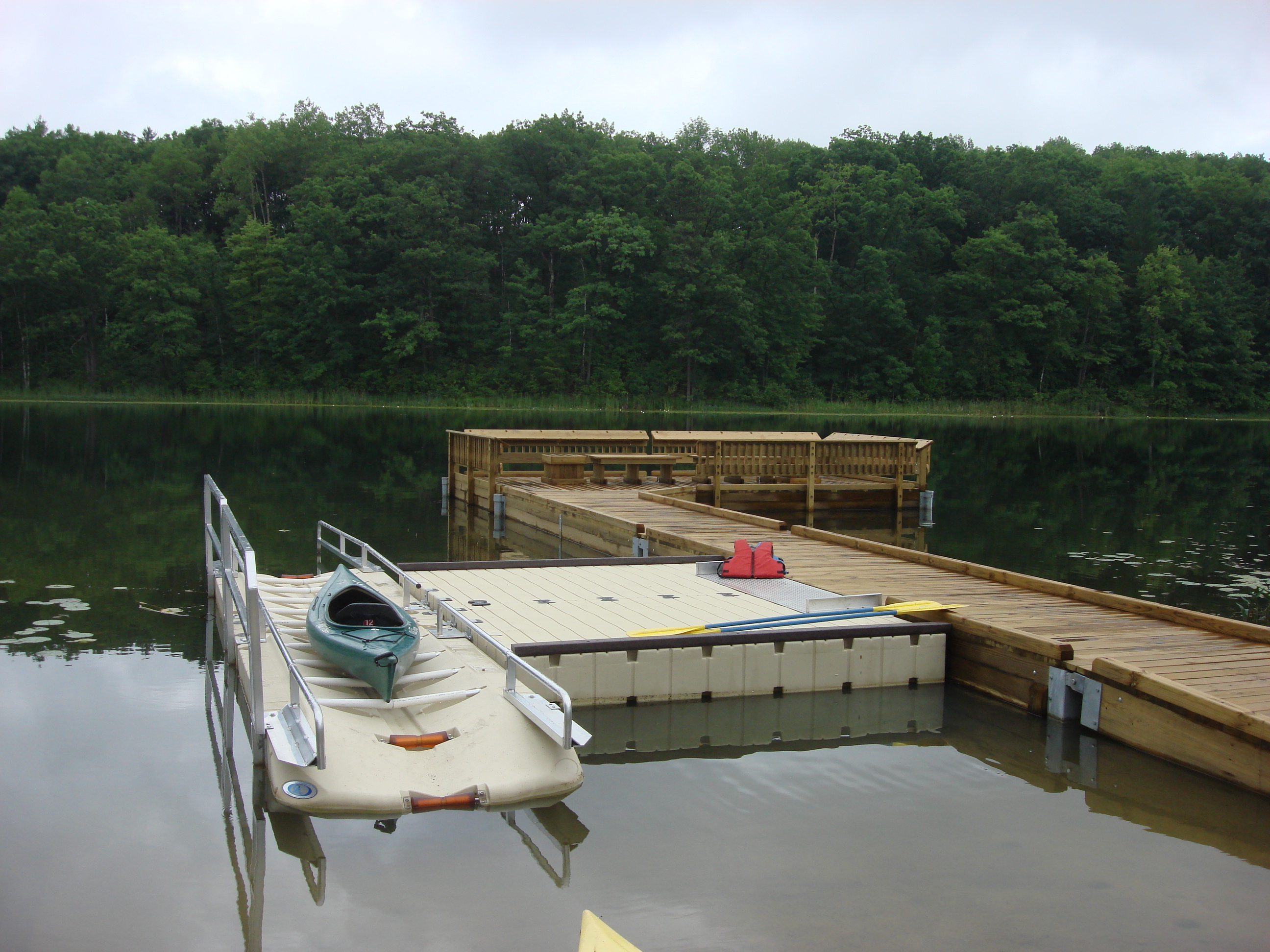
The new launch ramp at Grebe Lake in the Rifle River State Recreation Area. Photo: MDNR

The new launch ramp at Grebe Lake in the Rifle River State Recreation Area. Photo: MDNR

By Howard Meyerson

Disabled paddlers who need assistance getting into canoes or kayaks and getting launched will find life is a bit simpler these days at Bishop Lake in the Brighton State Recreation Area.

A unique launch kayak launch system has been installed there that allows paddlers to move smoothly from wheelchairs into their boats while on a dry and a stable platform, from which they can guide themselves easily into the water.

“There is always a need to make things more accessible,” said Mike Donnelly, the Brighton State Recreation Area supervisor.  “We are trying to open recreation up to those people who use wheelchairs, crutches and prosthetics.”

The new EZ Launch Accessible Transfer System, as it is called, was funded by a grant from the W.K. Kellogg Foundation “Access 2 Recreation Initiative.” The launch platform at Bishop Lake is the second of two installed at state recreation areas. The other is on Grebe Lake in the Rifle River State Recreation Area.

“The foundation gave us two million dollars a couple of years ago which has been set aside for projects in state parks and recreation areas,” said Dan Lord, development program manager in DNR’s Parks and Recreation division. “They also gave one million dollars to the Natural Resources Trust Fund. It’s all meant for demonstration projects. They were looking to fund unique recreation opportunities that go above and beyond the minimums for ADA (Americans with Disabilities Act) compliance.” Continue reading

Posted in Uncategorized | Tagged , , , , , , , , , , , , | Leave a comment

Toxic Hogweed: State looking for giant poisonous plants

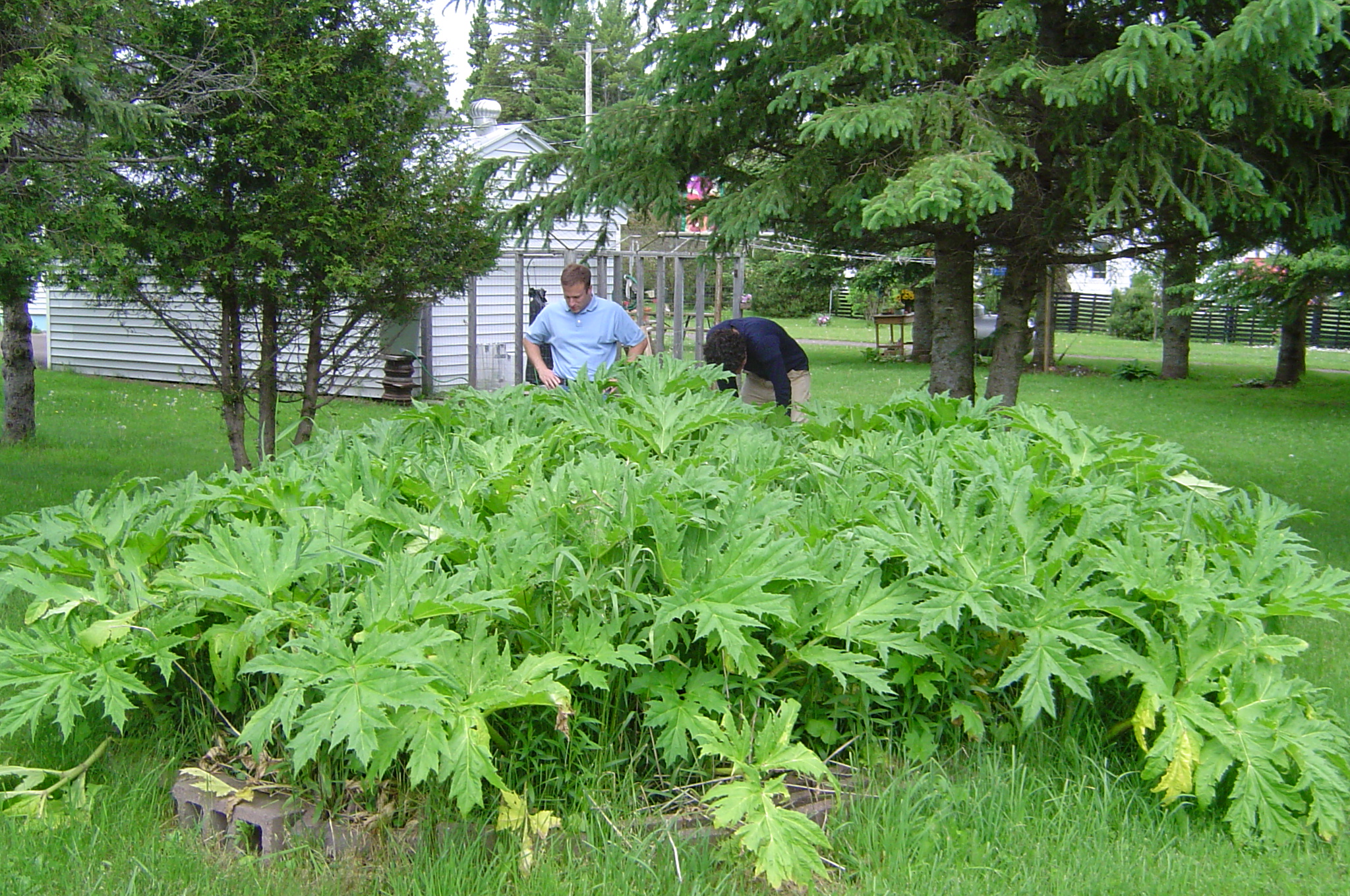
Brian Kooper of the USDA and Matt Bushman study a patch of hogweed found in a backyard planter in Wakefield in 2004. Photo: USDA

Brian Kooper of the USDA and Matt Bushman study a patch of hogweed found in a backyard planter in Wakefield in 2004. Photo: USDA

By Howard Meyerson

Giant hogweed, an illegal and toxic non-native plant has been known to give state and federal officials heartburn now and then. But homeowners, hunters and hikers who may stumble upon it are being advised to report it and give the plant wide berth so as not get burned themselves.

“The toxin from it burns the skin and feels like a hot iron on your arm,” said Peter Carrington, assistant curator of the W.J. Beal Botanical Gardens at Michigan State University. “You can get burned pushing through a thicket of it. And that will change your whole day. The burns can take months to heal.”

Giant hogweed, or giant cow parsnip as it known, is a member of the carrot family. But it ranks right up with poison ivy and poison sumac as a health hazard, according to the Michigan Invasive Plant Council. The organization first reported about the weed in 2003. The group was formed in 1999 by a federal executive order signed by then President Bill Clinton.

Cow parsnips may grow to three or four feet tall, but giant hogweed can get to be 15-feet high with five-foot-wide leaves. It is covered with fine fuzz that carries a toxic sap. The  toxic effects are triggered by ultra-violet light, or sunlight.  Get the sap on your skin and walk in the sun and a serious case of blisters is likely to follow. Continue reading

Posted in Uncategorized | Tagged , , , , , , | 2 Comments

Growing concern about Great Lakes nuclear hot spots

Posted in Uncategorized | 1 Comment

Between a rock and a hard place: Michigan’s national parks cut services amid budget woes

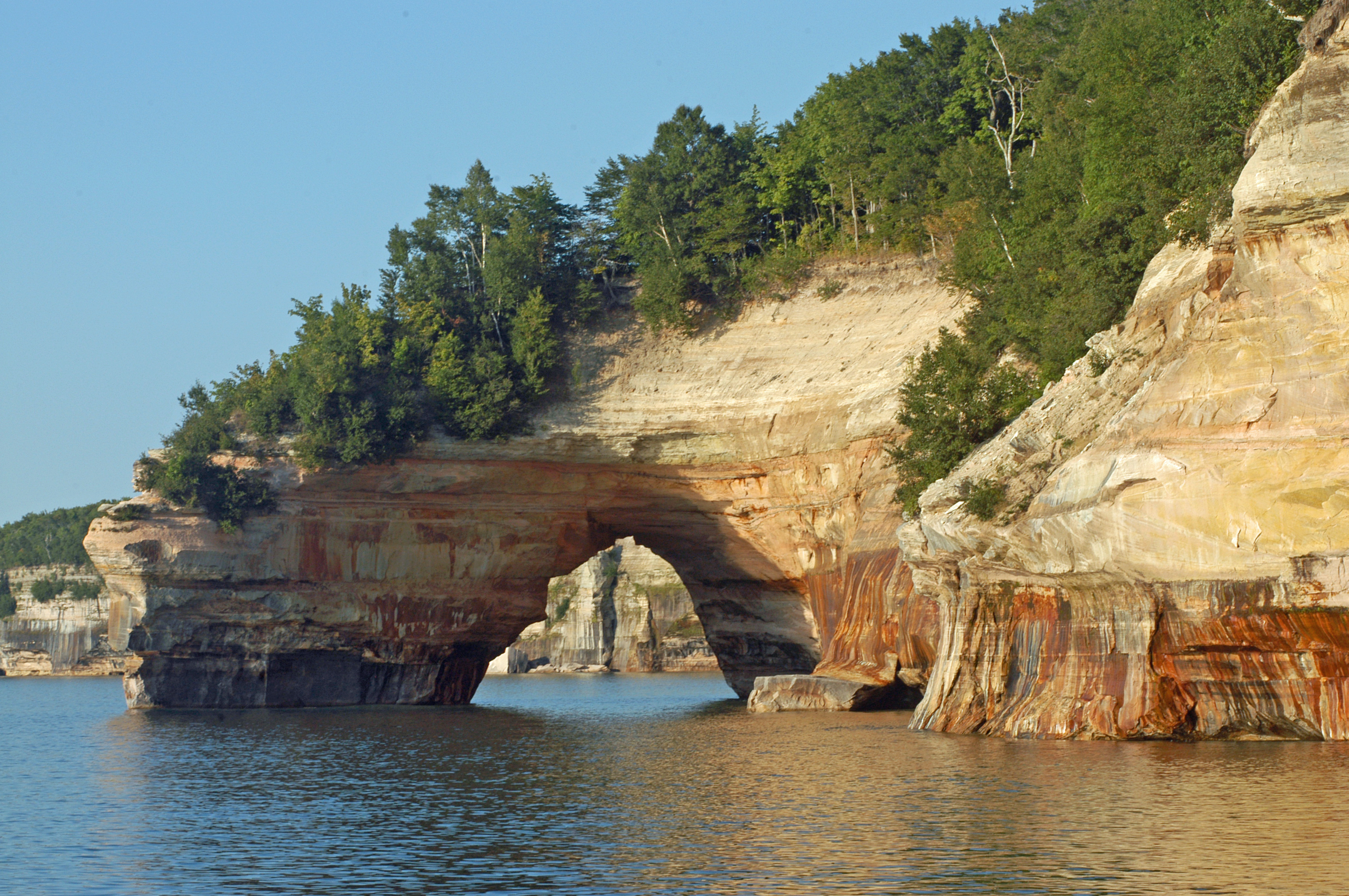
Pictured Rocks National Lakeshore will fare better than some national parks in Michigan as federal budget cuts take effect. Photo: Howard Meyerson

Pictured Rocks National Lakeshore will fare better than some national parks in Michigan as federal budget cuts take effect. Photo: Howard Meyerson

By Howard Meyerson

Hikers intending to backpack on Isle Royale this summer might want to pay extra attention to their planning. Fewer rangers will be stationed on the remote and rugged Lake Superior island, meaning fewer first-responders will be available to handle back-country emergencies. Break a leg, and you might end up waiting longer for a rescue.

Isle Royale and other national parks all absorbed a five percent budget cut this year, the result of the federal boondoggle known as “sequestration.” In Michigan, that also affects Keweenaw National Historic Park, and Sleeping Bear Dunes and Pictured Rocks national lakeshores.

You’ll feel the pinch

The impact at each varies. Most are not serious. But this is only the first year of cuts, and visitors to these national landmarks are likely to notice some of them.

“We’re closing the north and south shore ranger stations at Malone Bay and Amygdaloid Island,” said Liz Valencia, chief of interpretation and cultural resources for Isle Royale National Park. “Emergency response will take longer. Those (rangers) are usually our first-responders. Now, that response will come from Rock Harbor and Windigo.”

Most Isle Royale visitors, of course, come home smiling and none the worse for wear, but things do happen, according to Phyllis Green, the park superintendent. Hikers go out and stumble and fall. Some head out forgetting to take their medications.

“We see anything from cuts and scrapes to heart distress and heat exhaustion, things that require a higher skill level in response,” Green said. “There can be three incidents one year and 17 the next. It varies with the weather and people’s attentiveness.” Continue reading

Posted in Uncategorized | Tagged , , , , , , , , , , , | Leave a comment

Wind companies won’t face charges in condor deaths

Photo: LA times

California condors are fair game if you own a wind farm these days. Surprising as that may sound, the US Fish and Wildlife Service has granted permission to California’s Terra-Gen Power for incidental take of the endangered bird, meaning it won’t be prosecuted if one is killed by a wind turbine.

Environmentalists have complained, according to a story in the LA Times, which quotes FWS director, Daniel Ashe, saying it is a difficult decision and reality given that prosecution threatens a large-scale wind project.

This is a harbinger of things to come – and disappointing.

Read More: Companies won’t face charges in condor deaths

Posted in Uncategorized | Tagged , , , , , , , , | Leave a comment

The Catbird: A different take

Found on FB at Cornell Lab’s Celebrate Urban Birds

Posted in Uncategorized | Tagged , , , , | Leave a comment

Grand River Coho: Fewer stocked at Lansing, more downstream

Jumping the dam at 4th St. on the Grand River

By Howard Meyerson

Lansing, MI –A state decision to reduce the number of coho salmon  stocked in the Grand River at Lansing,  while increasing stocking downstream at Lyons, is just fine with Joe Mull, the manager of Grand River Bait and Tackle, a Lansing-based fishing outfitter that caters to salmon fisherman and other anglers.

In fact, he thinks it’s a good idea.

“Not only will more fish get downstream (to Lake Michigan), but more may survive to come back upstream. I think it’s a wonderful idea,” Mull said of the change that took place in April when state hatchery officials planted just 50,000 yearling Coho in the Grand River at Lansing rather than 295,000 as in the past.

State fisheries managers announced the plan a year ago; their thinking is that fewer young smolts will die from predation or hydro-electric dams while making the long trip down to Lake Michigan.

“We weren’t seeing a lot of fish return to Lansing,” said Jay Wesley, the Michigan Department of Natural Resources southern Lake Michigan management unit supervisor. “There is quite a predatory gauntlet upriver and we have been losing them to the Portland and Webber dams.

“Our goal isn’t to reduce the number of fish in Lansing, but to increase it,” Wesley said of the plan expected to boost coho smolt survival. Continue reading

Posted in Uncategorized | Tagged , , , , , | Leave a comment

Mentoring Youths: Young hunters bag big birds

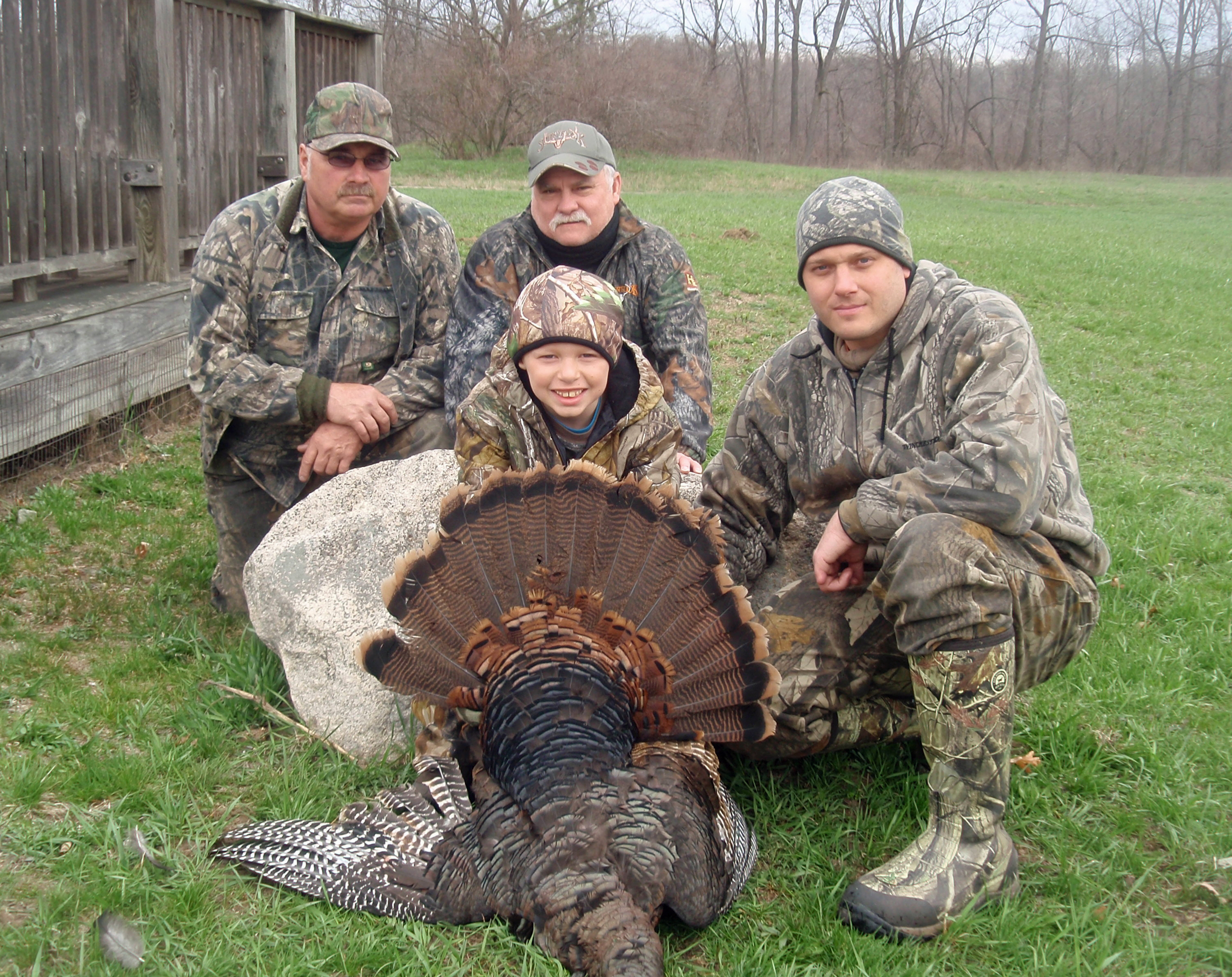
Cameron Edgerton shot this 14-pound turkey while being mentored by his uncle, John German. Behind them are guides Bruce Waterman, left, and Dennis Neibarger. Photo: Courtesy.

Cameron Edgerton shot this 14-pound turkey while being mentored by his uncle, John German. Behind them are guides Bruce Waterman, left, and Dennis Neibarger. Photo: Courtesy.

By Howard Meyerson

MUSKEGON, MI — At a time of day when most youngsters are comfortably home in bed, Evan Rogalla sat calmly in a moonlit field, waiting. Dawn was approaching. It wouldn’t be long. The 13-year-old hunter sat still in his blind with his father and grandfather.

Across the field, a group of wild turkeys soon started gobbling. They flew down from their roosts 500 yards away and began to squabble. It would be a while before they rushed the blind, drawn by the hunter’s enticing calls.

When they did, they came with seven hens calling and three jakes gobbling.

Evan dropped the biggest male bird with one shot from a 20-guage shotgun, a 20-pound wild turkey with a six-inch beard. He would be one of four successful hunters that weekend in a special youth hunt at the Muskegon County Wastewater Facility, organized by the Muskegon River Bottom chapter of the National Wild Turkey Federation.

“Evan has enough hunting experience that he is comfortable with it and a good shot,” said Aubrey Gale, Evan’s grandfather and hunting mentor. “I watched his hand when he put the gun out the window (of the portable blind). When he decided which one he wanted, I saw him slip his finger onto the trigger and let it go.”

It is that kind of scrutiny that makes “mentoring” a meaningful term, a guided and well-counseled experience where constructive feedback comes quickly, and undesirable behavior can be extinguished just as fast. Continue reading

Posted in Uncategorized | Tagged , , , , , , | 1 Comment