Pure Michigan: On the way to becoming a trails state

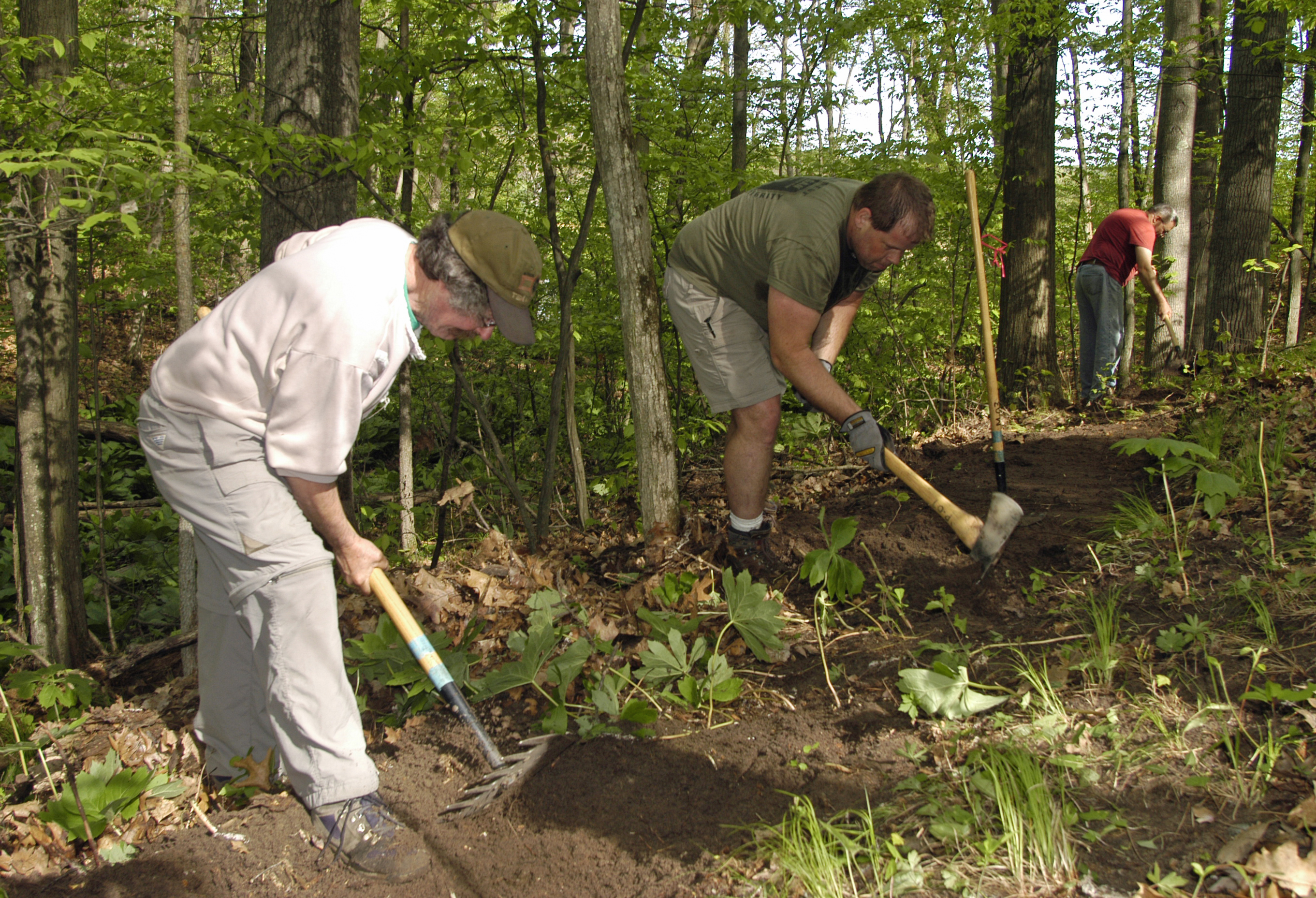
Volunteers from the North Country Trail Association create a new section of the seven-state trail runs through Michigan and will become part of Gov. Rick Snyder’s Showcase Trail. Photo: Howard Meyerson

By Howard Meyerson

Michigan has had a number of nicknames: The Water Wonderland, The Great Lakes State, The Wolverine State, The Mitten State; and now it appears we may get another: The Pure Michigan Trails State.

A five-bill package introduced to the Michigan Senate March 20th seeks to establish that brand for Michigan. The bill sponsors are working together to amend the 1994 Michigan Trailways Act in an effort to provide an official boost to all things “Trail.”

The sponsors are: Sens. John Moolenaar, R-Midland, Arlan Meekhoff, R-Olive Twp., Dave Hildenbrand, R-Lowell, Geoffrey Hansen, R-Hart, and Tom Casperson, R-Escanaba. Their bills, SB 873-877, are tie-barred and have been sent to various committees.

What the package does is establish the Pure Michigan Trail Network by establishing designations for Pure Michigan Trail Towns, Pure Michigan Trails, and Pure Michigan Water Trails. Those designations would be made by the Michigan DNR director upon recommendation of the Natural Resources Commission.

Designated trails and towns would be eligible for funding from the Pure Michigan Trail Fund, the new name for the Michigan Trailways Fund. It was established to receive revenues from a variety of uses along the trails, from billboards and easements to concessions, which never really amounted to much money.

The bill sponsors are looking to celebrate Michigan’s prospective status as the top trail state in the nation.

“I represent districts in northern Michigan where recreational use of trails is of tremendous importance,” said Sen. John Moolenaar. “We wanted to celebrate the trails we have and resurrect the Trailways program. There is growing emphasis on developing a true, statewide integrated trails network.

“There is no question that the Pure Michigan campaign has been a huge success. And the governor has recognized goals with respect to trails so we felt this was a good opportunity.” Continue reading
Posted in Uncategorized | Tagged , , , , , , , , , , , , | Leave a comment

Alewife numbers remain low in Lake Michigan

State fisheries officials predict salmon will be hungry and bite lures more readily with fewer alewives in Lake Michigan.  Photo: Howard Meyerson

State fisheries officials predict salmon will be hungry and bite lures more readily with fewer alewives in Lake Michigan. Photo: Howard Meyerson

By Howard Meyerson

Grand Rapids, Mich. — Researchers studying prey fish populations in Lake Michigan have found that alewife populations continue to be at low ebb and may dip further before the 2014 fishing season is over.

Surveys conducted last August by state and federal agencies found little change from 2012, when prey fish numbers were reported at all-time lows.

“Things haven’t changed much. There continues to be a relatively limited age range, and we don’t have any that are over age five,” said Dave Warner, a fisheries research biologist with the U.S. Geological Survey. His crew, along with those from Michigan’s DNR and the U.S. Fish and Wildlife Service, conducted acoustic and mid-depth netting surveys on Lake Michigan.

What was found was a “very low abundance” of new alewives, referred to as “age zero,” while the volume of older fish was comparable to 2012. Continue reading

Posted in Uncategorized | Tagged , , , , , , | Leave a comment

Lake Michigan fishing forecast: Colder waters, smaller salmon and steelhead

Lake Michigan is expected to be colder throughout the summer fishing season. Photo: Howard Meyerson.

Lake Michigan is expected to be colder throughout the summer fishing season. Photo: Howard Meyerson.

By Howard Meyerson

It’s not a stretch to say that lakes will be cold when the 2014 fishing season opens on April 1. And, given the volume of frigid runoff this spring, federal hydrologists predict Lake Michigan-Huron waters are likely to be colder than last year throughout the summer fishing season.

What Lake Michigan anglers can expect remains a question that will soon be answered – particularly when it comes to Chinook salmon. Anglers this year can once again catch and keep five salmon daily. Last summer was tops for 20 pound to 30 pound fish, very big salmon, but fewer were caught overall.

State fisheries officials will be watching the 2014 salmon catch closely. Concern remains about the forage base. The alewife population is still at low ebb, and they are the preferred food for Chinook salmon.

You may recall that Michigan and other bordering Lake Michigan states reduced Chinook stocking in the lake by 50 percent in 2013. That was done in an effort to conserve alewives and provide a sustainable salmon fishery going forward. The effects of that cut are not expected to show up until 2015.

“Last year we saw a surprising increase in the size of Chinooks,” notes Jay Wesley, the Michigan Department of Natural Resources southern Lake Michigan management supervisor. “This year we expect the size will be down, but the catch rates will be higher. That’s what we see when the forage base declines.” Continue reading

Posted in Uncategorized | Tagged , , , , , , , | 2 Comments

Cheboygan River system studied for landlocked lamprey

Landlocked sea lamprey are suspected of staying in the Cheboygan River system and feeding. Photo:  Great Lakes Fisheries Commission.

Landlocked sea lamprey are suspected of staying in the Cheboygan River system and feeding. Photo: Great Lakes Fisheries Commission.

By Howard Meyerson

CHEBOYGAN, MI – Researchers who are studying sea lampreys in the Cheboygan River system are looking for a little help from anglers over the next couple of years. Evidence is mounting that a landlocked population of lampreys exists in the Cheboygan River watershed, which includes the Maple, Sturgeon and Pigeon rivers, along with Burt and Mullet lakes.

Landlocked means the lampreys don’t migrate out to the Great Lakes to feed – in this case Lake Huron. Instead, they emerge from river bottoms where they live as larvae, make their way downstream during their metamorphosis to a blood-sucking parasite, and stop short of Lake Huron, feeding on fish Burt and Mullett lakes before eventually returning upstream to spawn and die.

Federal officials say that phenomenon not only has implications for sport fish that live in those waters, but for the agencies tasked with sea lamprey control. Until recent years it has been assumed that Cheboygan River lamprey migrate out to Lake Huron and return to spawn. The river system has been treated with lampricide for more than 50 years.

Now federal officials are considering other lamprey control options like sealing the Cheboygan dam and locks so lamprey cannot pass, then killing off any residual populations with chemical treatment. It is a move, they say, that could save a great deal of money for treatment, a cost estimated at $1.5 million every three years.

“Lampreys have traditionally lived in those streams and lakes,” said Nick Johnson, a research ecologist with the U.S. Geological Survey’s Hammond Bay Biological Station in Millersburg. “What’s new is they may be stopping for a snack in Burt and Mullet Lake(s) without going out to Lake Huron.

“We want to learn the size and location of the potential landlocked population. If anglers notify us of any (lamprey) wounds they find on steelhead, northern pike, and musky, and send us any lampreys they capture while out fishing, that will help give us more information.” Continue reading

Posted in Uncategorized | Tagged , , , , , , , , , , | 3 Comments

Increasing white perch population affecting Lake Erie yellow perch

By Howard Meyerson

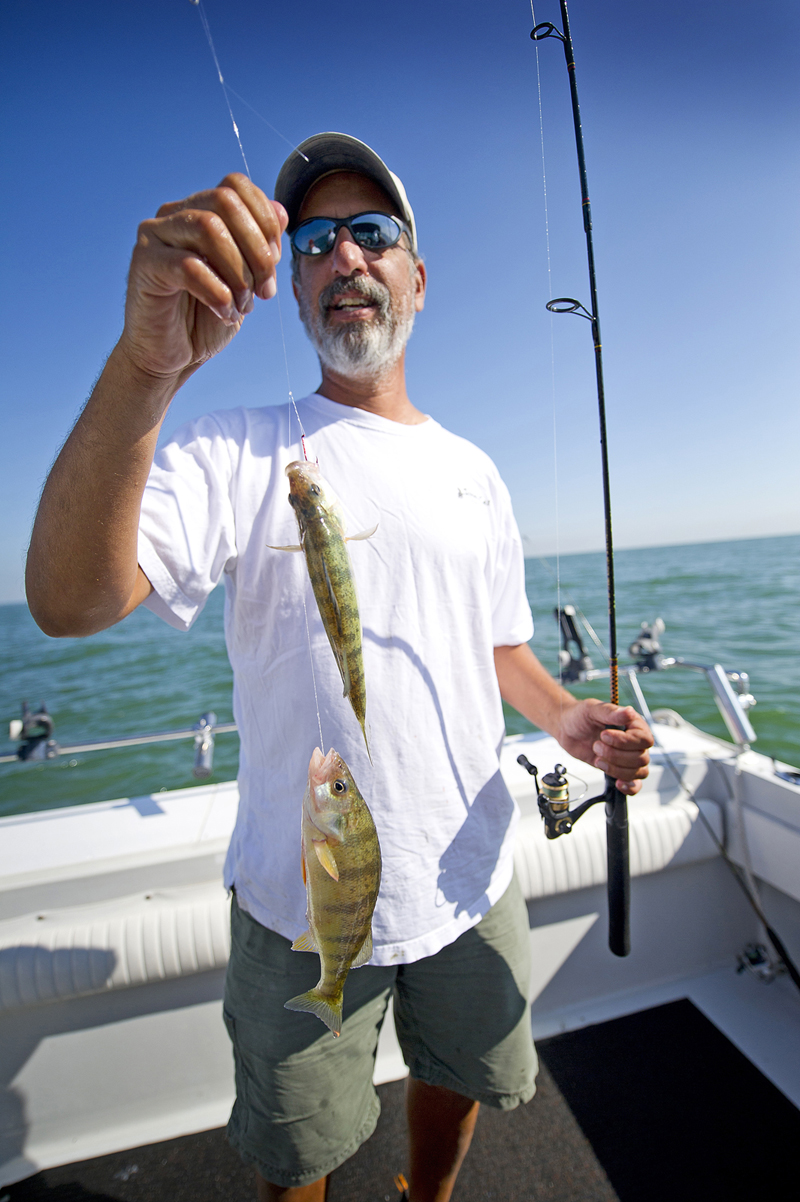
Lake Erie yellow perch fishing is being impacted by the non-native white perch that is eating up young yellow perch laravae. Photo: MDNR

Lake Erie yellow perch fishing is being impacted by the non-native white perch that is eating up young yellow perch laravae. Photo: MDNR

MONROE, MI — It’s no secret that the Lake Erie yellow perch fishery is not what it used to be. Only 10 million 2-year-olds now show up in the catch compared with peak years in the mid-1980s when 70 million to 80 million were caught.

Scientists studying the lake and fishery say there are numerous reasons why. They include changing water quality and clarity and the effects of recent warming trends. Yellow perch are a cool-water species.

Recent study findings, however, also suggest that Lake Erie’s booming white perch population has had more of an impact than previously thought. They prey voraciously on tiny yellow perch.

“The numbers are staggering,” said Stuart Ludsin, an associate professor of evolution, ecology and organismal biology at Ohio State University. Ludsin has been studying the lake and its fishery for 20 years.

“There are between 46 million and 106 million predators in the western basin of Lake Erie. In just 24 hours they can consume between 32 million and 189 million yellow perch larvae. That is an enormous number.

“We don’t have that broken down by how much each eats, but I can tell you that white perch make up 90 percent of the predators. It is the most abundant predator in the lake. Period.” Continue reading

Posted in Uncategorized | Tagged , , , , , , , , | 2 Comments

Increased license fees will improve inland fishing, cold water habitat and hunting lands

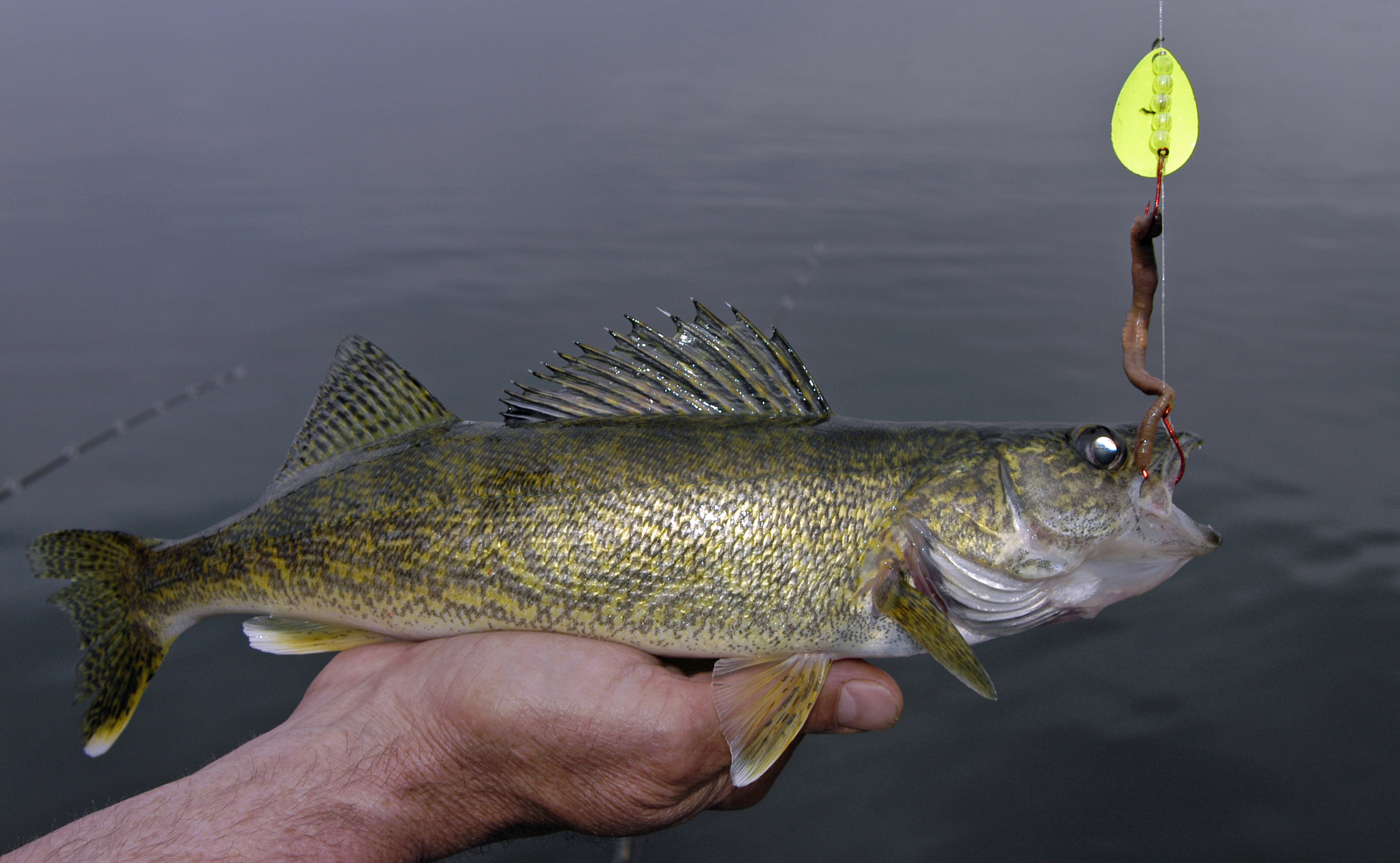
More money will go to inland lake fisheries management that  benefits walleye fishing along with panfish, as a result of the license fee increase. Photo: Howard Meyerson

More money will go to inland lake fisheries management that benefits walleye fishing along with panfish, as a result of the license fee increase. Photo: Howard Meyerson

By Howard Meyerson

The start of Michigan’s 2014 fishing season is still a couple of weeks away, but if you haven’t been paying close attention you might be surprised when you buy a fishing license this year. Prices have gone up and there are fewer choices.

The state’s hunting, fishing and ORV license program was restructured by the legislature last year and Gov. Rick Snyder signed those changes into law last fall. The new program took effect on March 1, just in time for the new fishing season that opens April 1.

The changes will be good for Michigan. The license program was streamlined and state officials estimate the new fee structure will generate $18.1 million in additional revenue this year for hunting and fishing programs. In light of steady program erosion at the Michigan DNR over the past decade, that’s a good thing and I expect good things to come of it.

State fisheries officials, among other things, are planning to give inland waters more attention. An enhanced inland water focus should have payoffs for those who enjoy bluegills, crappies and walleye as well as species like northern pike, Great Lakes muskies and Great Lakes sturgeon. Continue reading

Posted in Uncategorized | Tagged , , , , , , , , , , | Leave a comment

Six state forest campgrounds to reopen: New access for equestrians, paddlers and anglers

By Howard Meyerson

Six rustic campgrounds that were closed in 2009 due to budget constraints are to be reopened. Four of them will be re-configured to provide additional camping opportunities for equestrians.That recommendation is being taken up March 13 by the Natural Resources Commission.

Six rustic campgrounds that were closed in 2009 due to budget constraints are to be reopened. Four of them will be re-configured to provide additional camping opportunities for equestrians.That recommendation is being taken up March 13 by the Natural Resources Commission.

The start of spring is still 10 days out and deep snows in the north country could well mean a slow start for Michigan’s camping season, but state officials are moving forward this week to expand Michigan’s State Forest Campground program.

Six rustic campgrounds that were closed in 2009 due to budget constraints are to be reopened. That recommendation is being taken up March 13 by the Natural Resources Commission. The commissioners first got a look at the proposal at their February meeting. Members of the Michigan State Park Advisory Committee who were also meeting that day passed a resolution supporting the move.

“All of these (campgrounds) have been asked for by the public,” said Anna Sylvester, the Michigan DNR’s northern Michigan field operations section chief for Parks and Recreation division. “They are being incorporated into routes that our staff travels so they can get to them several times a week.”

Four of the six rustic campgrounds will be re-configured to provide additional camping opportunities for equestrians. One is the Lower Peninsula. Three are in the Upper Peninsula. Various riding groups have asked for more camping and trail opportunities on state lands in recent years. Continue reading

Posted in Uncategorized | Tagged , , , , , , , , , | Leave a comment

Climate Change: The Risks for Michigan birds

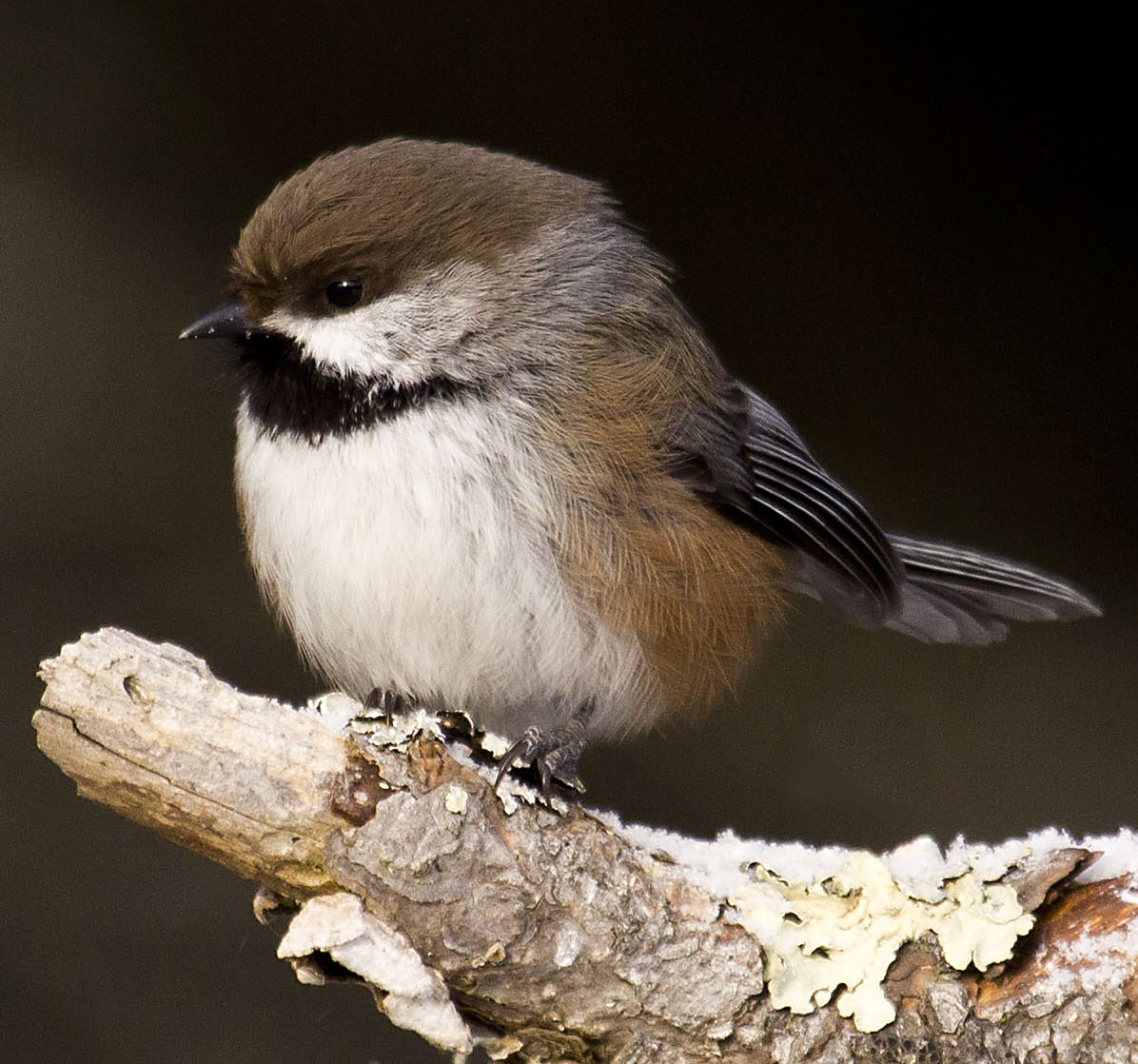
The Boreal Chickadee is as species found in Boreal Forests which may be impacted by climate shifts. Photo: Beth Olson

The Boreal Chickadee is as species found in northern boreal forests which are expected to be impacted by climate shifts. Photo: Beth Olson

By Howard Meyerson

While global climate change reports often focus on iconic creatures like polar bears and penguins, species that would be in jeopardy if the polar ice cap melts, Michigan and Great Lakes scientists are looking to understand what else might get in trouble. Will Michigan moose thrive 40 years from now when average temperatures are expected to be five degrees warmer? What about the Boreal Chickadee, Tufted Titmouse, and Common Loon?

David Yarnold, National Audubon president and CEO, declared in an Audubon Magazine column last October that “climate change is the greatest threat to birds and biodiversity since humans have been on the planet.” He followed that by writing, “Scientists say we stand to lose one-quarter to one-third of all species on earth. And birds will be hit hard.”

That sweeping statement may raise doubt for some and give others reason for pause, but wildlife researchers say the evidence bears it out. “He is probably accurate with the caveat that there is still a lot of uncertainty,” says Chris Hoving, the Michigan Department of Natural Resources adaptation specialist, formerly the agency endangered species coordinator. “That one-third to one-quarter figure comes from a paper in the Journal of Science. It’s [based on] a simple model that looked at how much [home] ranges would change and how much biodiversity we would lose (due to climate shifts), but it is as good as we know. It could be more or it could be less.”

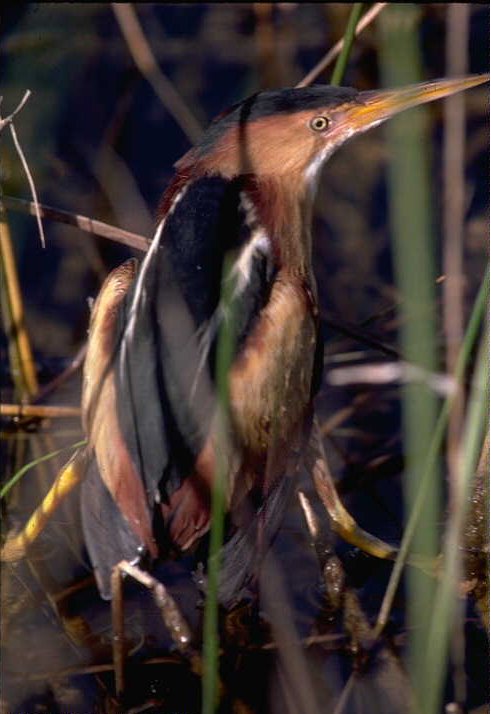
Least Bitterns one of the most difficult marsh birds to spot. The species faces possible population decline due to climate changes. Photo: USGS.

Least Bitterns one of the most difficult marsh birds to spot. The species faces possible population decline due to climate changes. Photo: USGS.

Data from citizen science projects like Audubon Christmas Bird Counts and Cornell Laboratory of Ornithology’s Project FeederWatch, along with projects like the Michigan Breeding Bird Atlas, have provided scientists with snapshots of the species that are moving northwards where winters are becoming less harsh and nesting seasons are growing longer.

“We already see evidence that birds are moving in Michigan and are adapting to the one degree Fahrenheit change we’ve had in the last 100 years,” Hoving said, pointing to the Least Bittern and Northern Cardinal as two examples. “We anticipate by mid-century, 2050, we will be looking at a three- to five-degree change and that the rate of change between now and then will be ten times as fast as the last 100 years.” Continue reading

Posted in Uncategorized | Tagged , , , , , , , , , , , , | 2 Comments

The romance of the courting canoe era is alive and well at Ken Kelly’s place

The lore and romance of early 20th Century wood and canvas canoes, and a modern-dayCRv13i1-1 man who collects them,  is the subject of a feature story by me in the newest issue of Canoeroots Magazine. It is called “The Canoe Collector.” The story profiles Ken Kelly, a Grand Rapids, Michigan wine dealer and Canoe Casanova, who has the world’s largest and finest collection of these magnificent wooden courting canoes. 

Kelly’s canoes date back to an era when designers built them for style and romance, a time when couples would go down to the river for a little moonlight  smooching. That became such a popular way to court your gal that local communities began to pass ordinances to restrict behavior on the water and hired constables to patrol local park ponds.

Photographer Judith Strieby-Raska shot the amazing photos for the story. Be sure to CRv13i1-50check out her  website: judesrphotography.com

Kelly is the president of the Wooden Canoe Heritage Association, a national non-profit organization. Its members are dedicated to the restoration and preservation of old wooden canoes.

You can find an earlier feature of mine  on this blog about the group’s annual float trip down Michigan’s AuSable River. Check out the photo gallery from that 2012 outing. I had great fun paddling one of Ken’s old canoes.

If you enjoy antique wooden canoes, paddling nostalgia, or simply world-class wood canoe restoration work, check out the cover story in the new Canoeroots Magazine or go to its website.  Magazine publisher, RapidMedia,  has a digital copy online which requires an email to read if you are not a subscriber.

Happy paddling!

Posted in Uncategorized | Tagged , , , , , , , | Leave a comment

A winter view: Walking the frozen Lake Michigan shoreline

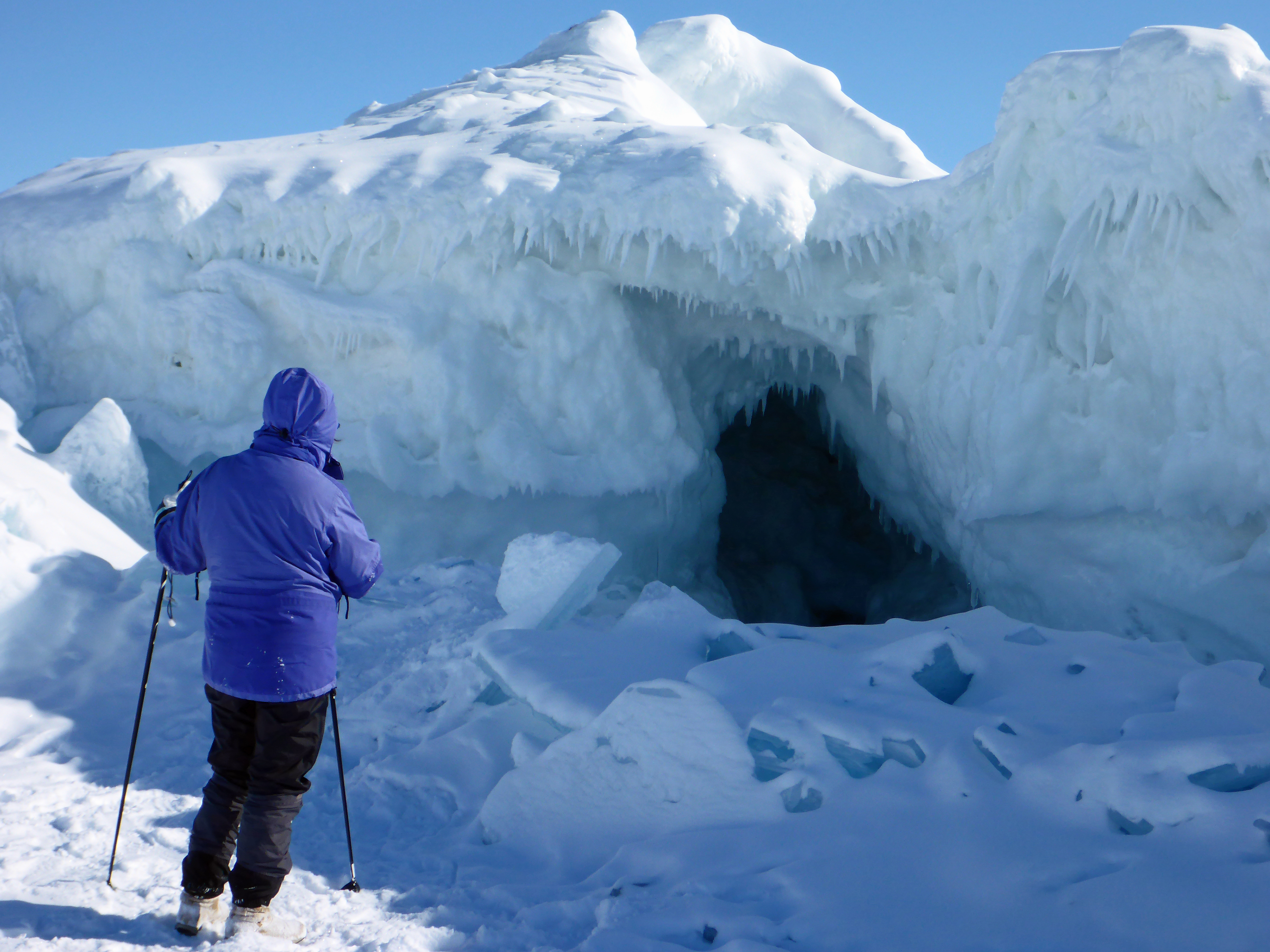
Ice caves formed in the shelf ice all along the tip of the Leelanau Peninsula. Photo: Howard Meyerson.

Ice caves formed in the shelf ice all along the tip of the Leelanau Peninsula. Photo: Howard Meyerson.

By Howard Meyerson

NORTHPORT, MI — As I moved cautiously from one ice knob to another, planting ski poles for added support in the uneven and slippery terrain, the northwest wind seemed intent on pressing southward, blunting the warm glow of the sun.

After so many bleak and gray winter days, having clear skies and sunshine was a delicious treat. People from all-walks of life had converged on this area, the frozen Lake Michigan landscape at the tip of the Leelanau Peninsula. They were gathered in small groups of two and three, spread out on the ice, maybe with children in tow. Each of the explorers seemed tiny against the vast frozen expanse.

We had come north to cross-country ski and had for one day, a marvelous day with deep fresh snow on the trails, but the frozen shoreline had proved irresistible. To walk out on Lake Michigan at the height of this year’s deep-freeze was like walking on the moon, so barren and desolate – and like walking in the Arctic at the height of winter.

The wind chills were below zero. The day called for all the extras: a balaclava, a beanie and a hood. It was an outing tolerated only with extra-heavy gloves, multiple layers and heavy boots that even then required constant movement lest toes begin to freeze.

As a friend and I walked amid the spectacular ice shelves and caves, the jumbled frozen

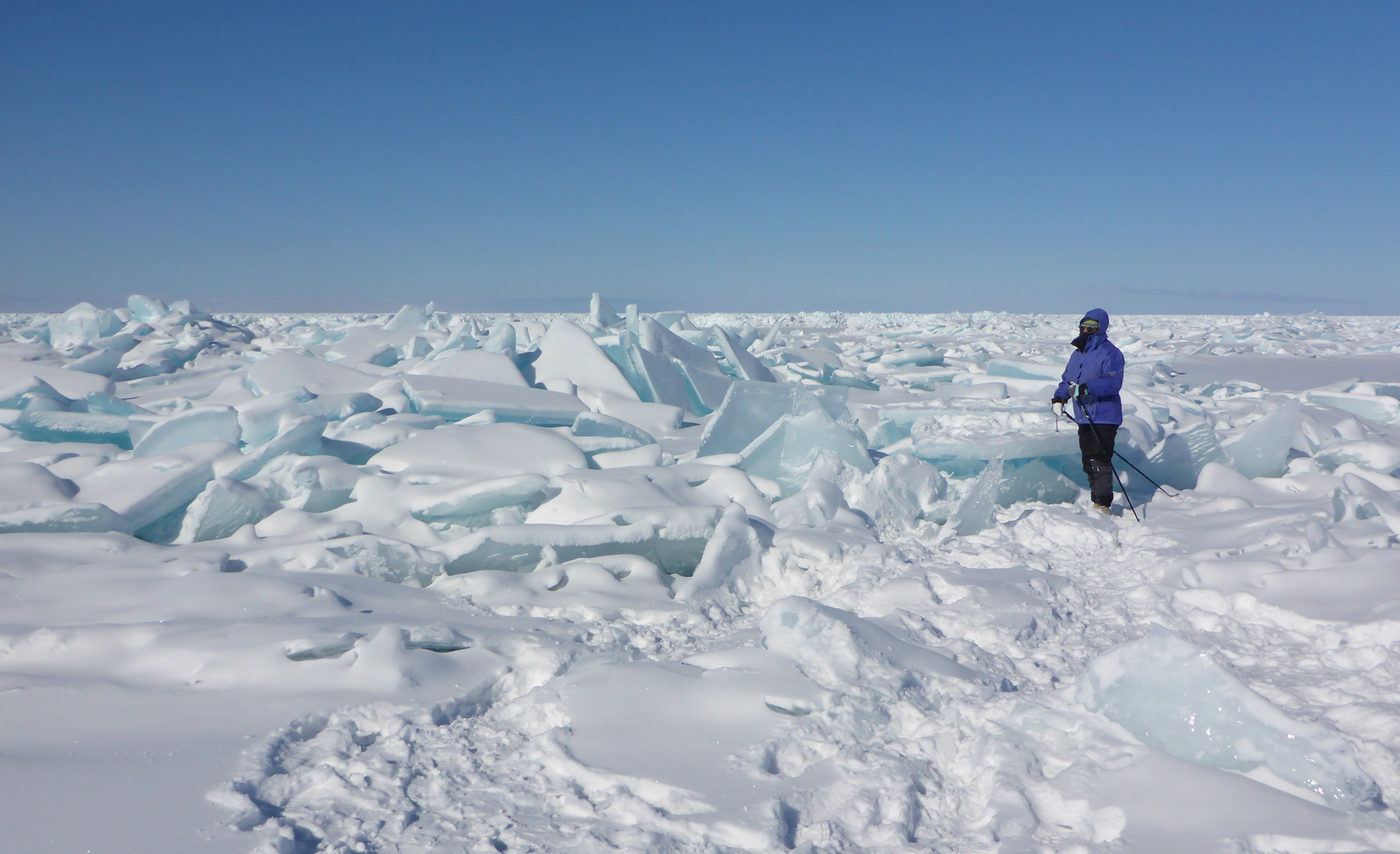
Slabs of broken ice pile up where large sheets of ice have collided. Photo: Howard Meyerson

Slabs of broken ice pile up where large sheets of ice have collided. Photo: Howard Meyerson

sheets of ice that lay stacked and broken into so many pieces of blue crystal covered in snow, I found myself mesmerized by the hauntingly beautiful terrain. Continue reading

Posted in Uncategorized | Tagged , , , , , , | Leave a comment