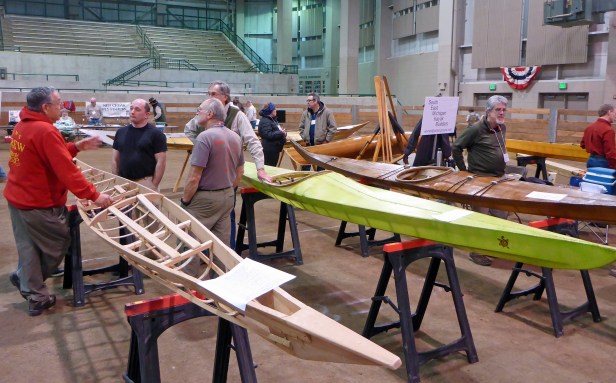
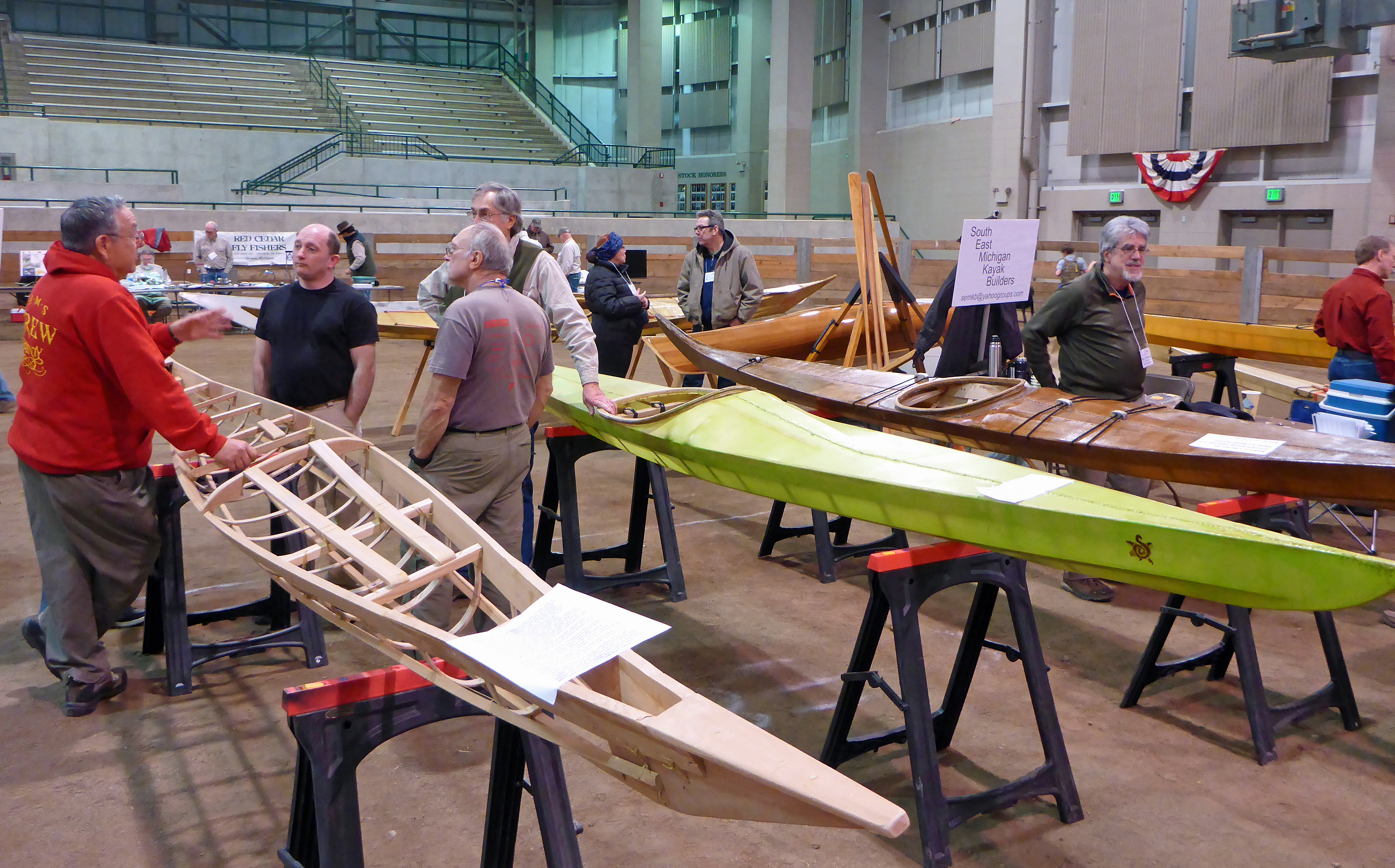
Skin over wood frame kayaks are just some of the designs kayak builders will have on display. Photo: Howard Meyerson.
By Howard Meyerson
Most of the major winter outdoor shows highlight boating, hunting and fishing, but that shouldn’t come as a surprise to anyone. Michigan, after all, boasts nearly a million registered boats and roughly 1.6 million anglers and hunters.
State officials estimate Michigan residents own about 300,000 unregistered canoes and kayaks, but when it comes to Michigan paddlesport shows, there is only one – The Quiet Water Symposium. That delightful event is about to celebrate its 20th anniversary.
Worth the trip
If you haven’t heard of it, be sure to check it out. It’s scheduled from 9 a.m. to 5:30 p.m., March 7, at the Pavilion for Livestock and Agriculture Education, 4301 Farm Lane, in East Lansing on the Michigan State University campus. Its organizers expect its largest crowd yet.
“We had 2,500 in attendance last year and expect from 2,500 to 3,000 this year,” said Allen Deming, a former symposium chairman and one of the many dedicated volunteers that put it on. The symposium is now sponsored by the Quiet Water Society, a small non-profit with no paid staff that formed to shepherd the event forward and through tough times.
“People can see 30 canoe and kayak models from commercial vendors, and we’ll have about 10 home builders displaying their work,” Deming said. “About 60 percent of the show is dedicated to non-profit organizations like watershed councils and nature centers and water trail organizations.
“We have people who drive up from Tennessee, Ohio, Illinois, Wisconsin and Ontario.”
That’s a far cry from the symposium’s earliest days when it was held at the Kellogg Center on MSU’s campus. I remember those early events. They were considerably smaller, but no less genuine. The organizers wanted to show off great canoes and kayaks, the works of boat builders, and the great trips paddlers were taking. Today, the symposium celebrates all of that and non-motorized recreation, the value of clean waterways, and shared concern for the Great Lakes. Continue reading →




 The Outdoor Journal