Pigeon River returning to free-flowing state

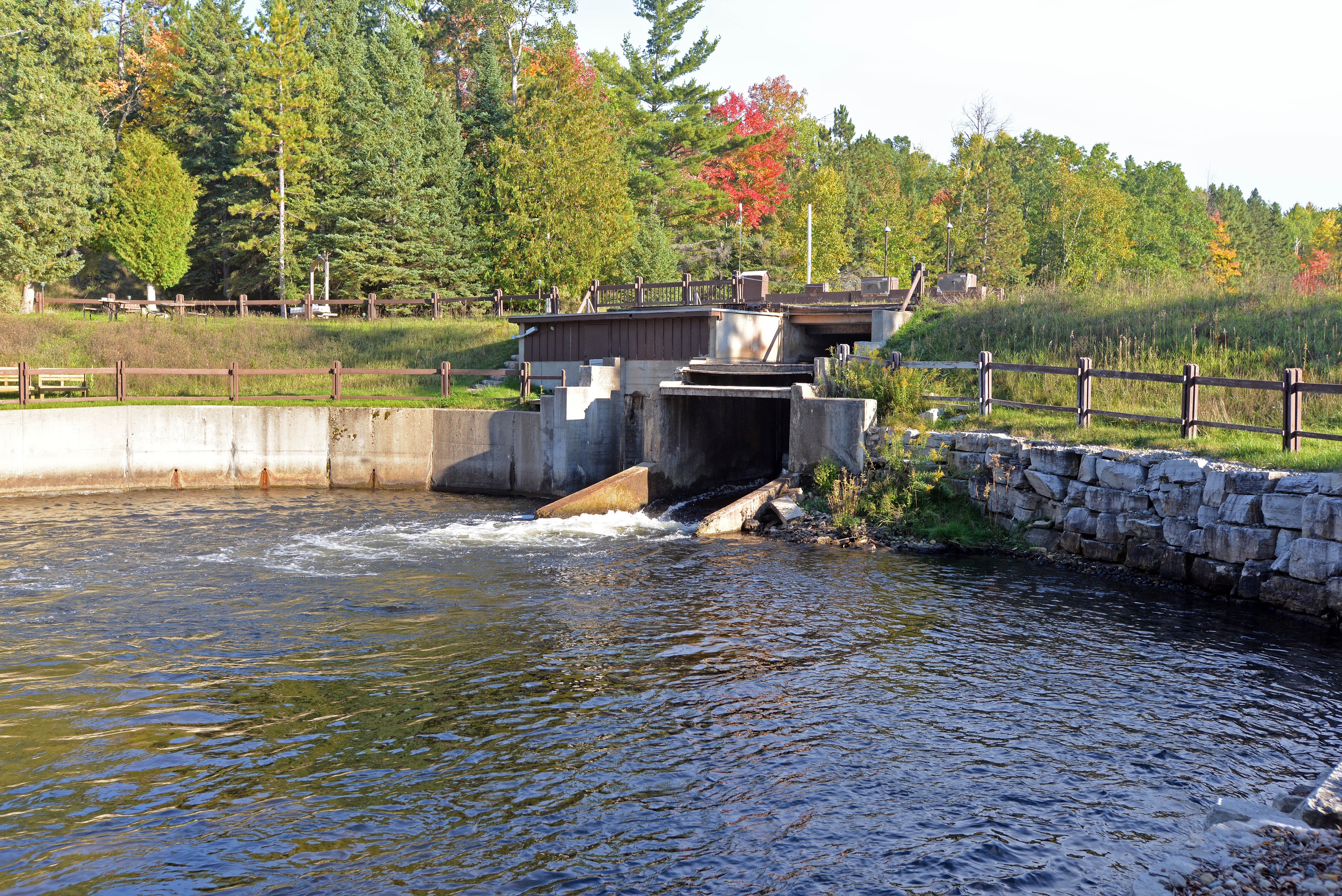
The Song of the Morning dam was opened permanently in 2014. The dam structure will come out this year, widening the river channel at the dam site. Photo by Howard Meyerson.

The Song of the Morning dam was opened permanently in 2014. The dam structure will come out this year, widening the river channel at the dam site. Photo by Howard Meyerson.

By Howard Meyerson

VANDERBILT — Anglers who like free­-flowing streams got a chance to celebrate in September 2014 when the Song of the Morning Yoga Retreat dam was permanently opened on the Pigeon River allowing it to return to a free­-flowing state.

It signaled a new era for those popular trout waters.

This year, there is a more to cheer about as phase II of the dam removal project moves forward this month.

Huron Pines, the Gaylord­based conservation organization overseeing the removal, recently announced its fund­raising objectives have
been met.

“We hope to break ground the second week in October, said Lisha Ramsdell, the program director for Huron Pines. “All of the utilities will be disconnected and the downstream sand trap is in place to catch sediments when we remove the dam.”

Deconstruction will cost $365,000, money Huron Pines raised from private donations, a $293,000 state Aquatic Habitat grant and a $5,000 donation from the Mullet Lake Area Preservation Society. The Pigeon River empties into Mullett Lake. Continue reading

Posted in Uncategorized | Tagged , , , , , , , , , | 2 Comments

Lake Michigan shipwreck zone to become national sanctuary

Divers survey the wreck of the schooner Northerner, which sank off Port Washington, Wis. in 1868. The National Oceanic & Atmospheric Administration is considering 875-square-mile of Lake Michigan off the Wisconsin coast for designation as a National Marine Sanctuary. Photo courtesy of Wisconsin Historical Society, Maritime Preservation and Archaeology Program.

Divers survey the wreck of the schooner Northerner, which sank off Port Washington, Wis. in 1868. The National Oceanic & Atmospheric Administration is considering 875-square-mile of Lake Michigan off the Wisconsin coast for designation as a National Marine Sanctuary. Photo courtesy of Wisconsin Historical Society, Maritime Preservation and Archaeology Program.

An 80-mile long stretch of Lake Michigan is on its way to  becoming the second Great Lakes National Marine Sanctuary. A story on MLive today reports the site contains 30 known shipwrecks including the “Rouse Simmons, a three-masted schooner known as the “Christmas Tree Ship,” which sunk with all hands off Two Rivers in November 1912.”

The proposed national sanctuary lies from 9 miles to 14 miles off the Wisconsin shoreline. The only  other one in the Great Lakes is Thunder Bay National Marine Sanctuary in Lake Huron off Alpena.  Read more: Great Lakes Shipwreck Sanctuaries.

Posted in Uncategorized | Tagged , , , , , , | 1 Comment

Geospatial PDFs point hikers in right direction on North Country National Scenic Trail

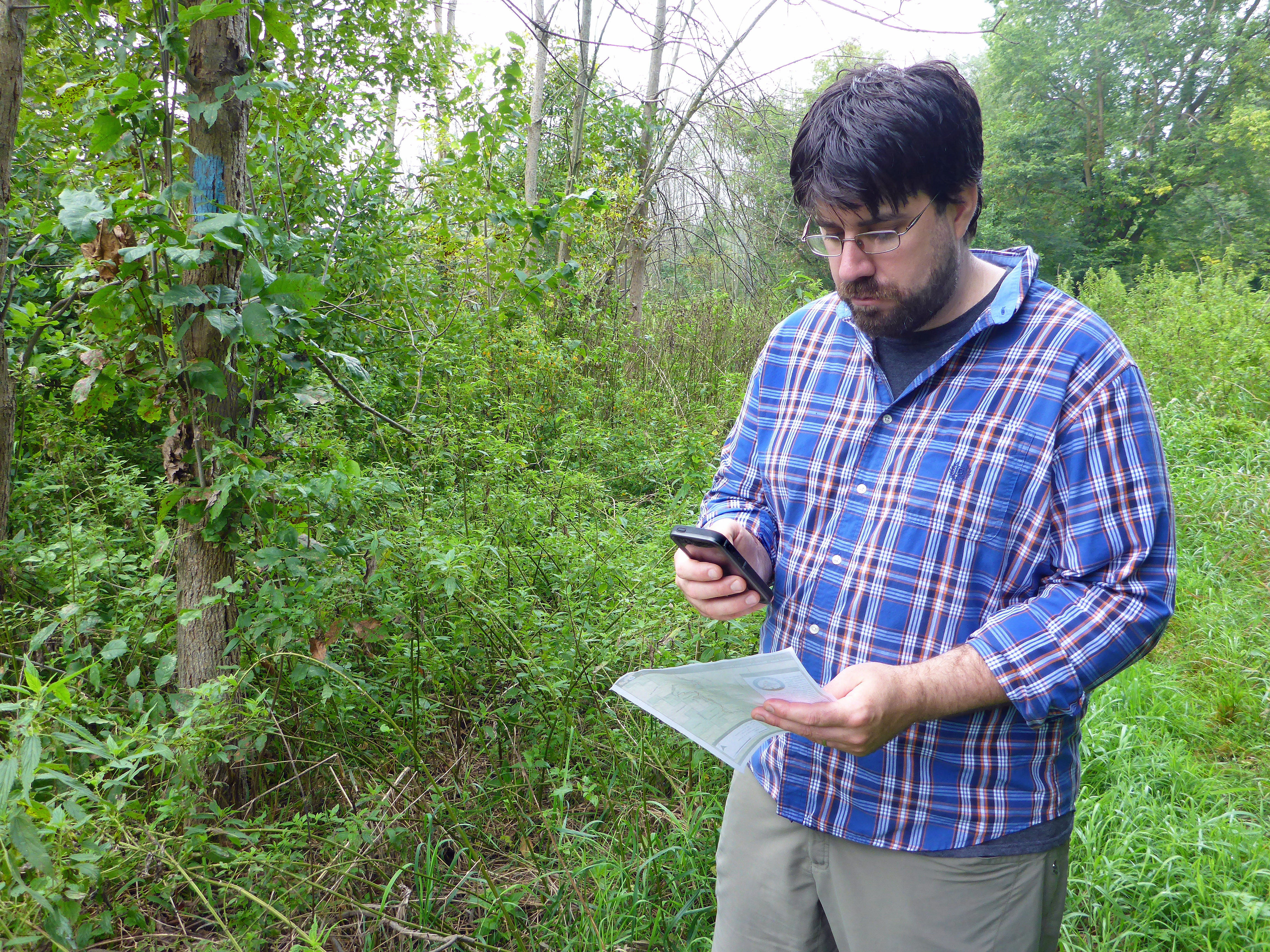
Matt Rowbotham, the cartographer for the North Country Trail Association, stops along the trail (marked by blue blazes on trees) to compare information on a paper map and the new digital map for the trail. Photo by Howard Meyerson

Matt Rowbotham, the cartographer for the North Country Trail Association, stops along the trail (marked by blue blazes on trees) to compare information on a paper map and the new digital map for the trail. Photo by Howard Meyerson

By Howard Meyerson

Experienced hikers know a map and compass are two essential items to pack on any trek. But, what about electronic navigation: using GPS or the new digital navigation apps that can be downloaded into a mobile device such as a smartphone?

Matt Rowbotham is a strong proponent for the latter, but the 36-year-old cartographer for the North Country National Scenic Trail is unequivocal about the former.

“You should never go on a hike without a good map as a backup,” Rowbotham said, having hiked sections of the NCT in all seven states. “Digital stuff can fail; your batteries can fail; your service can fail. The best practice is always to carry a map when headed off into the woods.”

Having said that, Rowbotham is very enthusiastic about a new series of smart-maps he is producing for the North Country Trail Association, the national nonprofit headquartered in Lowell that, among other things, supports and coordinates the work of its chapter members who are building the 4,600-mile footpath from North Dakota and New York. Continue reading

Posted in Uncategorized | Tagged , , , , , , , | Leave a comment

Grand River coho salmon run expected to be hot

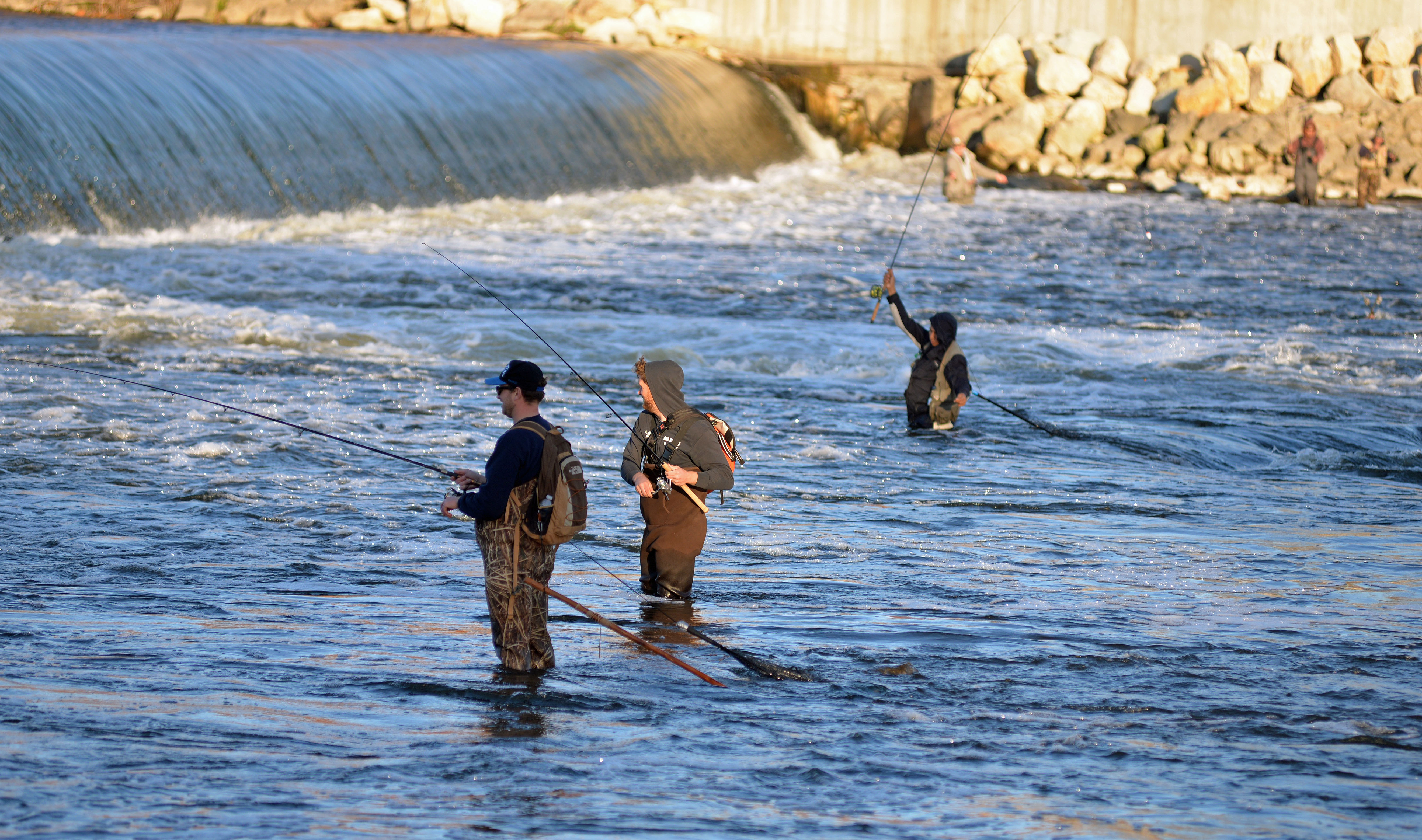
Anglers gather downstream of the Sixth St. Dam where salmon and steelhead congregate when they come upstream. Photo by Howard Meyerson.

Anglers gather downstream of the Sixth St. Dam where salmon and steelhead congregate when they come upstream. Photo by Howard Meyerson.

By Howard Meyerson

As summer winds down and thoughts turn to fall, area sport anglers often turn their attention to the Grand River. September is prime time for salmon runs. The city’s downtown fishery is next to none, drawing anglers from all over Michigan who come looking for an exciting urban fishing experience.

What’s not to love about hooking a 6-pound coho salmon; its orange-red meat is excellent table fare. Then there are some 20-pound chinooks. They’re called King salmon for a reason. Hooking one is guaranteed to be a memorable angling moment.

State fisheries officials say the new coho salmon stocking program for the Grand River should improve the fishery this year. They estimate as many as 10,000 cohos coming upriver in mid to late September. Read more about what’s expected on the city of Grand Rapids’ Experience GR Blog.

Posted in Uncategorized | Tagged , , , , , | 2 Comments

Brook trout study explores life-giving groundwater seeps

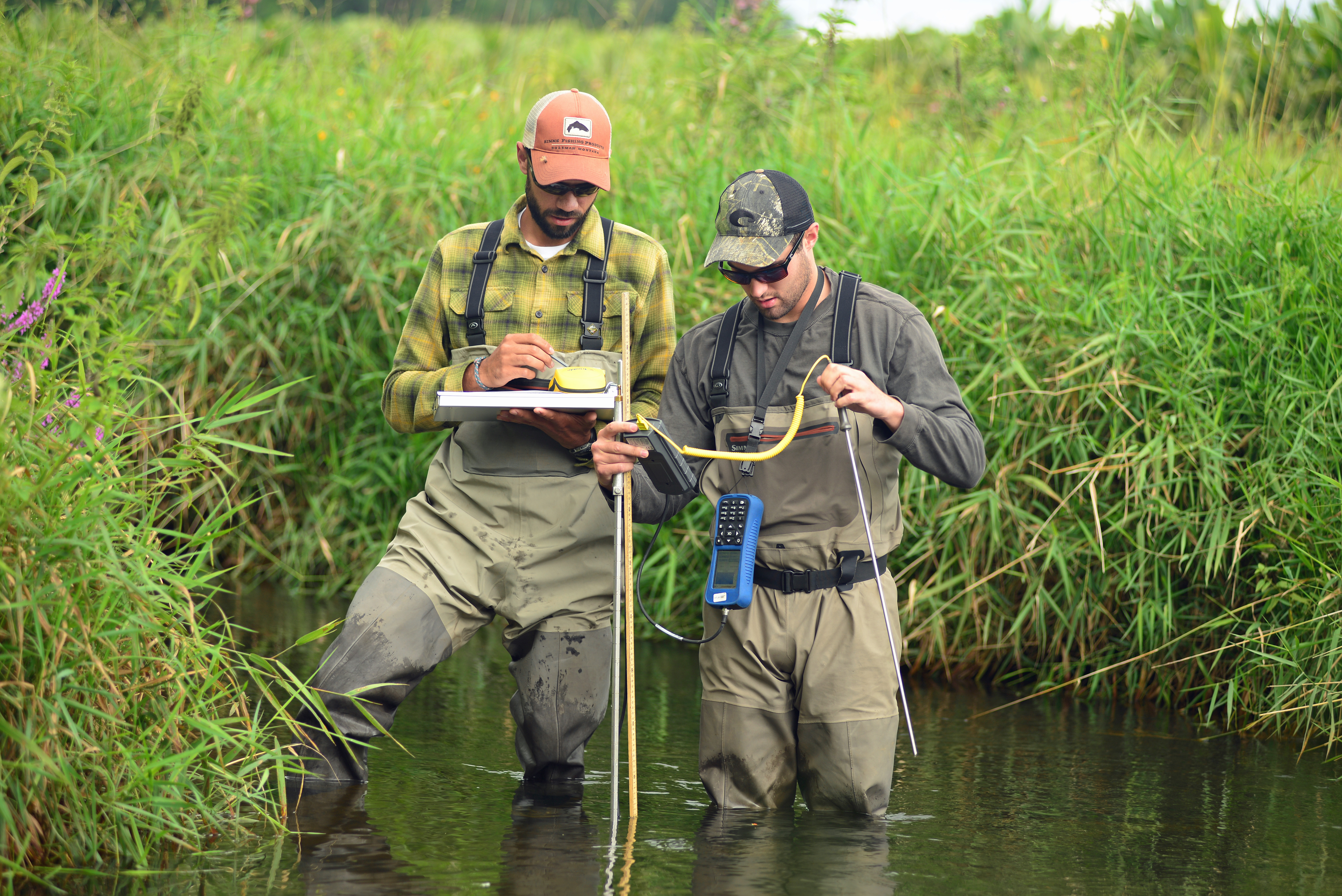
Justin Wegner, left, and Graeme Zaparzynski take ambient water temperature readings at a random spot downstream from where they located a tagged brook trout. Photo by Howard Meyerson.

Justin Wegner, left, and Graeme Zaparzynski take ambient water temperature readings at a random spot downstream from where they located a tagged brook trout. Photo by Howard Meyerson.

By Howard Meyerson

CEDAR SPRINGS — Within minutes of each pulling on a pair of waders, Justin Wegner and Graeme Zaparzynski were focused on a trout — a nice, hidden brookie in the clear, shallow waters of Cedar Creek, a tributary of the Rogue River, a popular West Michigan trout stream.

The Grand Valley State University grad students didn’t have fishing rods or landing nets. They arrived at the streambank loaded with radio-telemetry gear and antennas that would pick up a signal from the tiny transmitter they inserted in the fish’s abdomen in June.

“It’s close, probably under that log,” Zaparzynski noted, pointing the antenna toward the submerged woody debris that lay across the stream. “Its temperature is 13.6 degrees centigrade. It’s running a little cooler today than normal.”

Cooler is good when talking about brook trout. They need cold, fresh water to survive.

The fish being discussed was “No. 7,” one of 10 trout they equipped with transmitters that signal where they are and their internal temperatures. The students are conducting a two-year study to better understand where brook trout go in a stream, why they move and what they eat.

“We want to know whether brook trout are selecting habitat for the structure there or some other factor like groundwater (seeping in) and water temperature,” explained Mark Luttenton, professor of aquatic biology and ecology at GVSU’s Annis Water Resources Institute.

“Do they survive because they find pockets of cold water that allow them to maintain reasonable body temperatures? Several studies show brook trout move to thermal refuges, spots that provide colder water. Our hypothesis is they are finding cold-water seeps, springs near the bottom.” Continue reading

Posted in Uncategorized | Tagged , , , , , , , , , | Leave a comment

Michigan’s Important Bird Areas Flag Conservation Priorities

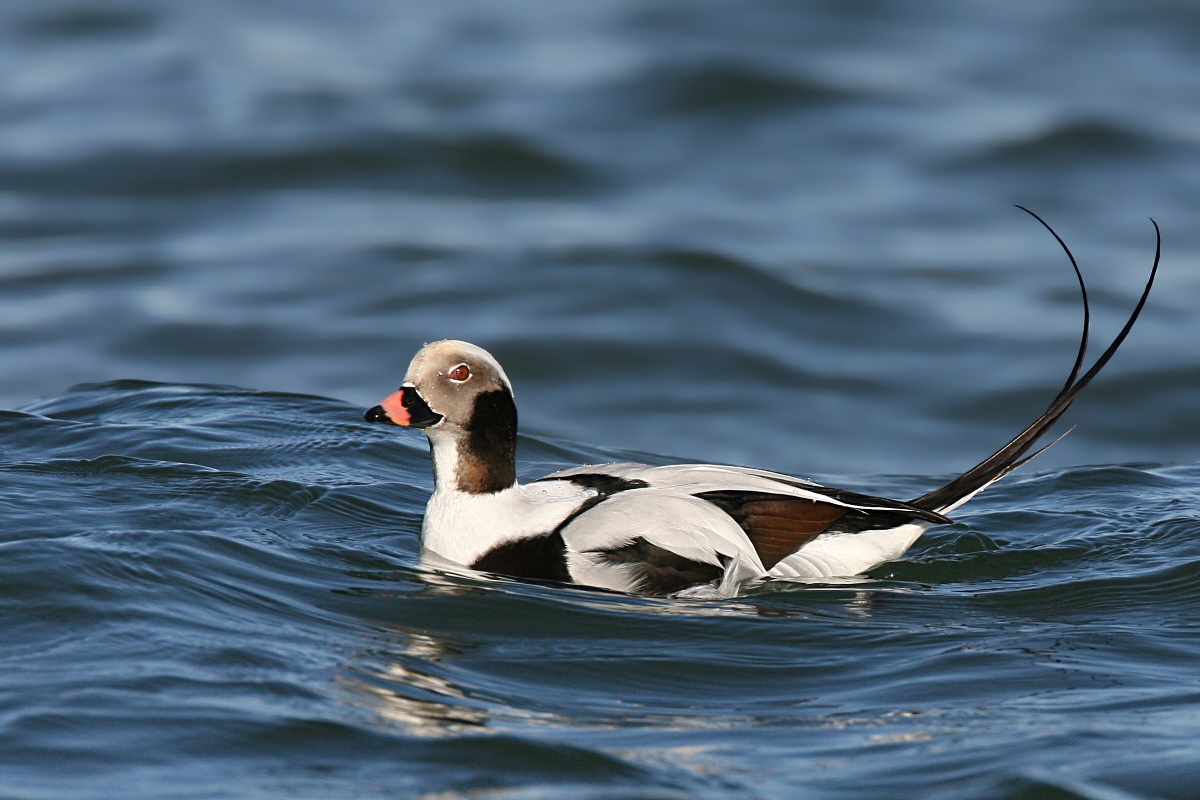
Long-tailed Duck populations are in trouble in some parts of the world. Photo by Wolfgang Wander, Wikimedia Commons.

Long-tailed Duck populations are in trouble in some parts of the world. Photo by Wolfgang Wander, Wikimedia Commons.

By Howard Meyerson

It’s no secret that Lake Michigan waters are important for recreation and tourism. Thousands of summer tourists flock daily to its shoreline to boat, swim, and play. But scientists have recently determined that those crystal-blue waters are also crucially important for Long-tailed Ducks, an attractive, deep-diving waterfowl species. So important, in fact, that in May 2015, a 200-mile stretch of open water, from Allegan County to Benzie County, was designated a Global Important Bird Area.

IBAs, as they are known, can have state, continental, or global significance. The program was developed by BirdLife International, which works with conservation partners all around the world. A technical advisory committee convened by National Audubon Society, which administers the U.S. IBA program, decided the Lake Michigan Long-tailed Duck IBA would become Michigan’s 10th global IBA.

“It’s just unbelievable how many [ducks] are out there,” exclaims Caleb Putnam, Michigan’s IBA coordinator. “There are clouds of them. In spring at Manistee or Benzie there were like 30,000 birds.” Continue reading

Posted in Uncategorized | Tagged , , , , , , , , , | Leave a comment

North Country Trail offers unique hiking opportunity near Grand Rapids

A hiker follows the blue blazes that mark the North Country Trail. Photo by Howard Meyerson

A hiker follows the blue blazes that mark the North Country Trail. Photo by Howard Meyerson

By Howard Meyerson

Grand Rapids is a walker’s paradise, full of parks where an hour or more can be spent outdoors walking. But for those who seek an entire day on the trail, an excellent opportunity is found just 30 minutes from downtown, in nearby Lowell, where the North Country National Scenic Trail passes through town.

The 4,600-mile, seven-state trail is the longest hiking path in America. Head north and you can walk to Lake Sakakawea, in North Dakota. Go south and you can hike to Crown Point, in eastern New York. Lowell is home to the North Country Trail Association (NCTA), the non-profit group that is building the trail, as well as the National Park Service office that administers it.

To read more about a terrific 12-mile hike on the trail, or shorter family hike and where to get free maps, take a look at my most recent story on Experience GR, the city of Grand Rapids blog.

Posted in Uncategorized | Tagged , , , , , , , , , , , | 1 Comment

Artisans Gone Wild: Creative living inspired by canoes

CRv14i3_ copy 300

It’s been my privilege over the years to profile different artisans for publications. All have been exceptional and creative people, from wood carvers and bamboo rod builders to painters, canoe and kayak builders, fly tiers and decoy carvers.

I’ve  enjoyed telling their personal stories and learning of their varied inspirations, the defining moments in their lives that spurs them to push further and give expression to something innate.

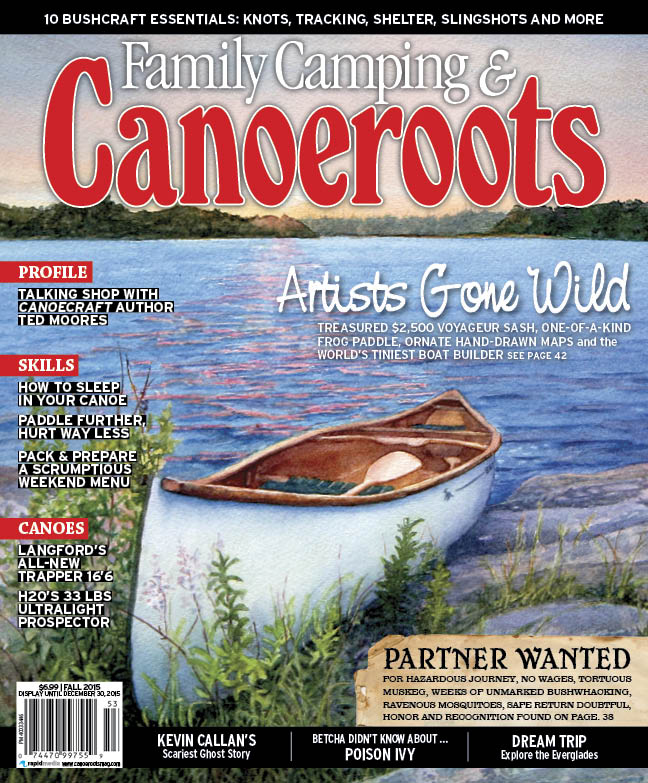
Earlier this year, I was asked to contribute to a feature package in the August 2015 issue of Canoeroots Magazine, published by Rapid Media. It’s called “Artist’s Gone Wild. ”  The assignment involved finding artisans whose work and life had been directly influenced by canoes or canoeing, not kayaks nor stand-up paddle boards.  Just canoes.

It proved a peach of an assignment that combined two areas I really enjoy, art and life in canoes. The feature package includes six short profiles of remarkable artists. They all are worth getting to know.

Three of those follow (my contribution). Enjoy Rob Mullen’s story, an expedition painter who just this week finished at 350 mile canoe trip in Alaska; Chris Pearson’s inspirations for building spectacular tiny, scale model canoes and dioramas; and Kent Lund’s beautiful handcrafted paddles, all inspired by history and sometimes whimsy.

You can find the rest – and more –  on the magazine’s website.  The digital version of the issue requires providing your email. It is also on sale at magazine stands.

Happy Paddling!

Continue reading

Posted in Uncategorized | Tagged , , , , , , , , , | Leave a comment

Looking Good: Waterfowl seasons quickly approaching

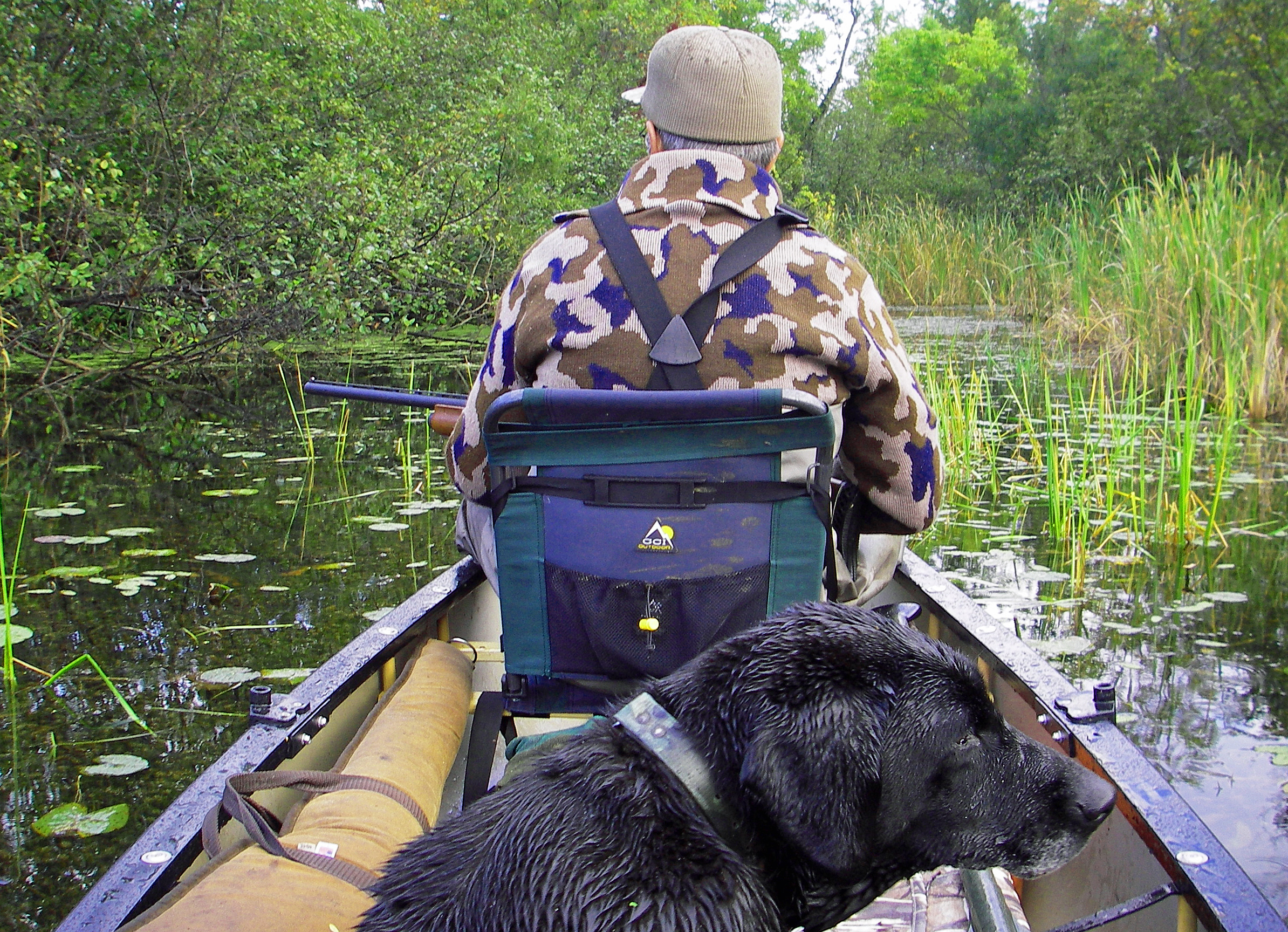
Duck hunters looking for mallards and wood ducks will often hunt the small wooded waters. Photo: Howard Meyerson

Duck hunters looking for mallards and wood ducks will often hunt the small wooded waters. Photo: Howard Meyerson

By Howard Meyerson

Michigan’s waterfowl hunting seasons are rapidly approaching and conditions, overall, look good for hunters.

The statewide early goose season opens Tuesday and so does Michigan’s seven-day experimental early teal season.

“Last year was our first teal season,” noted Barb Avers, the Michigan Department of Natural Resources waterfowl program specialist. “It seemed very good, based on comments from hunters who were happy to have the opportunity to hunt them.”

Blue-winged teal are early migrants. They typically fly south before the regular duck season openers in late September and early October.

The 2015 early teal season is the second in a three-year trial for Michigan, Wisconsin and Iowa hunters. The experiment was approved by the U.S. Fish and Wildlife Service after each state sought to have early seasons. Continue reading

Posted in Uncategorized | Tagged , , , , , , , , | Leave a comment

West Michigan herbalist Lisa Rose authors book about Midwest foraging

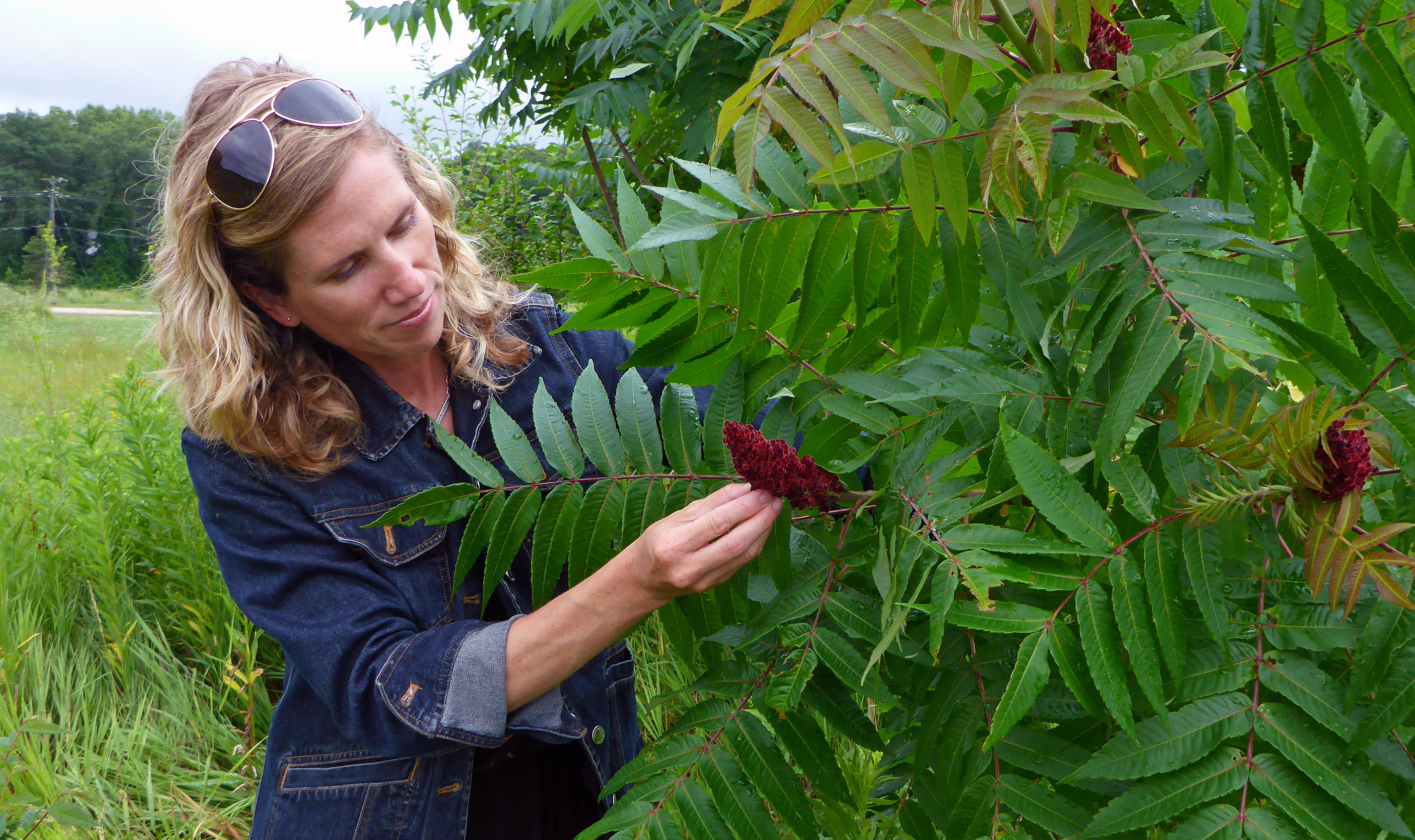
Herbalist and wild food forager, Lisa Rose stops to sample sumac berries. Photo: Howard Meyerson

Herbalist and wild food forager, Lisa Rose stops to sample sumac berries. Photo: Howard Meyerson

By Howard Meyerson

Lisa Rose was smiling when she handed me a leaf and asked if I wanted to taste it, humorously questioning whether I was brave enough to eat it. It was long and green with serrated edges, plucked off a nettle — a stinging nettle as some call them — a plant I grudgingly know.

“Roll them (so the hairs are inside) and it won’t sting you,” Rose advised, showing me how and popping one in her mouth.

“The nutrient value in these — oh my gosh,” Rose gushed with characteristic enthusiasm. “It’s high in plant protein, about 20 grams per serving and it’s delicious.”

Skeptically, I followed suit, still uncertain about chewing it up, anticipating a flash of pain. But its flavor was distinctive, even tasty — something akin to spinach.
It went down without incident, a perfect coda for our walk through a local park where we sampled a variety of plants from chicory and elderberry to sumac and monarda fistulosa, a plant from the mint family similar to oregano.

It is also known as bee balm.

Rose is a professional herbalist, writer, teacher and wild food forager. Her new book, “Midwest Foraging; 115 wild and flavorful edibles from burdock to wild

“Midwest Foraging; 115 wild and flavorful edibles from burdock to wild peach,” was published this summer.

peach,” is a must-have for anyone who likes to forage. It was published this summer by Timber Press and is a remarkable piece of work, offering beautiful photos and hundreds of useful tips about when, how and where to harvest edible plants.

It is available online and from a variety of booksellers.

As we walked through the park, we chatted about the ethics of picking wild edibles. They play an increasing role in the local-food movement and are offered at chic dining establishments.

“Gathering nuts and parts (of plants) is one thing; in national parks, you can gather parts, but physically removing the plant is another thing,” said Rose, who resides in Ada with her two children and Rosie, her golden retriever. Continue reading

Posted in Uncategorized | 2 Comments