U.S. Forest Service employee under fire for photographing wounded gray wolf before killing it

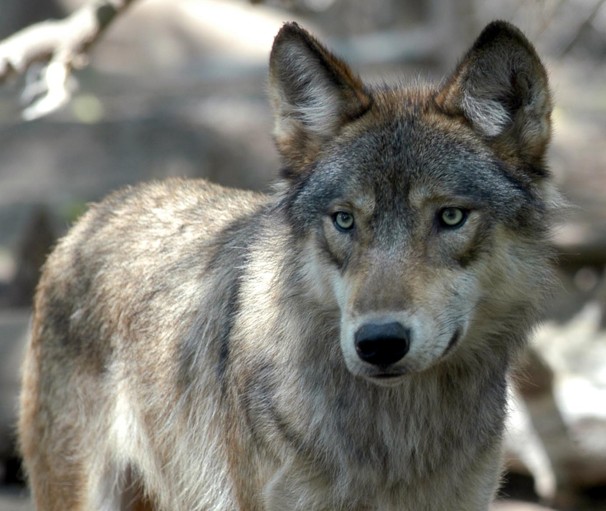
A National Forest Service employee, Josh Bransford, is under fire for taking a photograph of himself with a wolf that was caught in a leg trap, according to the Washington Post. The incident occurred during Idaho’s first-ever wolf trapping season. The controversial  trapping photos  have gone viral.

The wolf appears to be a huge animal.

“According to the conservation officers he did nothing illegal, but we would have preferred that he had dispatched it himself before photographing himself with it.”

—Mike Keckler, Idaho Fish and Game

What you think? Was it in bad taste or just how things are, a person caught in the cross-fire of society’s changing attitudes about wolves: once feared, then revered, now reviled by some and worshiped by others?

Posted in Uncategorized | Tagged , | Leave a comment

Fees Reduced at Rustic State Forest Campgrounds

By Howard Meyerson

LANSING – It’ll be cheaper from now on to camp at Michigan’s state forest campgrounds; two bucks less, to be exact. Michigan Department of Natural Resources director, Rodney Stokes today reduced the overnight camping fee from $15 to $13 at most sites.

State officials say the reduction was to bring the fee for those remote forest sites in line with similar sites at other DNR campgrounds.

“We want to lower the fee so they are more like the rustic campsites at state parks,” said Ron Olson, the chief of Michigan State Parks. Olson was addressing a joint meeting of the State Park Citizen’s Advisory Committee and Gov. Rick Snyder’s appointed Blue Ribbon Panel on State Parks. The group met during the monthly Natural Resources Commission meeting.

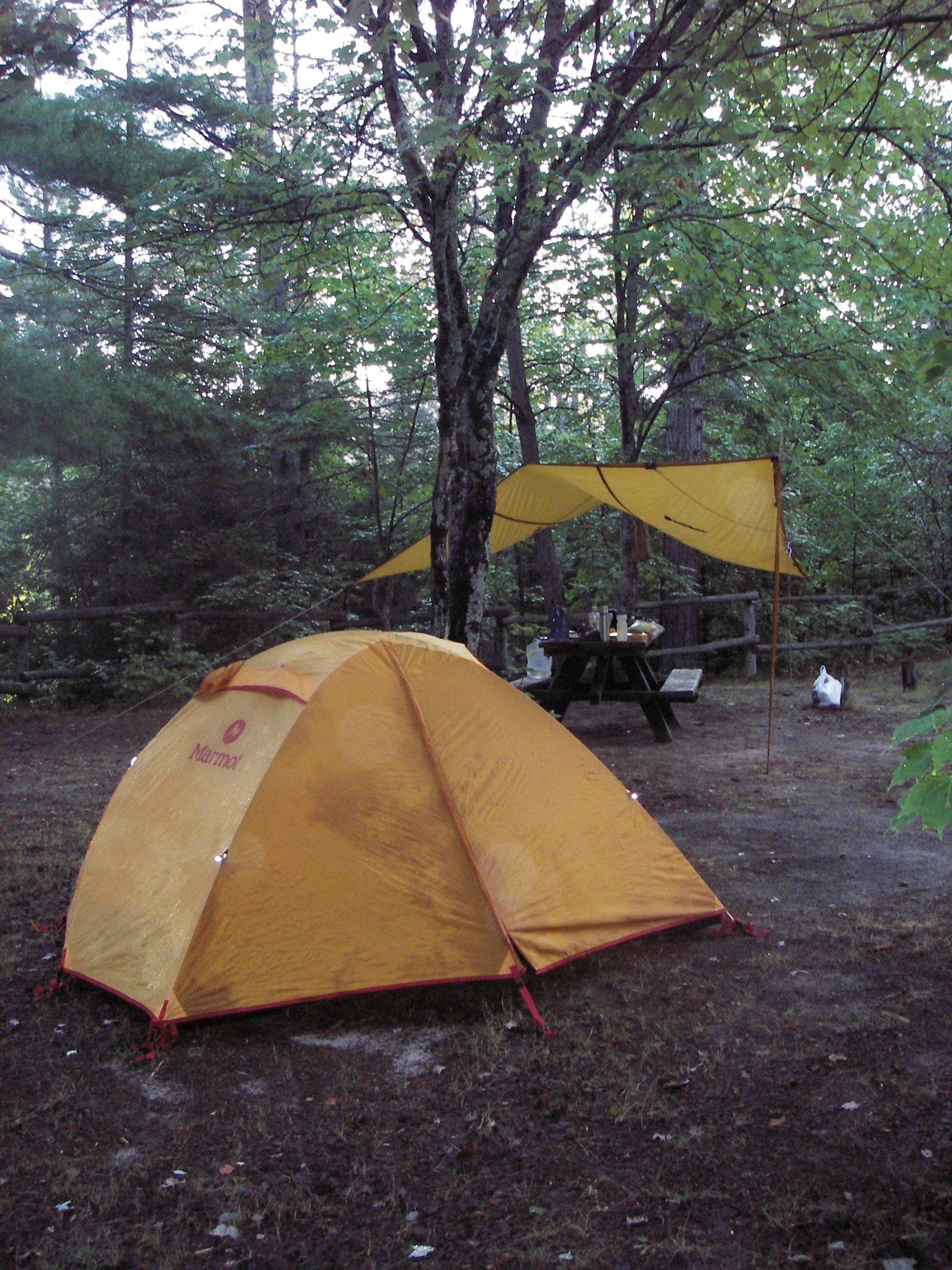
Michigan’s DNR operates 135 rustic state forest campgrounds. They are simple affairs in remote locations, just a tent pad, fire ring, picnic table, outhouse and pump for water. Most are located either on streams, lakes or trails.

Olson said they have fewer amenities than state parks where campers have hot and cold running water, toilets and showers along with staffing. Continue reading

Posted in Uncategorized | Tagged , , , , | 4 Comments

Michigan planning to shift how coho salmon are stocked along Grand River

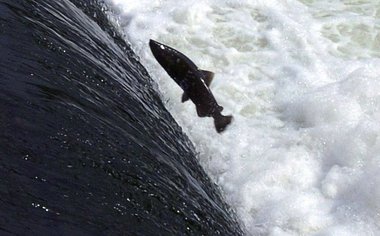
Jumping the dam at 4th St. on the Grand River

By Howard Meyerson

GRAND RAPIDS, MI — Salmon fishing on the Grand River could get a boost next year. That’s when state fish managers propose to move ahead with a plan to reconfigure how they stock coho salmon there. Fewer will go in at Lansing, and more will be stocked downstream at Lyons and the Rogue River.

State officials say the approach will reduce the number that die from hydroelectric turbines and predators. Anglers will see a better return, and more fish may end up in their coolers.

“My reaction (to the proposed plan) is quite positive, said Dennis Eade, executive director of the Michigan Salmon and Steelhead Anglers Association. “I think we will have more coho coming up the Grand and getting further upstream. We may end up seeing a better fishery as a result.”

That’s the intent, according to state officials, who say young, lake-bound coho will have a better chance of surviving if they do not have to negotiate hydroelectric turbines and additional miles of predator-infested waters. The DNR’s plan will be announced this spring and go before the Natural Resources Commission.

Less than 1 percent of stocked coho salmon now make their journey back upstream to spawn. State officials analyzed salmon passage at Webber dam and found 0.09 percent returned from Lake Michigan in 2001, while 0.06 and 0.07 percent returned in 2002 and 2008 respectively.

That’s not a lot, they say, given that the Grand River gets the second-largest coho-stocking effort in the state, at a cost of $626,850. Only the Platte River gets more, because it is the brood-stock river for Michigan’s coho program.

“If we can move the bulk of the fish downstream of the turbines, that will reduce mortality of these very expensive fish,” said Scott Hanshue, the DNR’s Grand River manager. “We will also reduce predation, because those fish pass through two impoundments getting downstream to Webber Dam. Everything from bass to pike to flatheads, walleye and channel cats will eat them. There are a lot of predators.”

Yearling coho are preferred for the Grand, according to Hanshue. They are larger and heartier than smaller, fall fingerlings. However, yearlings require more time in the hatchery and are more expensive. That makes each a substantial investment.

“If you are losing so many at $1.26 each, that’s not a good use of the resource,” Eade said. “A lot of mortality has to do with dams. Planting them below Lyons is a much wiser choice in terms of return.”

The new stocking strategy calls for only 50,000 to go in at Lansing, where 295,000 are currently stocked. The rest (240,000) would be stocked in the vicinity of Lyons, where only 20,000 are stocked now. Another 25,000 would be stocked on the Rogue River. State officials say the improved survival could result in a stronger Lansing salmon fishery despite the cuts.

“I think it’s a fantastic idea,” said Bob Strek, a Grand Rapids angler and member of the Grand Rapids chapter of the steelheaders. “The Grand Rapids run is usually over quickly. The Rogue River plant isn’t significant to me, but we have members that fish the Rogue.”

Upstream sentiment is less enthusiastic. Jim Bedford, a longtime Grand River angler from Lansing, said the plan is premature. He said it doesn’t take many salmon to entertain Lansing anglers. He is in favor of ideas that improve fishing and save the state money.

However, more should be done to eliminate other factors that affect coho survival, he said. Structural issues at Webber Dam that have since been fixed once trapped returning fish, he said. Other issues remain at Portland. Bedford also suggested using volunteers to monitor the downstream smolt migration. Consumers Energy shuts its Webber Dam turbines down for a period in April to allow young fish to pass downstream, but the timing isn’t always on the mark, Bedford said.

“I don’t think they (the DNR) have tried hard to improve smolt survival. Maybe we need a two-pronged approach — to reduce stocking and improve survival,” Bedford said.

Anna Werner has a different view. She owns Grand River Bait and Tackle in Lansing and supplies local anglers with their tackle. She called the Lansing salmon run unpredictable. She doesn’t rely on it for income.

“A lot of years, it’s not really worth bothering with fishing for them,” Werner said. ‘This past fall was one of the better ones. We saw good business from it. But the fall before was virtually nothing. We were prepared for salmon, but we can’t really count on it.

“As a business person, I’d rather focus on pike and bass. Common carp is a big thing for us. As a bait-shop owner I’d prefer to concentrate on that. It’s more stable.”

© 2012 MLive.com. All rights reserved.


Posted in Uncategorized | Tagged , , , , , | Leave a comment

State Wildlife Budget is Tight, Jobs Not Getting Done

By Howard Meyerson

LANSING – A $28.8 million wildlife management budget may seem a lot to some, but Michigan wildlife officials say hunters and other wildlife enthusiasts can expect to see continuing program cuts.

“The problems we’re facing don’t show up in the budget. They show up in the difference between the work plans we develop to lay out where we want to be and what we can actually afford,” said Russ Mason, Michigan’s wildlife chief with the Michigan Department of Natural Resources.

Mason recently reviewed the fiscal year 2012 wildlife division budget and the available funding for wildlife programs. The presentation was given to the Natural Resources Commission to bring new commissioners up to speed.

Declining license sales and hunting participation is having an affect, according to Mason. Wildlife programs are largely funded by hunting license sales and federal excise taxes on hunting gear and ammunition, along with grants, donations and other federal funds.

State general fund tax revenues make up only 9 percent of the DNR’s budget. Five percent is returned to local units of government as payment in lieu of taxes for state holdings. Four percent remains with the DNR, according to Mason. Wildlife programs receive $1.7 million in general fund revenues which is spent largely to monitor tuberculosis in the deer herd and high-fence hunting and breeding operations.

“We’re now operating below minimum standard,” Mason said.People are going to start noticing it. Things aren’t going to happen. We aren’t going to be doing the work we have done in the past.” Continue reading

Posted in Uncategorized | Tagged , , , | Leave a comment

Going Light: MSR tarp tent review

Finding the right, lightweight shelter can be challenging. It should be light, easy to pitch, sturdy enough for some nasty conditions and ventilate well. It ought not to break the bank either.

Hikers increasingly are turning to tarps as a way to cut weight and bulk in the pack.  They are versatile and can be pitched in a number of ways.

Me? Well, I  like my side walls and a connected floor. I still remember waking up as a young camper with a blue racer snake slithering through the tent one night.

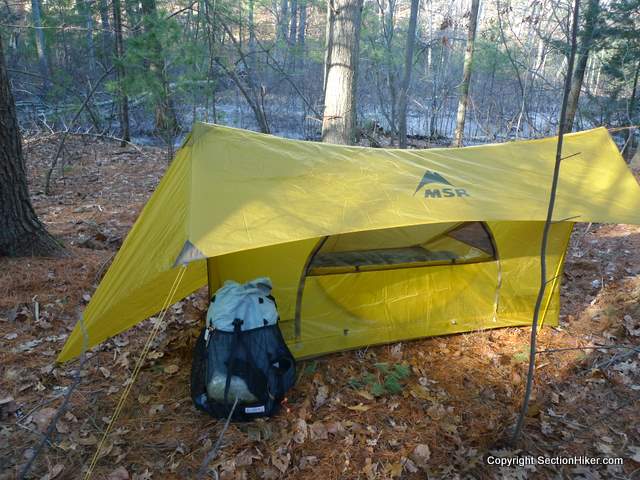
Still, there is a lot to be said for a shaving pounds. The MSR Fast Stash Tarp Shelter is one of the lightweight offerings on the market today. Phil Werner reviews it at his Section Hiker Blog. Check it out: Section Hiker

Posted in Uncategorized | Tagged , , , | 1 Comment

Public Review Sought on Michigan’s Northern Pike Regulations

The Michigan DNR is moving forward with a series of regulation changes for pike and muskie. State fish managers are looking for feedback from anglers about the new rules. Here is what is being put forward for northern pike. The link below goes to the DNR page about the rules with links to more information and an optional survey of angler’s preferences.

1)       Minimum Size Limit of 24 inches with a possession limit of two (2) fish.

2)       No Minimum Size Limit with a possession limit of five (5) fish where only one (1) may be greater than 24 inches.

3)       Protected Slot Limit between 24 and 34 inches and a possession limit of two (2) fish.

Read more: Public Review Sought on Michigan’s Northern Pike Regulations.

Posted in Uncategorized | Tagged , , | Leave a comment

Big Brookies

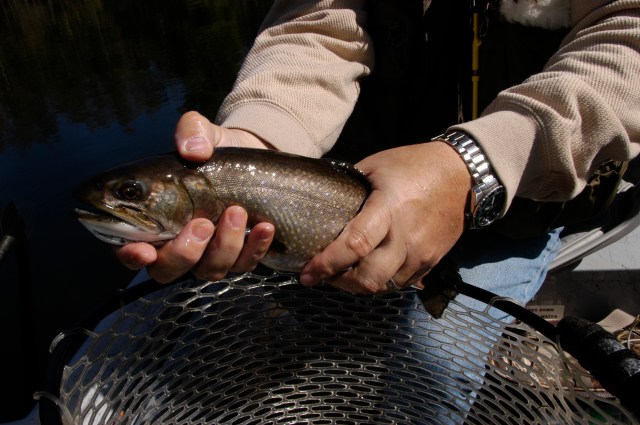
Big Brookies

Sometimes you just have a good day on the water.

copyright (c) 2012 Howard Meyerson

Posted in Uncategorized | Tagged , , , | Leave a comment

Experts surprised by No. 1 deer predator in Michigan’s western Upper Peninsula

ESCANABA — Michigan hunters have been known to say that state’s growing wolf population is bad for deer. Their lament is about the diminished Upper Peninsula whitetail population. It’s not unusual to hear someone claim: “Wolf are eating all the deer.”

But what researchers found this past winter, the third year of a western U.P. deer mortality study, is that coyotes were the No. 1 predator followed by bobcats. Wolves came in fourth after a three-way tie among hunters, unknown predators and undetermined causes.

“I was somewhat surprised to see coyotes play as large a role in fawn predation as they did…,” said Jerry Belant, an associate professor of Wildlife Ecology and Management at Mississippi State University. Belant oversees student researchers who are working in partnership with the Michigan Department of Natural Resources. He said coyotes were more prevalent than expected. Read more: Experts surprised

Posted in Uncategorized | Tagged , , , | Leave a comment

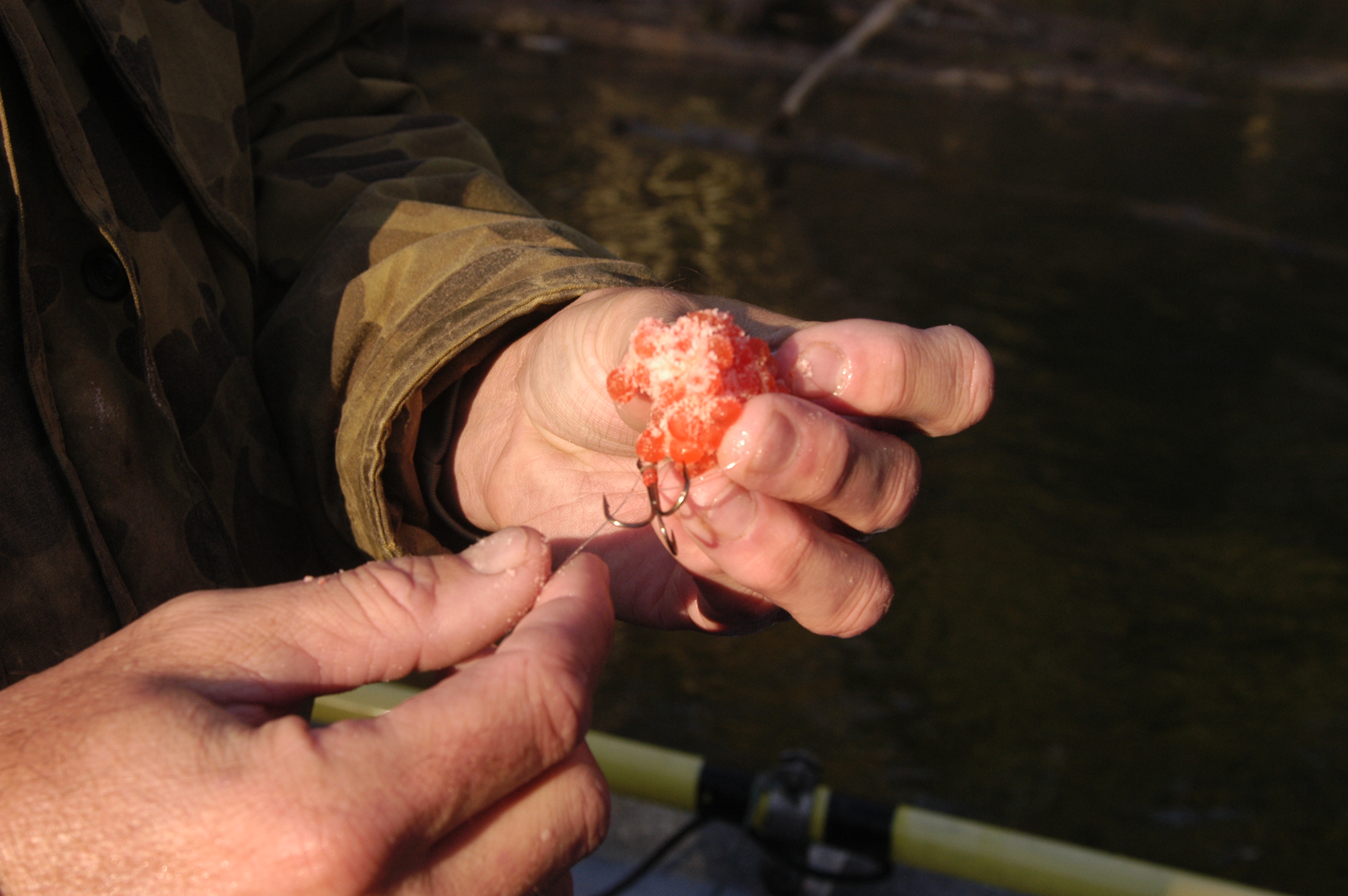
Chumming with spawn: Michigan anglers celebrate as ‘stupid’ ban lifts

Anglers thought it silly that fishing with loose eggs had been banned when it was still legal to fish with skeins of eggs. Photo by Howard Meyerson

By Howard Meyerson

GRAND RAPIDS — Fishing guide Steve Hutchins is pleased that anglers once again can fish with loose salmon or steelhead eggs.

State officials banned the practice in 2007 to safeguard against viral hemorrhagic septicemia, a deadly fish disease. The ban was rescinded last fall and the practice becomes legal again Sunday, April 1, the first day of the 2012 fishing license season.

“I’m pleased. It’s the right thing to do,” said Hutchins, of Cedar Springs, who opposed the 2007 ban.

“You are going to tell me throwing a handful of eggs does potential harm while 5,000 salmon are upstream dropping millions of eggs into the water?” Hutchins said.

State officials say they heard from a lot of angry bait fishermen and decided to drop the rule from the books. VHS did not show up the way they feared. The disease, however, was found in lakes Huron and St. Clair, the St Clair and Detroit Rivers, Lake Erie and its tributaries, Budd Lake in Claire County and Baseline Lake in Washtenaw County.

“There have been very low occurrences of VHS,” said Jim Dexter, acting fisheries chief for the DNR. “VHS is still out there, and we are still testing at hundreds of locations. We are not seeing it where we thought we would, and decided the restriction wasn’t necessary.”

The 2007 rule did not ban fishing with spawn. It required that eggs be attached to a hook rather than loosely tossed into a fishing hole, a practice called “chumming.”

Fish eggs were singled out in an effort to reduce the potential of disease spread, Dexter said. But, John Hojnacki, an angler from Croton, called the ban “stupid” because anglers were still allowed to fish with a skein of eggs attached to a hook.

“You could use a skein as big as a softball, but scraping three eggs off was against the law,” Hojnacki said. “That was the stupidest law I’ve ever seen.”

© 2012 MLive.com. All rights reserved.
Posted in Uncategorized | Tagged , , , | Leave a comment

The Grayling Effect

One doesn’t get a chance to see Grayling any more in Michigan, at least not out in the wild. The legendary fish was extirpated a long time ago. But today, fortunately a sunny day, I have the unusual opportunity to spend a day fishing for them. Where? Can’t say yet. But it should be fun.

Posted in Uncategorized | Leave a comment