
Howard Meyerson
After more than 30 years in the outdoor writing business, you would think I'd know better.
Mixed Blessing: Wild Lake Michigan salmon challenge fish managers
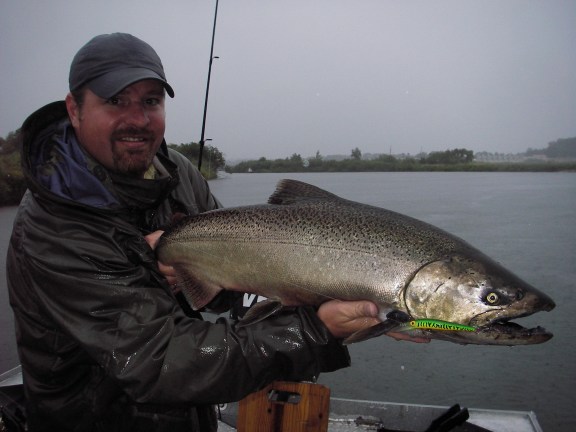
Jay Koehler holds up a nice rainy day chinook salmon caught on the Manistee River with a Thunderstick. Photo by Howard Meyerson
By Howard Meyerson
PENTWATER – As Lake Michigan states prepare to cut Chinook salmon stocking by 50 percent on Lake Michigan, researchers are looking closely at the growing number of wild fish that swim there. Determining their abundance will prove increasingly important to Great Lakes fish managers.
Chinook salmon now reproduce naturally in Michigan shoreline streams from Charlevoix south to the Muskegon River. Those naturalized populations add substantially to the Lake Michigan fishery, according to a Michigan Department of Natural Resource study that found wild fish made up 63 percent of the 2010 Chinook salmon year class in the lake, a total of more than 5 million wild smolts.
“We don’t know exactly where they come from, or how many of them come from Canada, but we thought the level of natural reproduction would be more variable. The lack of variability has been a surprise,” said Randy Clarmunt, with the Michigan Department of Natural Resources Charlevoix Fisheries Station.
Clarmunt recently addressed the Ludington Charter Boat Association at an annual Michigan Sea Grant workshop. He described the findings of a 2006 to 2010 study that examined more than 5,000 Chinook salmon collected from anglers fishing in tournaments all over Lake Michigan.
The study showed 53 to 56 percent of the one-year-old Chinooks caught between 2006 and 2009 were wild. Wild two-year-olds made up 62 to 69 percent of the catch while three-year-olds made up 61 to 66 percent of the catch.
“If natural reproduction were to jump to 90 percent we would have 15 to 20 million wild smolts in the lake and that would devastate the prey fish community within a year.”
–Randy Clarmunt, MDNR Fisheries
Looking Good: State forest campgrounds to get facelift
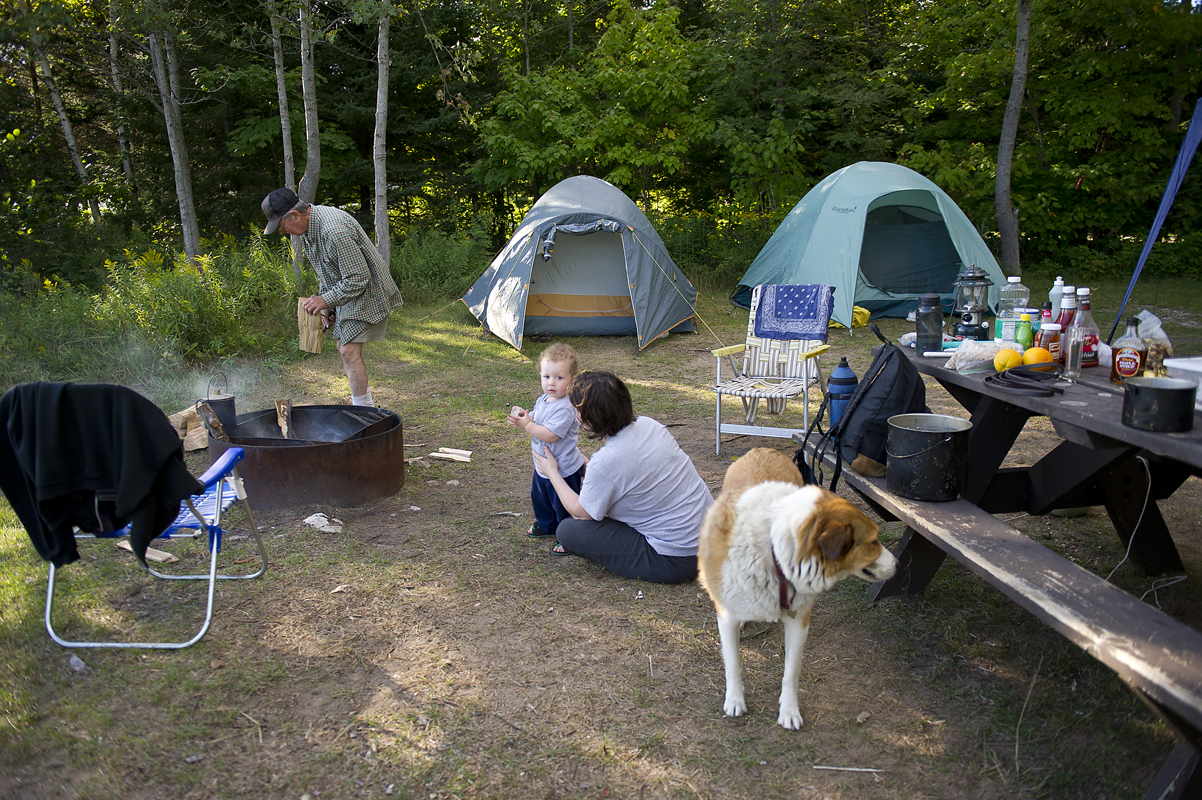
Campers enjoy time at Hog Island State Forest Campground. Photo by: Dave Kenyon, Michigan DNR.
By Howard Meyerson
Michigan’s state forest campgrounds will get the start of a facelift in 2013. There are changes ahead, not the least of which are better outhouses, fire rings and picnic tables at campgrounds most in need.
“We’re going take things from state parks that still have some life and move them to state forest campgrounds,” said Anna Sylvester, northern field operations chief for the Michigan Department of Natural Resources Parks and Recreation division. “It may be a little like going to a second-hand store, but it will be a huge improvement.”
The hand-me-downs will save money in the short-run, while bettering the rustic campgrounds, Sylvester said. The replacement pieces would otherwise be discarded as various state parks upgrade to meet Americans with Disabilities Act requirements.
The rustic camping program was merged with the state park program in spring 2012. It was moved out the agency’s Forest Resources division where it had languished for years due to a lack of funding. State parks staffers say their first season of operation, in cooperation with FRD staffers, provided insights on ways to improve the facilities.
“We are seeing things start to turn around,” said Tim Schreiner, manager for Traverse City State Park and the man who coordinated the initial transition. “We had a number of customers make positive comments about the things they saw.” Continue reading
Captain Denny Grinold Honored by Michigan Steelheaders
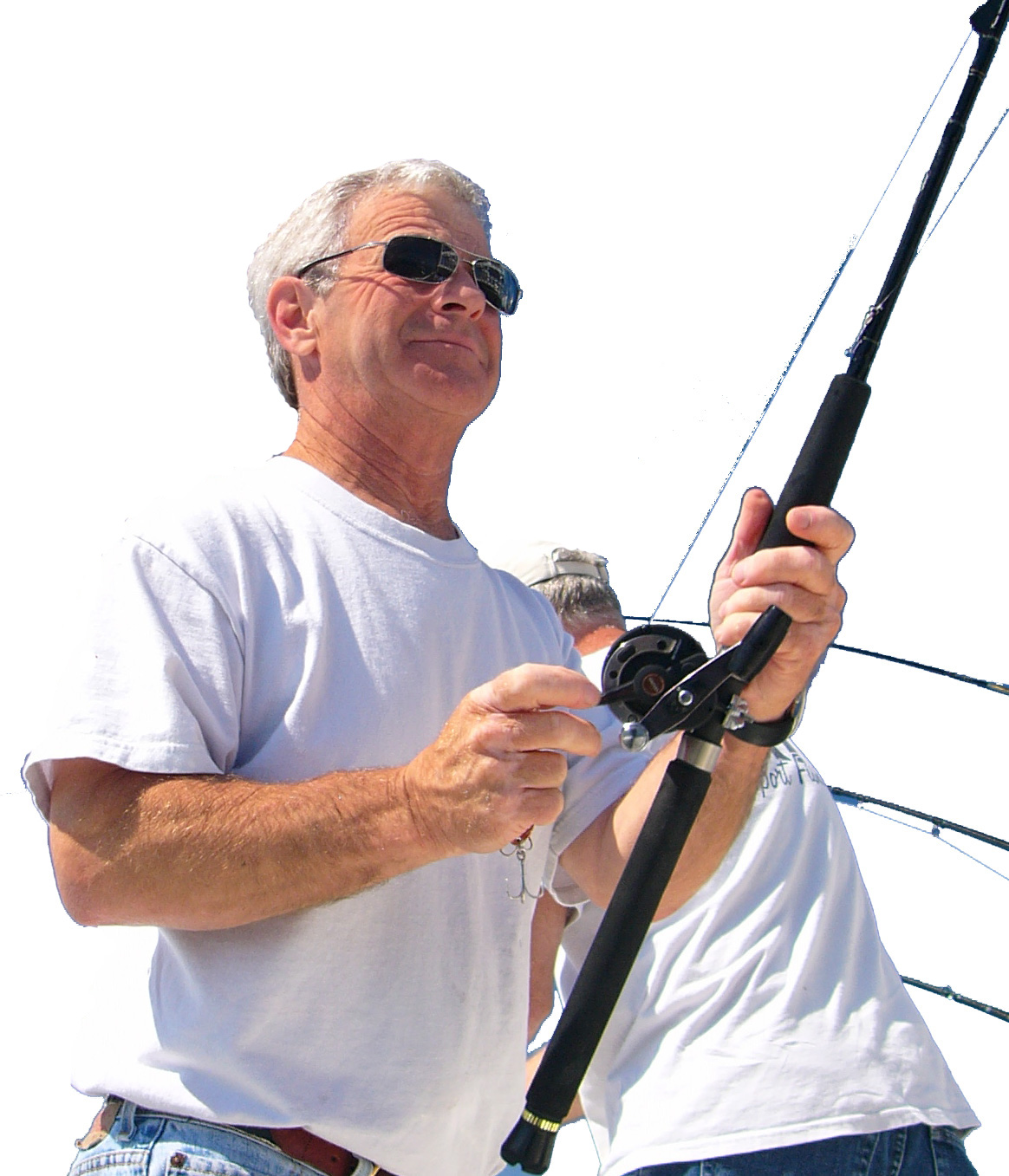
Captain Denny Grinold was given the Howard Tanner award for his contributions to the Lake Michigan fishery. Courtesy photo.
By Howard Meyerson
LANSING – Denny Grinold’s resume reads like the Who’s Who of Great Lakes fisheries management. Outdoor Life Magazine included him in a 2010 feature about the 20 best anglers on the planet. Even the Great Lakes Fisheries Commission has bestowed honors on him for his leadership.
But it didn’t start that way for the 30 year veteran Lake Michigan charter fishing captain out of Grand Haven, who operates a 36 foot Bertram called Old Grin. Grinold, now 70, began fishing with his dad and brothers as a boy, hitting the little creeks around the family’s DeWitt home.
Fishing, he says, continues to be “fun.” His customers may be newcomers, old hands, or even the Michigan Governor.
“It’s all fun,” said Grinold, who lives in Lansing with his wife Jeanne. “It’s fun to introduce people to one of the most precious resources on the planet, the Great Lakes fishery, and take them out show them a good time.”
Grinold was honored by the Michigan Salmon and Steelhead Fisherman’s Association in January. The group presented him with its Dr. Howard Tanner Award, named after the man behind Great Lakes salmon. It is presented only to individuals who make substantial contributions to the Great Lakes anadromous fishery. Continue reading
Fly-tied flicks: 2013 Fly Fishing Film Tour nets six stops in Michigan
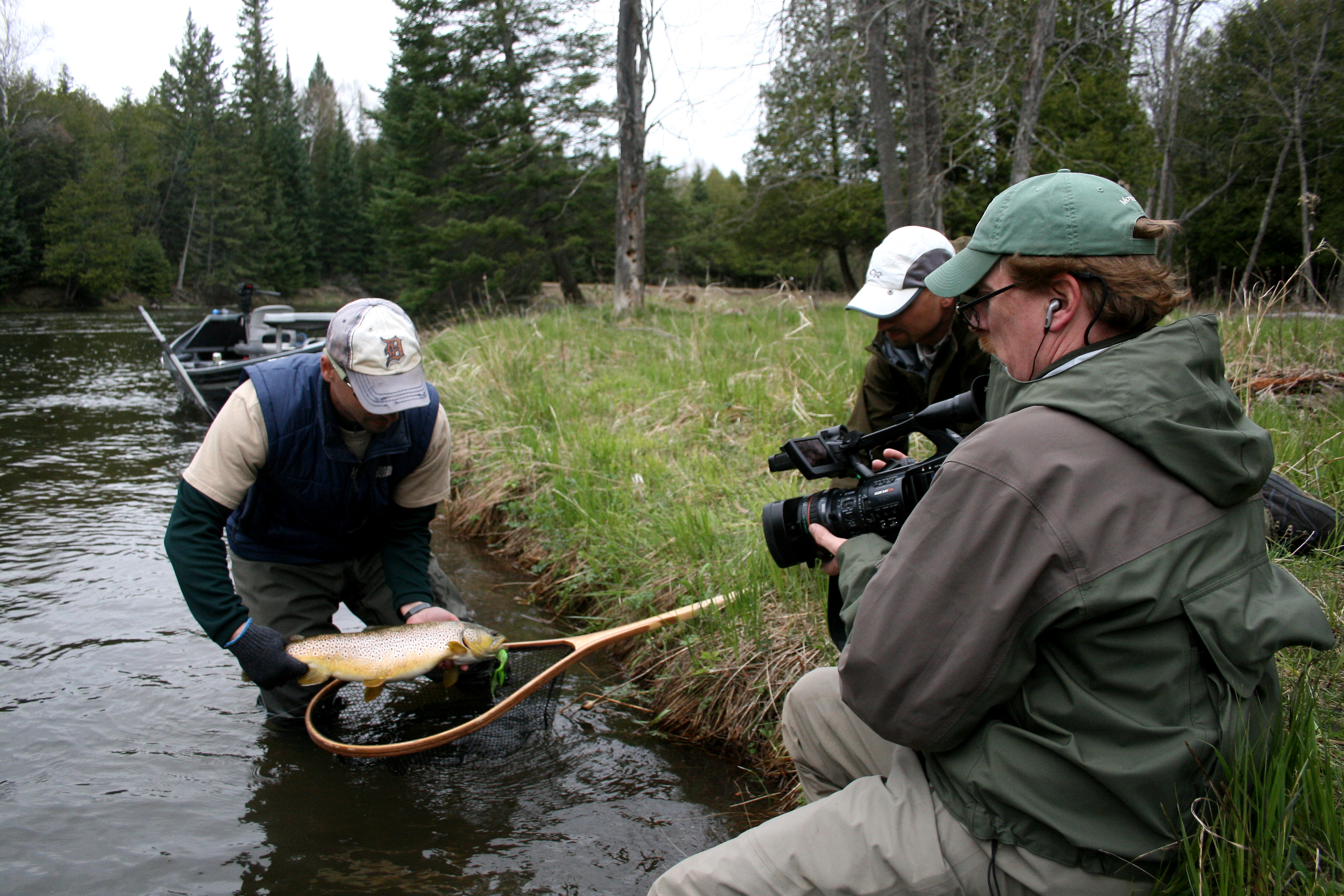
Film-maker Robert Thompson shoots a segment along the lower AuSable River for “The Brothers Brown.” Courtesy photo.
By Howard Meyerson
One of my favorite annual winter events, the 2013 Fly Fishing Film Tour, is about to land in Grand Rapids at the Wealthy Theatre. The 7 p.m. Thursday, Feb. 7 showing kicks off a six-stop Michigan tour that includes Ann Arbor on Feb. 22 at the historic Michigan Theater.
It wasn’t that many years ago that Grand Rapids was the only Michigan stop for this Boulder, Colo.-based film fest for fly fishers. But Doug Powell, co-owner of the festival, said the tour buzz has been growing. The footage keeps getting better and more diverse. The festival is playing in 150 venues nationwide this year, 40 more than last year.
“We do have more showings in Michigan this year,” said Powell in a phone interview from his Boulder office. “Fly fishing is really picking up in the Midwest, not just in Michigan.
“What I’ve noticed the last couple of years is we are seeing great films from the Midwest. Everyone used to send us films about western trout or bonefish and tarpon, but now we’re getting films about smallmouth bass in Wisconsin or fishing musky on a fly.
“It’s nice to see. It’s not just Belize and the Bahamas. People are making great films that are focused on Midwestern areas.”
No doubt. One of my favorites this year is “The Brothers Brown,” shot on the trophy waters of the AuSable River below Mio. The piece was crafted by the Chicago-based filmmaker Robert Thompson, whose film “Musky Country; Zero to Hero” broke new ground with wide acclaim in 2011, providing an in-depth look at two Wisconsin anglers who were obsessed with landing a big musky on the fly. Continue reading
State forest ski trails to be groomed; but will there be snow?
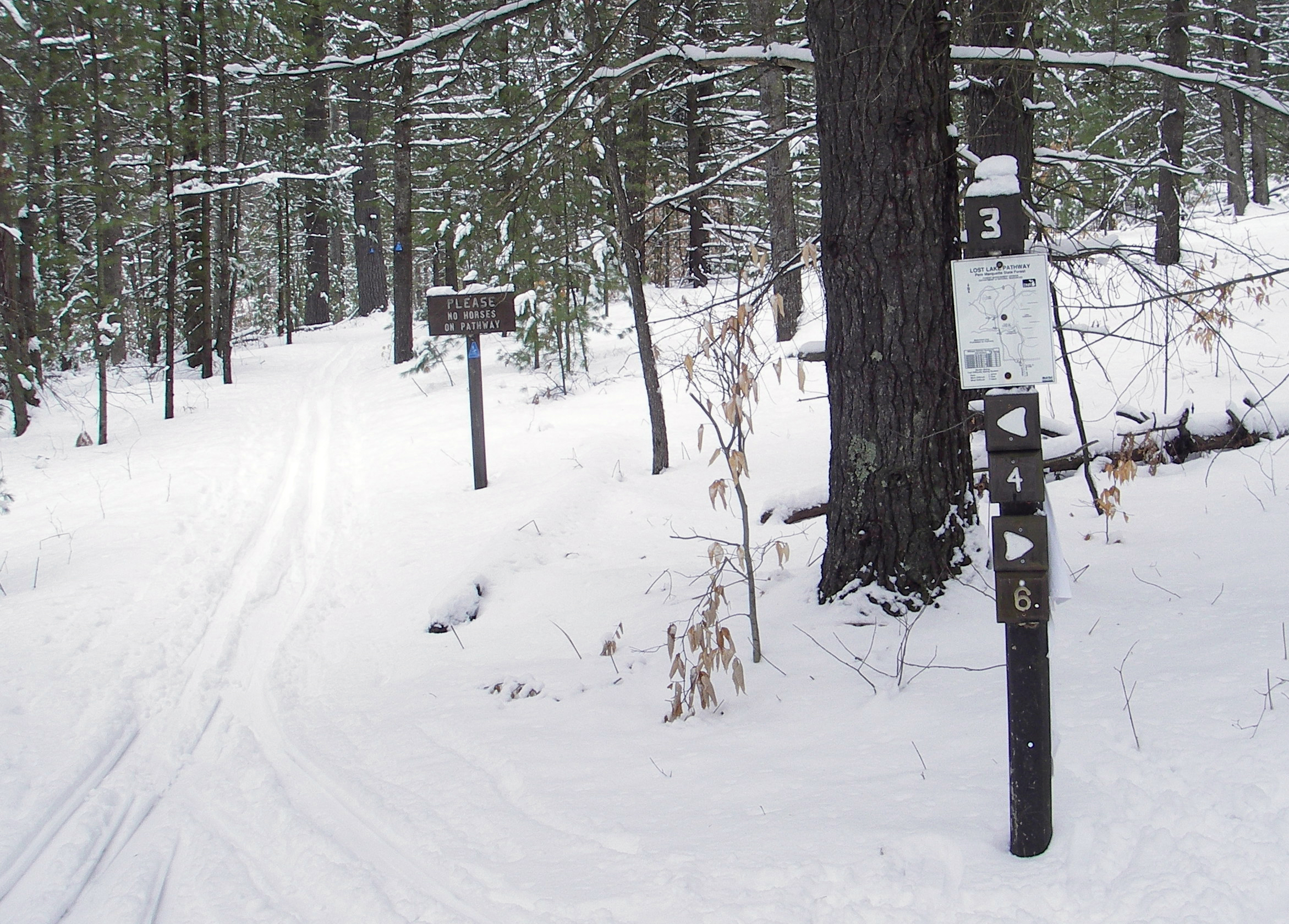
Lost Lake Pathway will be groomed as there is snow this winter. Photo by Howard Meyerson
By Howard Meyerson
As the first dusting of snow hit southern Michigan over the holidays, I naturally gravitated down to my gear room where I thought to give things the once over. I was full of excited anticipation, much like a kid.
Snowshoes: Check.
Cross-country skis: Check.
Poles: Check.
Boots: Check.
Day pack: Check.
‘Alright. I am ready,’ I thought to myself. And then I waited expectantly.
And waited.
And waited.
In the weeks that followed, I waited some more. Two winter outings came and went. Regular hiking boots were all that was needed. Even gaiters were unnecessary.
Then the warming trend arrived: rains and 50-plus degrees.
Rain jacket: Check.
Rain pants: Check.
“Who still thinks the climate isn’t changing,” I snorted aloud to no one in particular, one evening a week ago, while driving home in the rain after seeing the film “Chasing Ice,” a terrific documentary about glaciers melting due to accumulating greenhouse gases. My window wipers were thumping rhythmically.
“It’s shaping up to be a rough winter,” said Todd Neiss, the Michigan Department of Natural Resources recreation specialist in Cadillac. “We have snow on the ground, but not much.”
I had called him to find out what was happening in his region. Continue reading
A Father’s Sons: Michigan’s Frank brothers land on NBC fishing show after father’s death
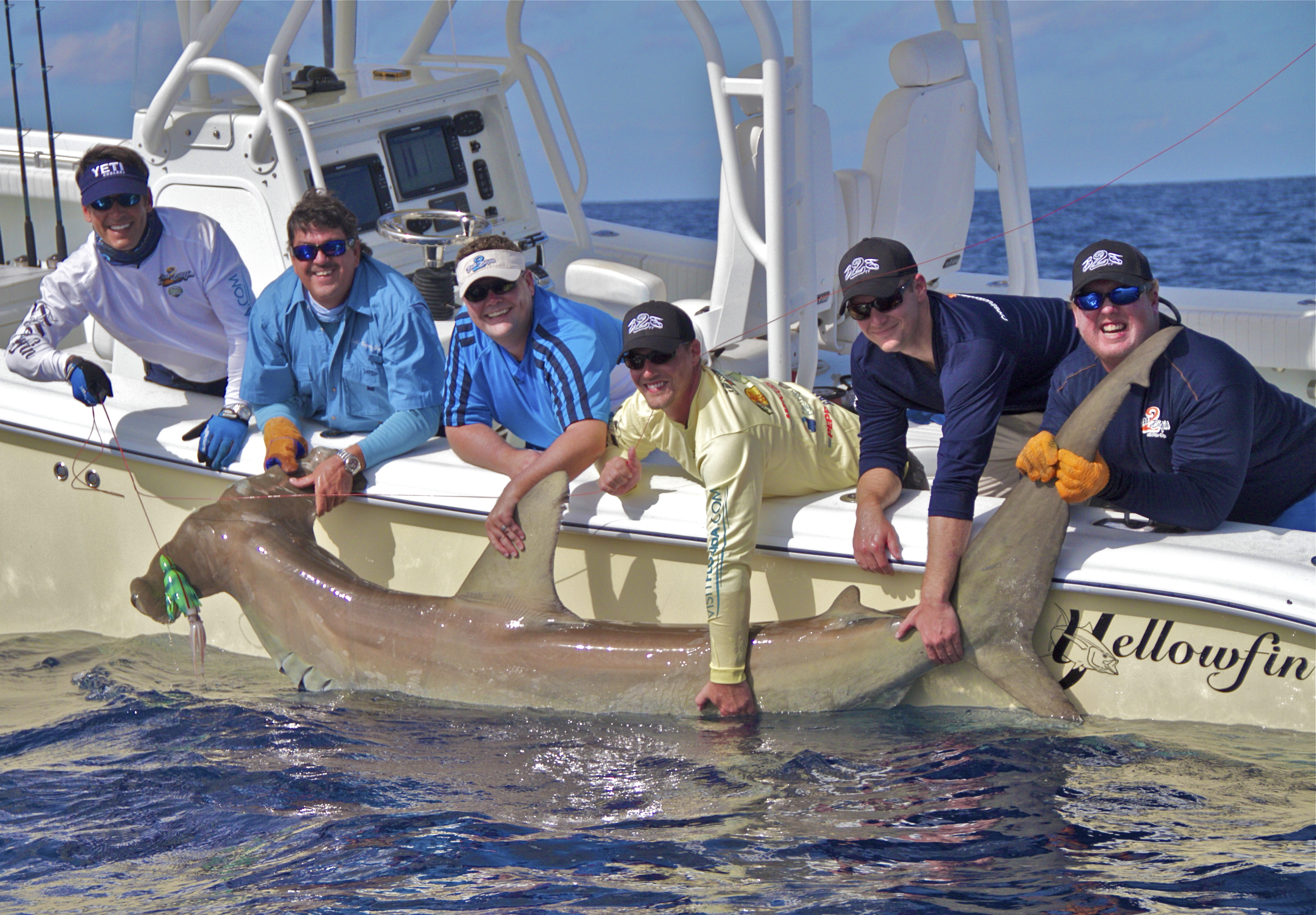
Left to Right: Peter Miller, Captain Randy Towe, Tom Frank, Sam Frank, Mike Frank and Madison the boat mate work get a good look at a 500 pound hammerhead shark before letting it go.
Courtesy | Rick Sorensen Photography
By Howard Meyerson
It might be hard to imagine a fishing trip as providence, but Sam Frank and his brothers, Mike and Tom, might see things otherwise. The summer of 2012 was tough for the Frank family.
David Frank, their father, passed away in June. He was 64 and a resident of Byron Center. Sam, the oldest son, called him his “best friend.” It was not the best of times.
Sam had about given up on a crazy idea his brother Tom had hatched of trying to get them all on a reality fishing show called Bass2Billfish on NBC Sports, hosted by Peter Miller, three-time sailfish tournament world champion. The brothers had submitted audition videos. Months had passed with only silence.
Then, one day, an email arrived that raised their spirits. Their videos had producers excited. The brothers, all fishing fanatics who gig on “talking trash” to each other, were to be flown to Miami, transported to Islamorada in the Florida Keys, lodged and fed at the luxury Cheeca Lodge Resort & Spa and spend two full-days saltwater fishing — all expenses paid.
“I was completely caught off guard,” said Sam, who lives in Grand Rapids with his wife, Beth, and their two children. “It had been a tough summer.
“But Peter had in mind doing a more hard-core trip with us, going out for sailfish and maybe deep waters for swordfish. It was the greatest adventure of our lives.”
The exciting results will air on NBC Sports in a special two-part series starting at the end of the month. Part one airs Jan. 26 at 9:30 a.m. and re-airs Jan. 30 at 2:30 p.m. Part two airs Feb. 2 at 9:30 a.m. and re-airs Feb. 5 at 2:30 p.m. The website for the show is bass2billfish.com .
“What I liked about these guys was their sense of humor and wit,” said show host Peter Miller in a phone interview from his Florida office. “I picked them from the moment the (audition) video started. The competition between them was very strong, and that makes a good storyline. Continue reading
Family Friendly: New fishing website developing at Michigan DNR
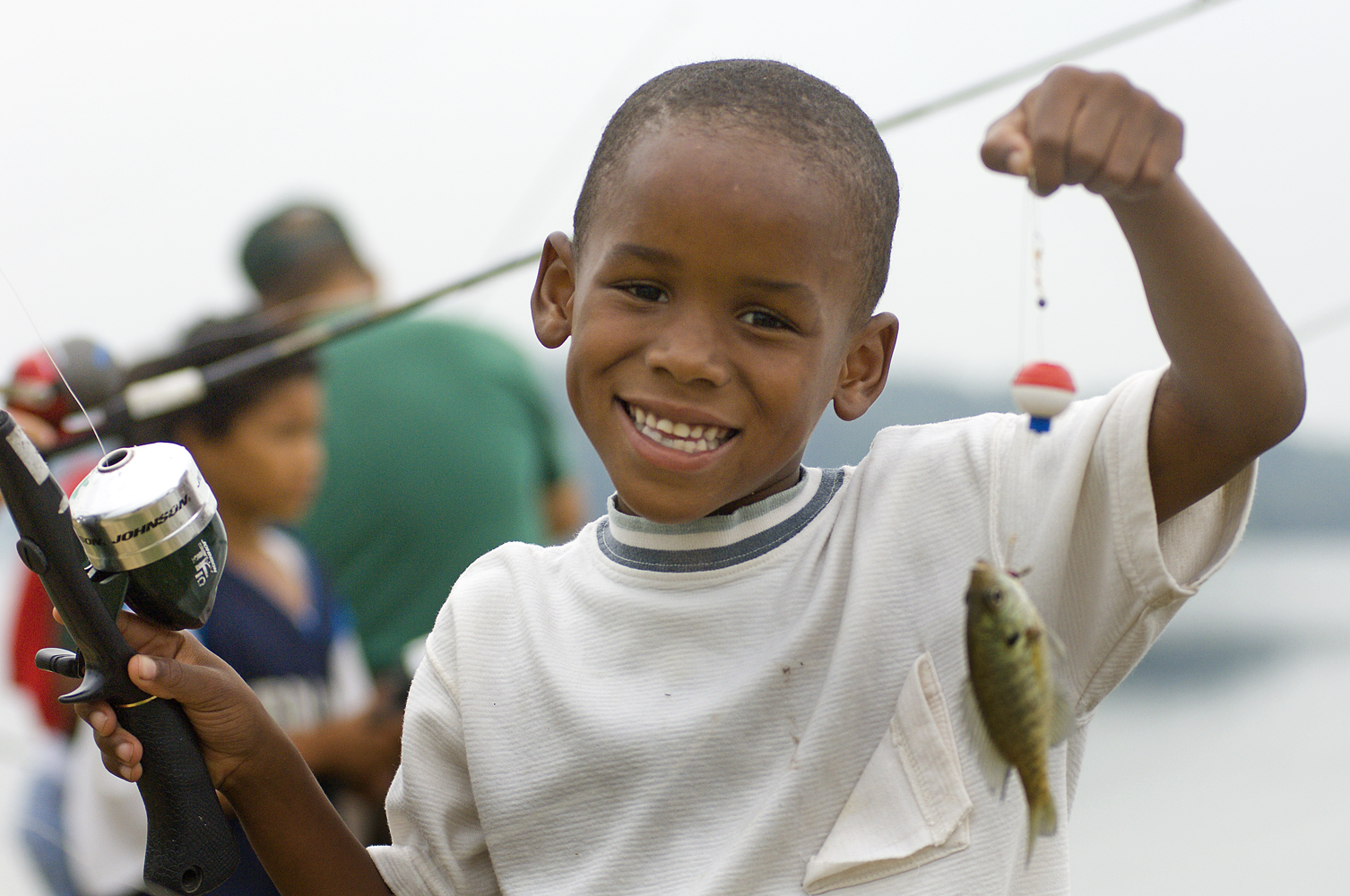
Family-friendly fishing sites will allow parents and children to get out and enjoy fishing. Photo: Dave Kenyon, MDNR.
By Howard Meyerson
Experienced anglers may know the difference between good places and bad to fish, difficult places and those that are easy, but families just starting often do not. And so, many never fish. The learning curve sometimes seems too steep.
But state officials say they hope that will change this year. Michigan Department of Natural Resources fisheries staffers are developing a Family-friendly Fishing Waters website they plan to launch in April, the start of the 2013 fishing season.
“People will see a whole slew of things there,” said Jim Dexter, fisheries chief for the DNR. “There will be lakes with fishing piers, lakes where people can fish from shore or a boat, and river areas that are good for families. All of the places will be vetted to make sure they have the types of amenities families need.”
The decision to develop a family-friendly website, one that lays out the fish that can be caught, how to get there, and other amenities like bathrooms, parking and where to fish, came out of research into what other state were doing. Michigan was found to be behind the times, according to Dexter.
“We found that there is a whole lot of this around the country and we seemed to have missed the train,” Dexter said. “That was unsettling to me.
“This is an enhanced aspect of customer service we hadn’t done before. If people wanted to know where to fish, we expected them to call and ask. But we’re looking at how to become more customer-friendly.” Continue reading
Day hike ends in tragedy for father and two sons

David Decareaux and his two sons. Photo from: inquisitr.
_____________________________________________
I don’t normally make a practice of posting entire stories written by other authors or news services, but this one, which ran in a number of publications today, deserves to be looked at in entirety. What caught my attention is the tragic outcome of a simple outing in the Mark Twain National Forest that resulted in the death of a father and his two young sons.
That outcome was avoidable. Read it and let me know what you think. I look at this photo and see everyone’s family. What a sad conclusion. Don’t let it happen to you. Give some thought to the gear you might need the next time you head out on a day hike: a weather report, map and compass, rain gear, extra layer, fire-starter, food and water.
Enjoy the outdoors, but be careful out there.
______________________________________________
ST. LOUIS (AP) — On a weekend trip that was a surprise anniversary gift for his wife, an outdoors-loving Air Force veteran ventured out with two of his sons for a hike on a remote trail. Clad only in light jackets and sweaters, the three apparently didn’t know how rapidly the weather would turn ugly, and that proved deadly.
Searchers found the soaked bodies of 36-year-old David Decareaux and the two boys — ages 8 and 10 — on the Ozark Trail on Sunday, a day after Decareaux declined a passerby’s offer of a ride back to the lodge where they had been staying, Reynolds County Sheriff Tom Volner said. The cold had killed them, he said.
Only the family’s 4-month-old yellow Labrador retriever survived the hike. He was found near Decareaux, who died at the scene, and the two boys, who were declared dead at a hospital after hours of efforts to revive them failed.
The tragedy crushed Decareaux’s father-in-law, Keith Hartrum, who described the family as tightly knit, “always on the go and adventurous.”
“Dave was a great guy, a good father, son-in-law and husband,” Hartrum told The Associated Press. “Those two boys were just precious — smart, very nice kids.”
It was nearly 60 degrees Saturday morning when Decareaux and his sons set out on the popular trail that runs through a sparsely populated area of southeast Missouri. Decareaux was wearing only a light jacket, while one of his sons was clad in a fleece pullover, and the other a sweater, Volner said.
They were ill-equipped as the temperature sank into the 40s, and a storm that would drop 2 inches of rain set in, making the trail all but impassable. Continue reading
Posted in Uncategorized
Tagged David Decareaux, Forest, Hiking, Hiking Safety, Mark Twain National Forest, National Forest, Trails
14 Comments
Last year was a bad year in terms of human/bear interactions at national parks. There are some who are suggesting that changes in climate may be contributing to the increase in attacks, having impacted the availability of natural foods.
Whether you agree or not – bear spray is a good precaution and the folks at the National Park Traveler are suggesting that visitors to the backcountry carry it. Here’s a quick read on what constitutes an effective spray and some tips on using it.
Read more: Picking the right bear spray.

 The Outdoor Journal