Looking Back on Everest: Jim Whittaker 50 years hence

Perhaps you know of this man: Jim Wittaker, the first American to climb Mt. Everest. That American expedition took place nearly 50 years ago in 1963. Whittaker and his sherpa,  Nawang Gombu, were the seventh and eighth ever to climb the highest mountain on the planet. The mountain and its climbers have been source of fascination ever since. Whittaker as well.

The American Alpine Club recently celebrated its 50th anniversary in San Francisco, the Adventure Journal Blog reported recently. Wittaker and all of the surviving members of that expedition attended. The interview with Jim Whittaker carried by AJ is an interesting read. For a look-back perspective read on: Jim Whittaker Looks Back on 50 Years Since Everest.

Posted in Uncategorized | Tagged , , , , , , , | 1 Comment

St. Joseph River Great for Winter Steelhead Fishing

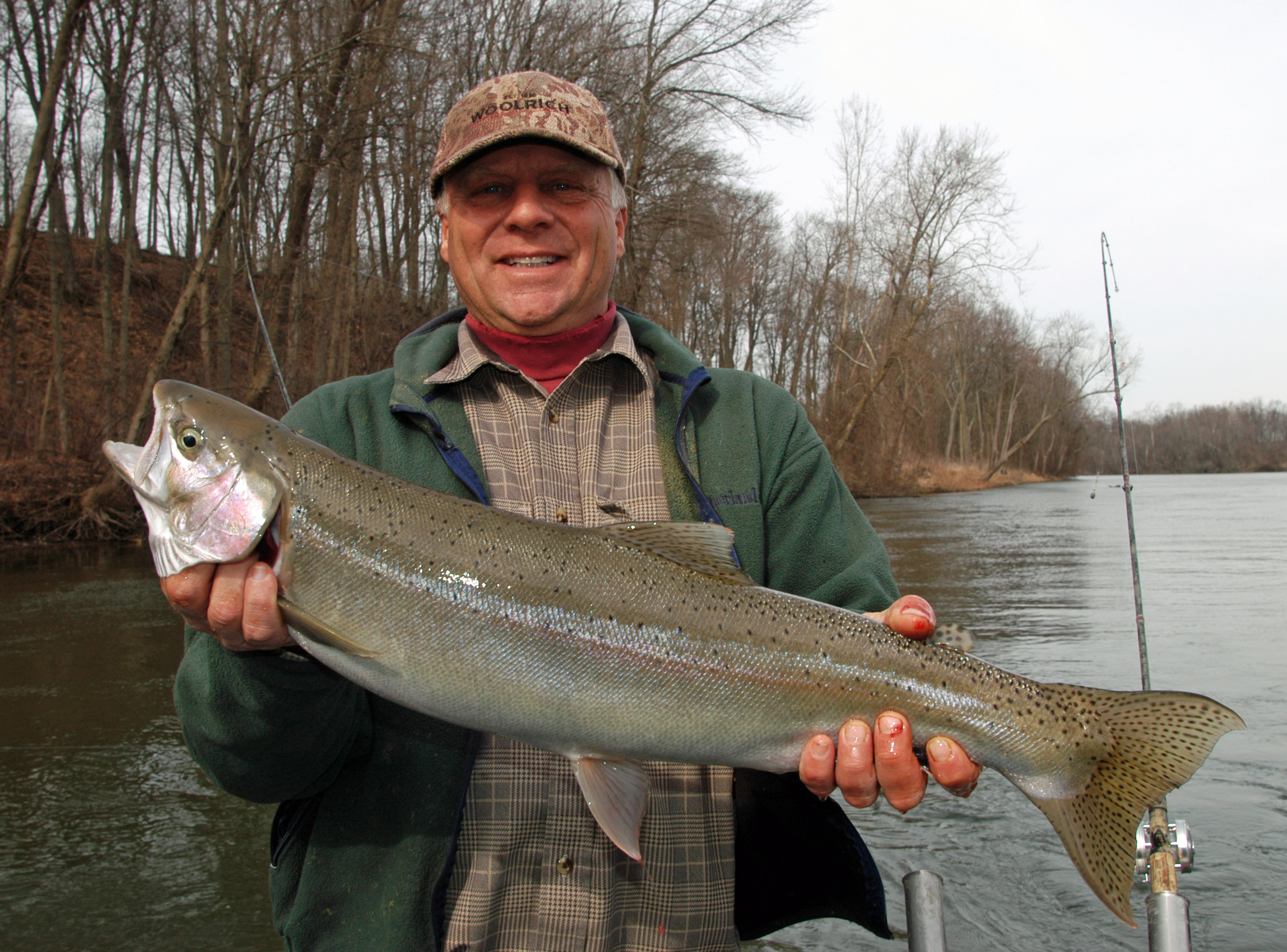
Captain Russ Clark hoists up a nice winter steelhead caught on the St. Joe River in February.

Captain Russ Clark hoists up a nice winter steelhead caught while bouncing spawn on the St. Joe River in February. Photo: Howard Meyerson

By Howard Meyerson

ST. JOSEPH, MI -. Russ Clark’s motto is simple:  “patience and persistence.”  That’s what it takes to catch steelhead. And on an unusually warm February day not long ago, the 27-year veteran charter captain demonstrated its wisdom.

It was 1 p.m. when two of us, standing on the aft-deck of his covered Carolina Skiff, looked on as Clark reeled in a striking 8-pound steelhead that drew excited exclamations from everyone. The fish had hammered a chunk of spawn the size of a donut hole. We had been fishing since 7 a.m., hunting for winter steelhead on the St. Joseph River.

“That’s a really nice fish,” said Charlie Broadhurst, Clark’s buddy and the owner Broadlow’s Fishing Hole, a fishing outfitter in town. “And that’s something you don’t see every day,” he said referring to Clark working a rod and reel, landing a fish.

Clark is a 50-year-old native of St. Joseph. He’s spends the better part of 270 fishing days a year helping clients get their fish. Clark owns Sea Hawk Fishing Charters and runs St. Joe River steelhead trips and Lake Michigan salmon charters.

Clark smiled in his easy-going manner and hoisted up the bright silver male so we could gawk.

“The biggest thing is patience and persistence. This time of year they can be in pods and you can go and go and get nothing and nothing, then all of a sudden you get two, three or four in one spot,” Clark had said earlier. Continue reading

Posted in Uncategorized | Tagged , , , , , , , | 1 Comment

Posted in Uncategorized | 1 Comment

Bottoming Out? Lake Michigan forage still at all-time low

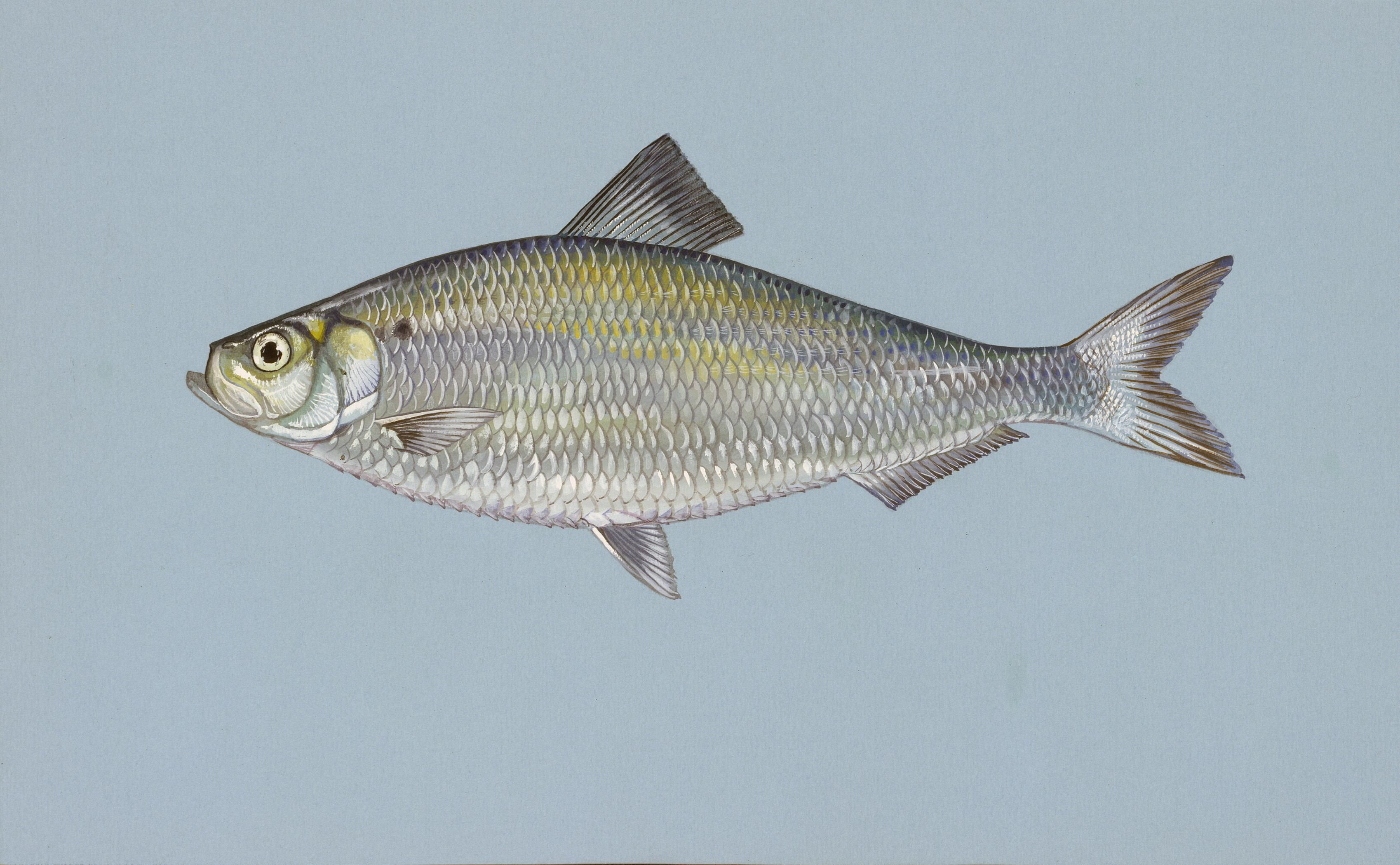
Alewives, the primary forage for Chinook salmon in Lake Michigan are again at an all-time low. Illustration: USFWS

Alewives, the primary forage for Chinook salmon in Lake Michigan, are again at an all-time low. Illustration: Duane Raver, U.S. Fish and Wildlife Service

ANN ARBOR – Lake Michigan’s prey fish population grew in 2012, but not enough to put aside concerns about the potential for collapse, according to federal scientists who conduct annual prey fish assessments on the Great Lakes.

Findings from 2012 acoustic surveys and bottom trawls, conducted by staff with the U.S. Geological Survey Great Lakes Science Center in Ann Arbor, show prey fish populations continue at an all-time low; the slight uptick proved statistically insignificant; and alewife populations, a primary food source for Chinook salmon, remain in tenuous condition.

“It’s pretty clear that we have far less fish biomass in Lake Michigan than we had in the 1990’s,” said Dave Warner the GLSC leader for the annual acoustic survey effort on Lake Michigan. “The years 2011 and 2012 are the lowest and second lowest biomass years respectively in the 17 years since we started surveying the lake, he said.”

Biomass refers to total volume or tonnage of prey fish. An August 2012 acoustic survey of Lake Michigan found 31 kilotons of prey fish, up from 21 kilotons in 2011. It was an average year, according to Warner, and the increase is due to a large 2010 alewife year class that survived and grew. Another increase is likely in 2013 resulting from alewives born in 2012.

But Warner and others suggest that those increases are not likely to offset the potential for a collapse. Other conditions exist that have scientists concerned.

The alewife population is now dominated by two-year classes where there were once many. The oldest fish found was 5 years old and there was just one. Nearly all of the rest were born in 2010 and 2011.

“Most of the alewife biomass was made up of 2-year old fish,” Warner said. They made up 60 percent of the alewife biomass and almost 90 percent of the fish age one and older.

“A few years ago we would have had fish as old as age 9 and a good spread. Between 2007 and 2010 we had at least three age classes that contributed to the biomass.”   Continue reading

Posted in Uncategorized | Tagged , , , , , , , , , , | 1 Comment

New weight, length requirements for Michigan’s Master Angler Program

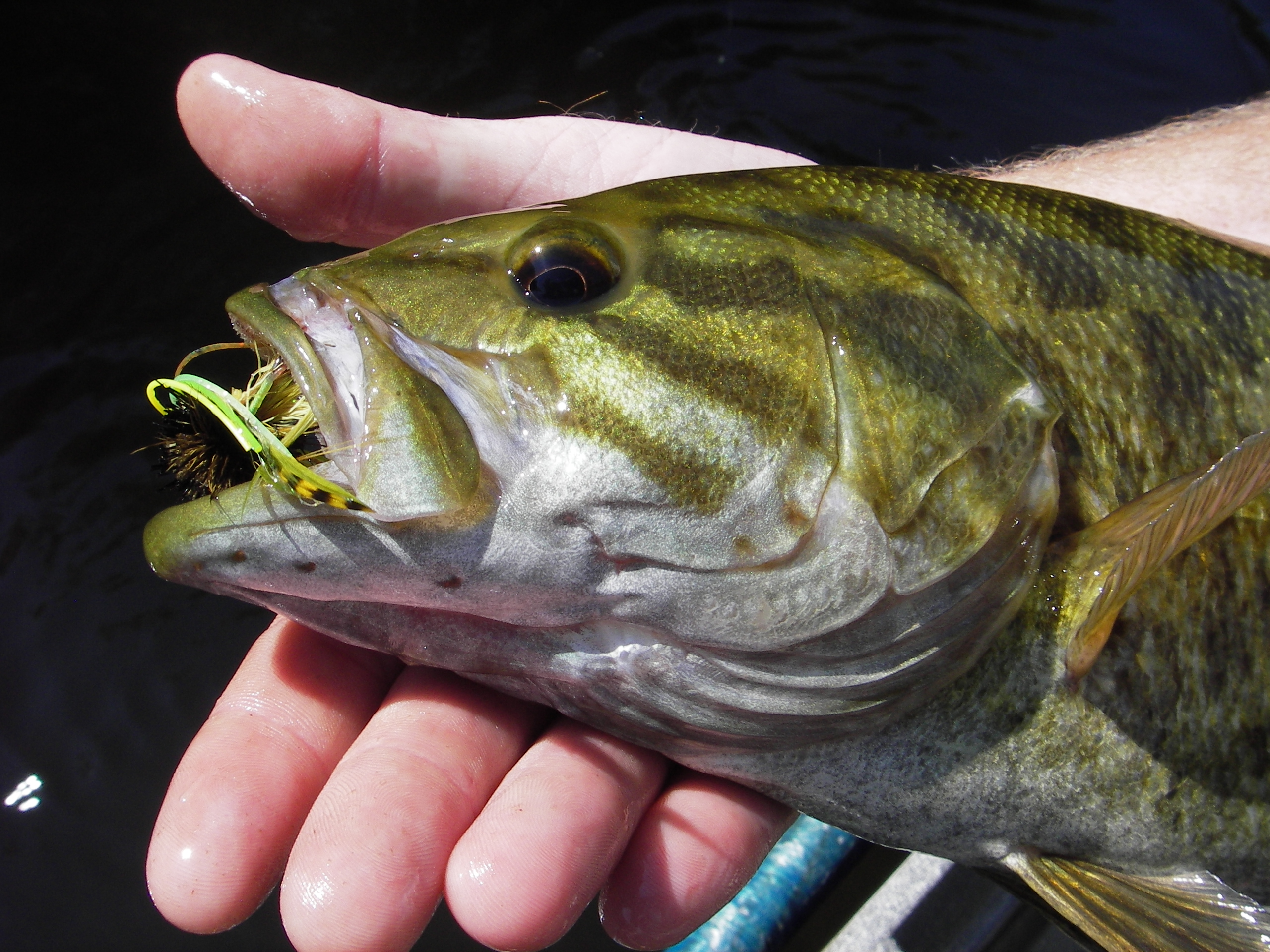
Smallmouth bass minimum size limits were increased for Master Angler program entry.Photo by Howard Meyerson

The minimum entry size for smallmouth bass was changed in January. Photo by Howard Meyerson

By Howard Meyerson

Michigan’s popular Master Angler program recognized a whopping 1,189 anglers including four new state records in 2012, but changes were needed, according to state officials, to bring the program in line with its intended purpose.

New rules went into effect in January. They include changing certain minimum entry lengths or weights, requiring color photographs to help with fish identification, requiring the photo to show the background where the fish was caught, and lowering the number of required witnesses from two to one, among other things.

“One reason we started looking at it was we were getting so many entries for certain species,” said Lynne Thoma, the Michigan Department of Natural Resources staffer who manages the Master Angler program. “It is supposed to be an award for particularly big fish, but it was becoming run-of-the-mill (to get one) for rock bass and fresh-water drum.”

Anglers received Master Angler awards for 119 freshwater drum in 2012 according to state records. They also took home awards for 113 rock bass and 108 bluegills.  But only nine brook trout made the cut and five rainbow trout.

_______________________

“I know from our weir program that steelhead are very popular, but the number of entries we got were not reflective of that popularity…17 pound steehead are becoming increasingly rare.”

 —Tom Goniea,  MDNR Fisheries Biologist

_______________________

Continue reading

Posted in Uncategorized | Tagged , , , , , , , , , , | Leave a comment

Holland Anglers Bring ‘Classic’ Michigan Flies to Life.

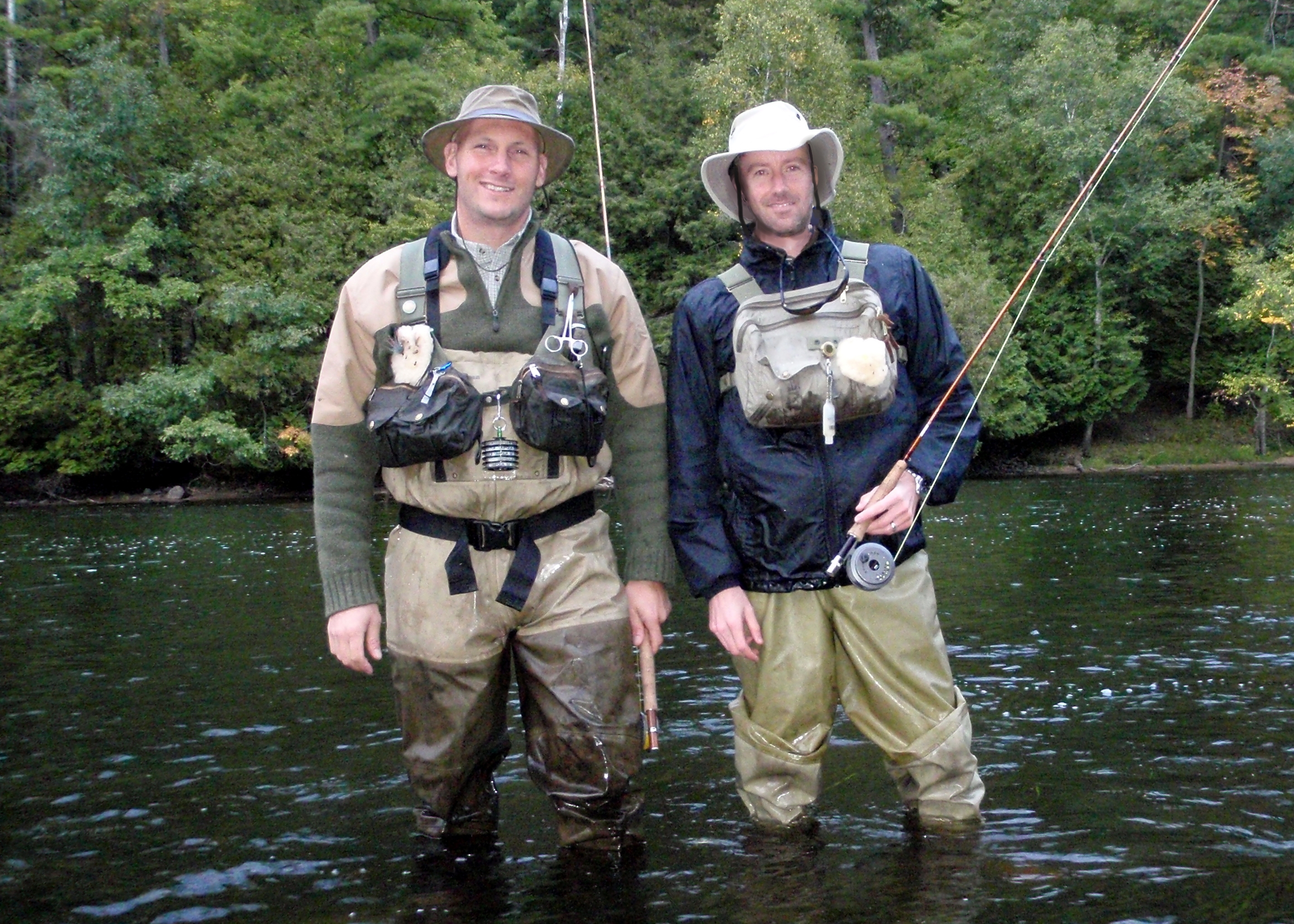
Jon Osborn and Joe VanFaasen, authors of Classic Michigan Flies stop while fishing the Muskegon River. Courtesy photo.

Jon Osborn and Joe VanFaasen, authors of Classic Michigan Flies stop while fishing the Muskegon River. Courtesy photo.

By Howard Meyerson

In the spring, when thoughts of trout fishing inevitably hit hard, I almost always bring the fly boxes out for a gander. One by one, I pick through them looking for gaps, the flies I need to replace for the coming season, having left some hooked on a stream snag, an overhanging branch or a fish that broke off.

Invariably, I will count how many Adams flies I have. To be frank, it’s rare that I use them, but I take comfort in their presence and never hesitate to tie one on when all else fails. They were the first flies I used when I started fly fishing, and they remain a classic Michigan fly design today.

Classic also is what Jon Osborn and Joe Van Faasen call them in their charming new book, “Classic Michigan Flies, 16 Legendary Patterns.”

“If ever there was a do-all, go-anywhere fly pattern, the Adams is it,” Osborn writes about the circa 1922 fly pattern designed by Michigan fly angler, Leonard Halladay for his friend, Charles Adams, a Ohio judge and the fly’s namesake.

“When Adams tested it on a pond near Halladay’s home in Mayfield, he ruled it a ‘great success.’ After fishing the nearby Boardman River, he enthusiastically ruled it ‘a knockout.’ The rest, as they say, is history.”

The Adams pattern today is as much a part of Michigan trout fishing history as the download 2legendary but now extinct grayling that used to swim in state waters. Its characteristic striped wings and gray body have tantalized Michigan trout for nearly 90 years.

“We had three groups of people in mind when we did the book: people who love fly fishing, people who love history and people with an appreciation for art,” said Van Faasen, the book’s illustrator. His watercolors grace most of the book’s pages. Continue reading

Posted in Uncategorized | Tagged , , , , , , , , , , , , , , , , , | 6 Comments

Mixed Views: Michigan 5 Year Fisheries Plan

Michigan's Great Lakes and inland fisheries will be guided by new five year plan. Photo: Howard Meyersoon

Michigan’s Great Lakes and inland fisheries will be guided by new five year plan. Photo: Howard Meyersoon

By Howard Meyerson

A draft five-year plan to guide where state fisheries managers will focus their future efforts is getting mixed reviews from anglers and fishing groups, who largely support it but criticize its lack of specificity.

The public comment period for the 32-page strategic plan closed on Feb. 10. The document and accompanying survey results can be found on the DNR website: under Fisheries.

“The overall work product was good; they came up with goals, objectives and strategies, but I was disappointed with its lack of specificity, said Dennis Eade, executive director for Michigan Steelhead and Salmon Fisherman’s Association. “The most glaring (omission) was any mention of gaining additional public access to lakes and water resources in southwest and southeast Michigan.

“We would have loved to see them say: We will increase public access by 10 percent by 2015, something they could be held accountable for.”

State officials say those details will come later in operational plans for each of the goals. The strategy was intended to lay out high-level goals and objectives.

“That’s a problem everyone encounters with a strategic plan which by definition is lofty in its goals,” said Jim Dexter, chief of fisheries for the Michigan Department of Natural Resources. “What should be most important is the public knows where we want to go.”

“We took an 8 percent budget reduction in 2012 from $29.1 million to $27.3 million. That’s huge,” Dexter said. “Our funding model is broken. We operate totally on a user-pay system and number of users has been going down steadily.”

–Jim Dexter, Fisheries chief for Michigan DNR

Continue reading

Posted in Uncategorized | Tagged , , , , , , , , , , | 4 Comments

Up for the Challenge: Michigan cyclists prepare for extreme winter cycling races

Jason Bratton builds a fire while bike camping in Alaska preparing for the Iditarod Trail Invitational Bike Race. Courtesy photo.

Jason Bratton builds a fire while bike camping in Alaska preparing for the Iditarod Trail Invitational Bike Race. Courtesy photo.

By Howard Meyerson

Jason Bratton and Ted Bentley have a lot in common. Each has an affinity for fat bikes, those heavy, bulbous-tired bicycles for sand and snow. Both love the outdoors, and each loves riding in winter.

But perhaps more significant is the fact they are geeked about winter bike camping and long-distance touring in the extreme.

“I ride in winter more than in summer,” said Bratton, a 38-year-old software tester from Ada, who recently returned from Alaska. He was there to attend a week-long training camp for the 2014 Iditarod Trail Invitational, a 350-mile human-powered race from Knik, Alaska, to McGrath, Alaska, where participants bike, ski or run along a portion of the Iditarod Trail.

“I got interested in winter biking eight years ago. The challenge (at first) was just how to stay warm, seeing the trails in winter and figuring out what the best equipment is. My goal next year is just to finish.”

Bratton will be among those who race the short version of the famous 1,100-mile course to Nome, Alaska, but there are those who will go the distance.

Still, the 350-mile route through arctic snow hardly is a cakewalk. Preparation and training is required to survive and finish.

The 2012 race took almost six days to complete. Four feet of fresh snow slowed everyone down, according to Bratton.

“They say, on average, you will (get off and) push your bike 70 miles” said Bratton, a Rockford native. “Last year, it took two-and-a-half days to go the first 50 miles.” Continue reading

Posted in Uncategorized | Tagged , , , , , , , , , , , , , | 1 Comment

Surging Firearm Sales: Michigan eligible for record federal wildlife funding

Federal funds will go to Michigan's Woodcock Initiative, among other things. Courtesy Photo: Michigan Department of Natural Resources

Federal funds will go to Michigan’s Woodcock Initiative, among other things. Courtesy Photo: Michigan Department of Natural Resources

By Howard Meyerson

Michigan’s deer, grouse and other wildlife programs are eligible for record federal funding in 2013. Ammunition, firearm and archery sales all surged in 2012. That rise in sales is translating to record payouts to hunting and wildlife habitat programs all across the country, federal officials said this week.  

“The gross receipts for 2012 were $555,769,306 and that’s a record,” said Jim Hodgson, chief of the Wildlife and Sport Fishing Restoration Program for the Midwest Region of the U.S. Fish & Wildlife Service. “Even with an 8.1 percent sequestration (money held back until Congress works out the budget) the money is so great that the states will get more than last year.

“We are looking at apportioning $501,326,993 to the states for wildlife restoration and hunter education and that is still a record.”

The federal funds come from excise taxes collected on firearms and archery equipment under the Pittman-Robertson Federal Aid in Wildlife Restoration Act of 1937, better known as the Pittman-Robertson Act. The money is returned to states for hunter education and wildlife restoration. How much each gets is based on the number of square miles available for restoration and habitat creation along with the number of certified hunting license buyers.

Michigan is eligible to get more than $17 million according to Hodgson, up from $12.3 million in 2012 and from 2010 when Michigan received a record $16.1 million. But state officials say the 2013 funding is not yet a done deal. States must come up with a 25 percent match to receive the funds.

“It looks like we are in for a banner year. The challenge will be coming up with the match for those funds,” said Russ Mason, chief of the Michigan Department of Natural Resources’ wildlife division. “We are very close to having a problem coming up with the match.” Continue reading

Posted in Uncategorized | Tagged , , , , , , , , , , , | 3 Comments

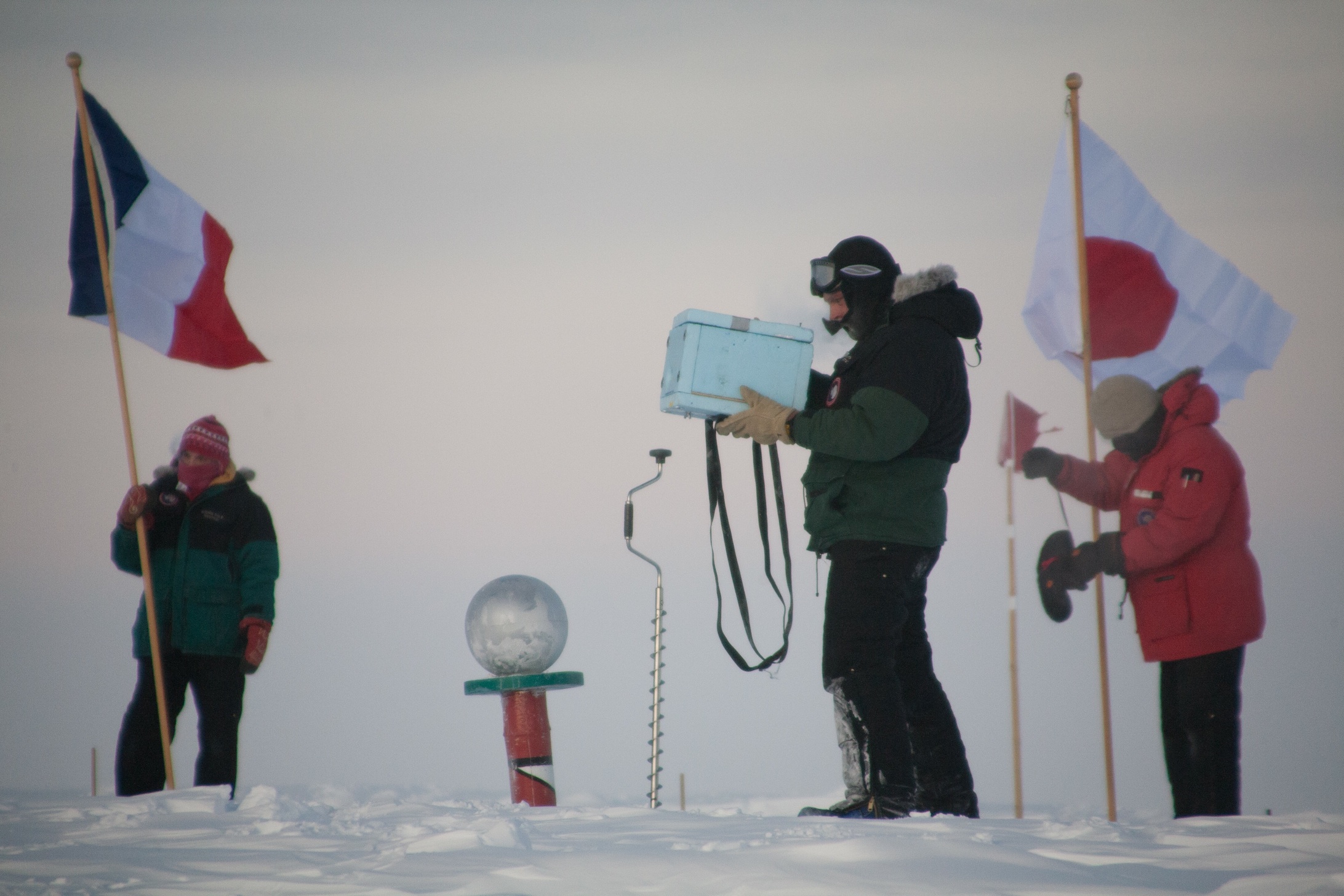
At Earth’s Edge: Michigan filmaker documents lives of people living at South Pole

Keith Reimink shoots footage at the South Pole where he lived for a year as a cook at the South Pole Station. Courtesy Photo.

Keith Reimink shoots footage at the South Pole where he lived for a year as a cook at the South Pole Station. Courtesy Photo.

By Howard Meyerson

Filmmaker Keith Reimink is the embodiment of wanderlust. Some would say he is a bit unconventional, too.

But the 34-year-old Zeeland native still remembers the day the red onion disappeared.

It was 2008. He was living at the South Pole. The onion had vanished during the dark winter months long after the last plane had departed for the winter season.

Reimink, a production cook, was part of the 43-member crew that stayed behind to keep the Amundsen-Scott South Pole Station operating, The facility is managed by the National Science Foundation, and it is cheaper to run it than shut it down, he said.

The red onion had been left to sprout. It’s colorful tendril came to symbolize life in a landscape where darkness prevails for months, and the average temperature is 72 degrees below zero.

“One morning, we came to breakfast, and the onion was gone, Reimink said. “Everyone was pissed for a week that someone took it or threw it away. It was the only color we had and the only thing growing.”

Reimink’s documentary film, “No Horizon Any More: A Year Long Journey at the South Pole,” looks at the people who live and work there year-round, the human dramas that develop and what people do to cope. It provides a glimpse of Antarctica’s barren majesty, the expeditions that come and go, the science conducted there, and the motivations of those who are drawn there to work.

“I was determined to capture them on film and tell their story,” Reimink said. “What brings people to the South Pole? Why do they keep coming back?” Continue reading

Posted in Uncategorized | Tagged , , , , , , | Leave a comment