Growing a mountain bike patrol: Volunteers needed

Five mountain bike patrol members in front of the CRAMBA (Clinton River Area Mountain Bike Association) tent at the group's 2013 Girls on Trails Clinic held at River Bends Park in Shelby Township Pictured left to right: Ken Becker, Norbert Skorupski, Aaron Burgess, JeremyVerbeke. Photo: Clinton River Area Mountain Bike Association.

Five mountain bike patrol members in front of the CRAMBA (Clinton River Area Mountain Bike Association) tent at the group’s 2013 Girls on Trails Clinic held at River Bends Park in Shelby Township Pictured left to right: Ken Becker, Norbert Skorupski, Greg Hodder, Aaron Burgess, JeremyVerbeke. Photo: Clinton River Area Mountain Bike Association.

By Howard Meyerson

Shawn Murphy is looking for a few good riders. Well, to be honest, maybe more than few.

Murphy is the director of the Michigan Mountain Bike Patrol, a small but growing group of volunteer cyclists who have taken it upon themselves to give something back to their sport by patrolling trails and race courses, offering assistance to riders in trouble whether fixing a flat tire or broken bones.

“We’re all volunteers,” said Murphy, a software developer from Canton. “Patrollers put on a red jersey and carry a first-aid kit. They go out and help people get back if they are injured.

“Our goal is to sign-up as many as we can. We would love to have 100 people around the state.”

If you’ve never heard of the group, you are not alone. Michigan’s program has only 30 patrollers around the state. Most live in southeast Michigan. It operates on a shoestring, but its vision is not small.

Michigan’s Mountain Bike Patrol is affiliated with the national program established by the Boulder Co. based International Mountain Bicycling Association. IMBA formed in 1988 and has 35,000 members, 750 chapters around the US, Canada and 30 countries. Its Mountain Bike Patrol program governs 50 groups and 600 patrollers. Continue reading
Posted in Uncategorized | Tagged , , , , , , | 1 Comment

Waterfowl hunting season gets underway: Fall forecast is good

Wetland counts are up this year due to spring rains meaning better access for hunters. Photo: Howard Meyerson

Wetland counts are up this year due to spring rains meaning better access for hunters. Photo: Howard Meyerson

By Howard Meyerson

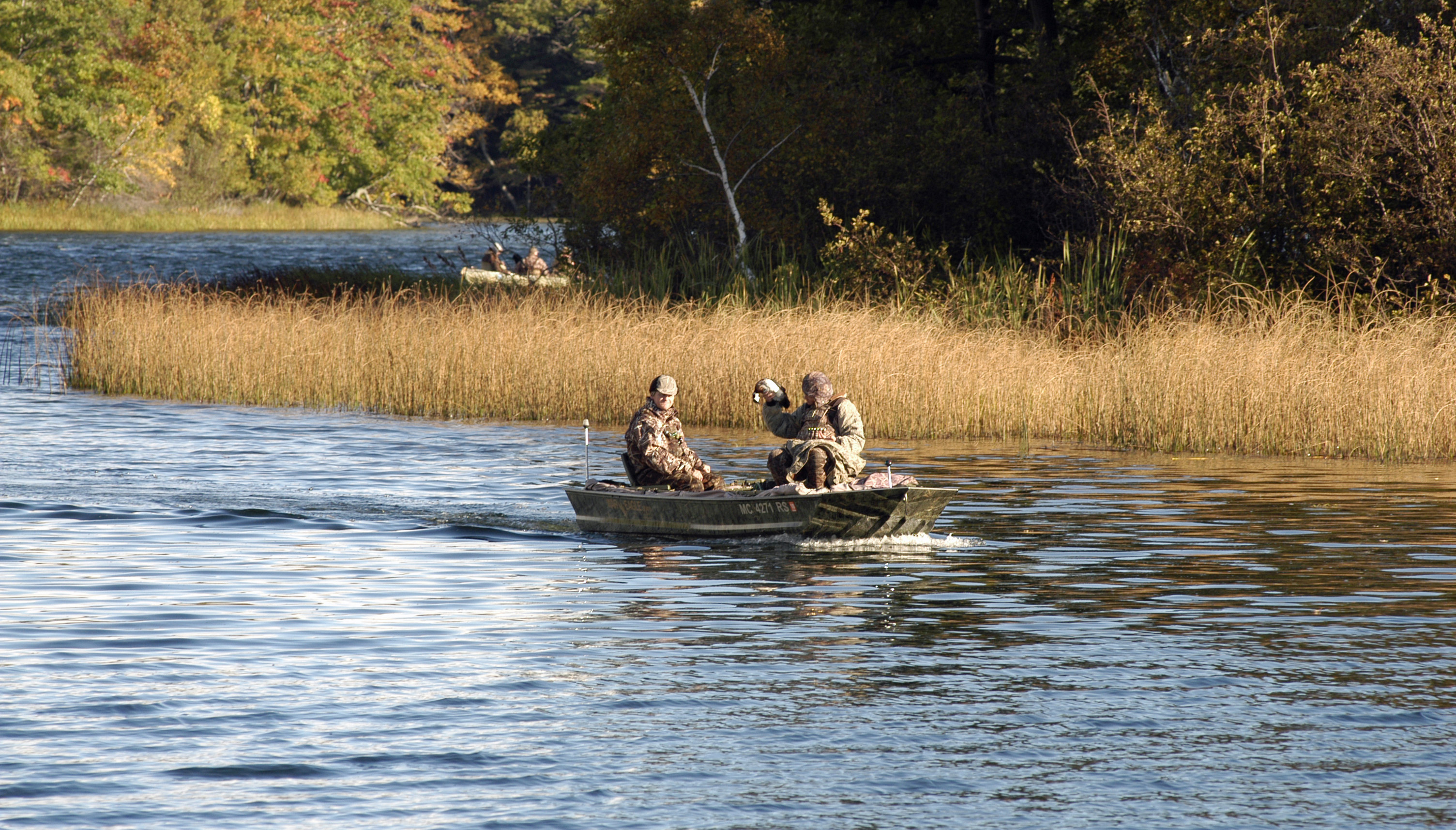
Spring rains may have wreaked havoc on the Michigan landscape this year, but they likely made things better for waterfowl hunters. More ponds and marshes are holding water meaning waterfowl hunters will have more places to hunt, easier access and possibly more ducks and geese.

Michigan’s early Canada goose hunting season kicked off September 1. Goose hunters have an unusually long 107-day season ahead. Goose numbers are down slightly, according to state wildlife officials, but Michigan’s resident population remains well over target. An early season count by wildlife officials shows the Michigan breeding population at 265,000 Canada geese.

“Our goal is a range between 175,000 to 225,000 Canada geese,” said Barb Avers, the waterfowl specialist for the Michigan Department of Natural Resources. “Last year we were looking at a very liberal 92-day season. Now we will have 107-day season, the absolute maximum allowed under the Federal Migratory Bird Treaty Act.”

Michigan goose hunters killed approximately 144,700 geese in 2012 according to a recent report on migratory bird harvests by the U.S. Fish and Wildlife Service. Michigan has approximately 31,900 “active” goose hunters.

Duck hunting this season should also be good. Michigan hunters killed 320,200 ducks during the 2012 season, an 11.3 percent increase over 2011. There is more water on the landscape and hunters will have more opportunities to find ducks.

“Our wetland estimates are up by 32 percent due to a wet spring,” Avers said. “And Great Lakes water levels are up and that helped us flood managed areas. Last year the birds were more concentrated in areas. This year they will be more dispersed.” Continue reading

Posted in Uncategorized | Tagged , , , , , , | 1 Comment

Black Lake sturgeon study assesses state stocking effort

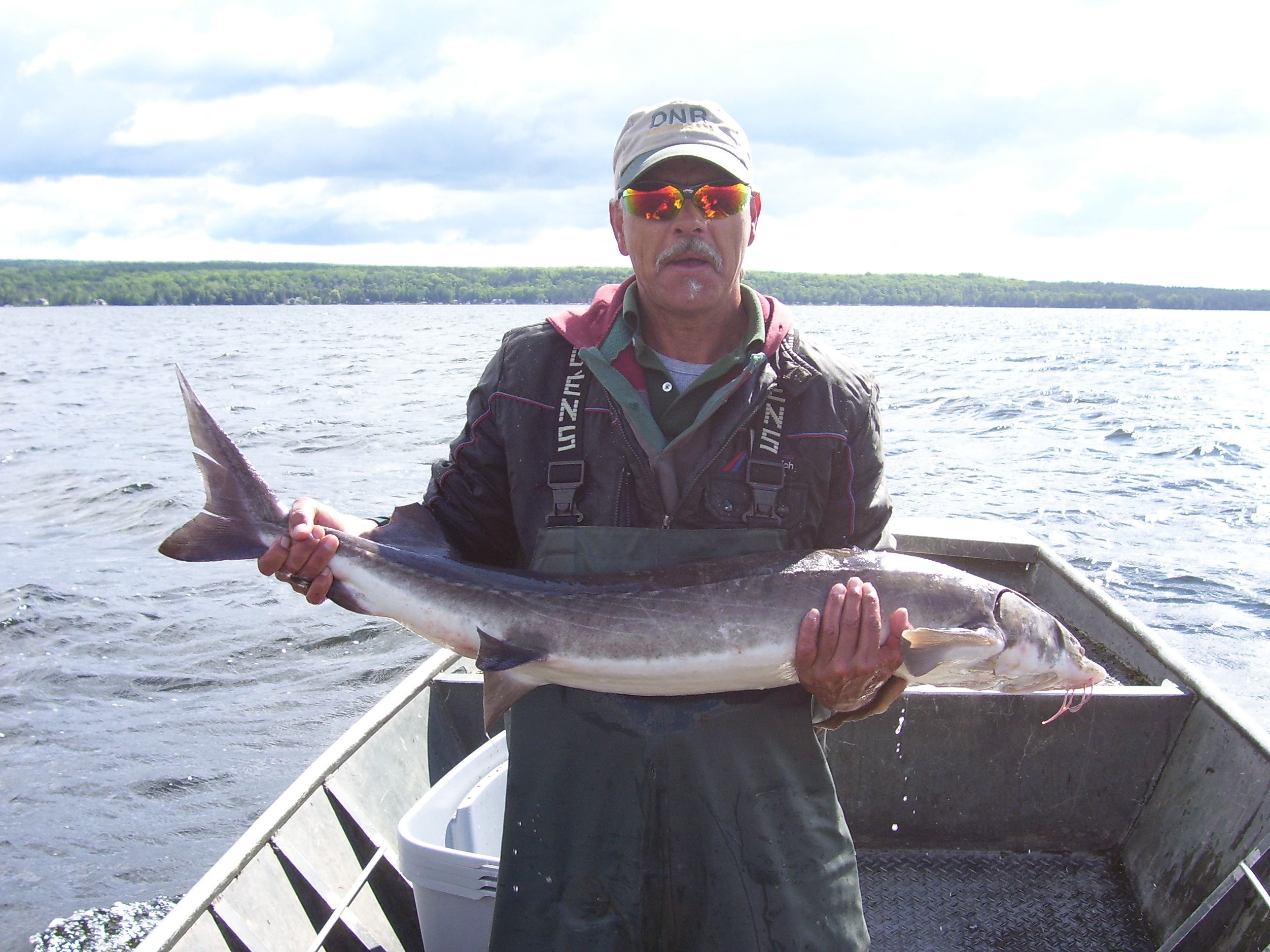
DNR fisheries staffer, Lon Brinkman holds a sturgeon netted on Black Lake during a prior assessment of the population. Photo: MDR

DNR fisheries staffer, Lon Brinkman holds a sturgeon netted on Black Lake during a prior assessment of the population. Photo: MDR

By Howard Meyerson

ONAWAY, MI – A study now underway to determine the status of young sturgeon in Black Lake is expected to shed light on the success of the state stocking program there.  Approximately 1,100 mature sturgeons are thought to swim in the Cheboygan County waters, but less is known about the younger ones that have been stocked there.

“There is a black hole in our knowledge,” said Dave Borgeson, the Northern Lake Huron Unit supervisor for the Michigan Department of Natural Resources. “Our past efforts rarely got sturgeon smaller than 40 inches long.

“We are trying to get fish smaller than that, those are that 20 inches long and up. If we can, we will an idea of our stocking success. And if we find some that aren’t marked we’ll get an idea of the natural reproduction.”

Boat crews staffed by the DNR, Michigan State University and the Little Traverse Bay Band of Ottawa Indians have been netting Black Lake sturgeons for the past two weeks. The crews are using smaller-mesh nets than in the past. They are better for catching smaller ones, Borgeson said. Continue reading

Posted in Uncategorized | Tagged , , , , , , , , , , | Leave a comment

Hunting Film Tour debuts in Grand Rapids

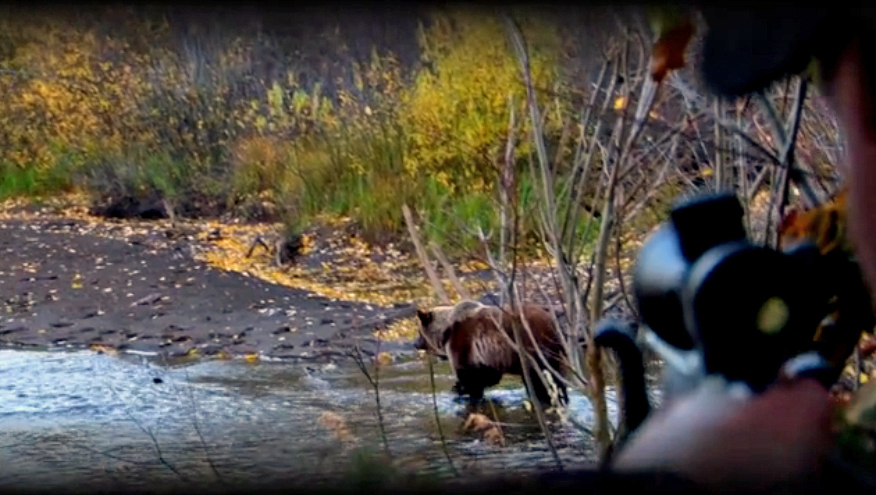
Jason Peterson takes on a grizzly bear in A Grizzly Adventure shot in British Columbia, Canada. Photo: Courtesy

Jason Peterson takes on a grizzly bear in A Grizzly Adventure shot in British Columbia, Canada. Photo: Courtesy

By Howard Meyerson

The heart and soul of hunting is alive and well in a video presentation debuting around the country this fall and showing in Grand Rapids at 7 p.m., August 28  at the Wealthy Theatre. It’s called the Hunting Film Tour.

The  two-hour event is the brainchild of Gary Gillett, owner of G2 Adventure in Calgary Alberta Canada, who teamed up with Webeye Group in Boulder Colorado, owner of the famously popular Fly Fishing Film Tour that shows every winter at the theater.

“We felt the hunting market was fairly underserved when it came to high-definition hunts and (people were) growing tired of the traditional “TV” hunt,” said Chase Perry, the marketing manager for both film tours.

“We wanted to place a meaning behind a hunt, a story, and try to preserve hunting at its core through these films.”

And preserve it they do.

I was skeptical when I first heard about the Hunting Film Tour – for the reasons Perry stated so well. Hunting television has some razzle-dazzle, but little that really captures the essence of hunting for the hunters– relying more on a host’s persona and formulaic presentations that fit the content slots between the ads. In a word: superficial.

But I had a chance to see an advance presentation of many of the films in the Hunting Film Tour. I found them rich in story color, both human and visual, superbly produced, and fascinating to watch. Continue reading

Posted in Uncategorized | Tagged , , , , , , , , , , | Leave a comment

Playing rough: Illegal ORV use overwhelms law enforcement and restoration efforts

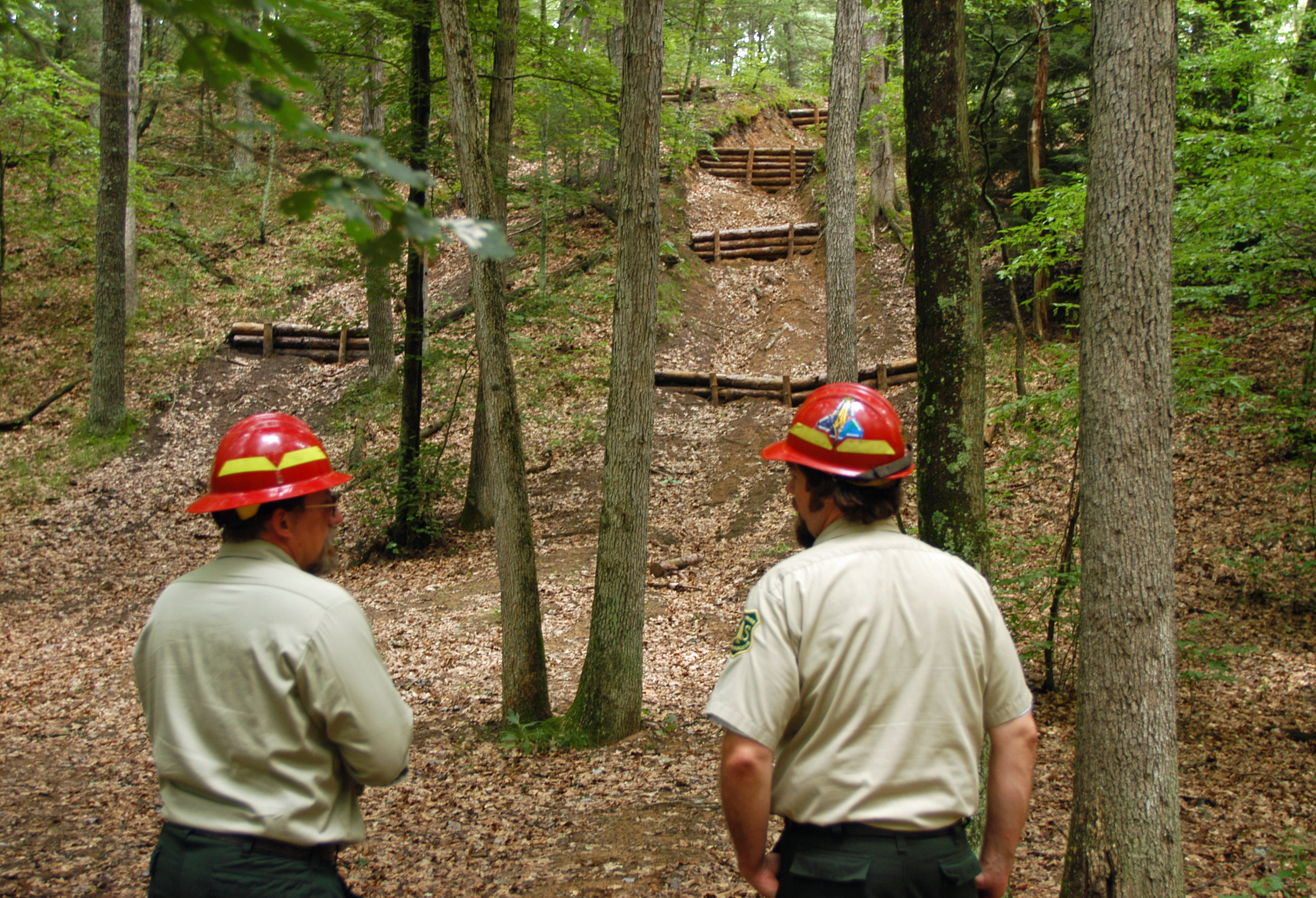
Baldwin district acting ranger, Chris Frederick (left) and trail coordinator, Dave Jaunese (right) look over ORV damage restoration work underway in the Manistee National Forest where illegal hill climbs created erosion. Photo: Howard Meyerson

Baldwin district acting ranger, Chris Frederick (left) and trail coordinator, Dave Jaunese (right) look over ORV damage restoration work underway in the Manistee National Forest. Photo: Howard Meyerson

By Howard Meyerson

TWIN LAKES, MI – With the Labor Day holiday weekend ahead, often a last-hurrah for outdoor weekend warriors, Manistee National Forest staffers say they plan to be on alert for rogue off-road-vehicle riders in the forest.

By rogue, they mean those who are ripping up the countryside, riding off the designated ORV trail system, and those who would ride around barriers and/or smash gates.

“We put things up and they get torn down,” said Diane Walker, assistant ranger for the forest’s Baldwin ranger district. “They have this beautiful national forest outside their doors and I don’t know why people think it’s OK to go outside and tear it up.”

Tear it up, indeed. I visited recently with forest staff and toured one of the more extreme ORV damage areas in the southern part of the forest. It’s near the Cedar Creek Motorsports Area, a designated 24-mile single-track trail for quads, motorcycles and smaller ORVs.

The vandalism and landscape damage was not on the ORV trail. It was on areas adjacent to the trail. Cedar Creek is the southern-most trail in the forest, the closest for riders from Indiana, Ohio, Grand Rapids, Muskegon and other areas.

Riders have been going off-trail and created a web of illegal trails, deeply eroded hill climbs and denuded valleys where entire forest bowls have been scrubbed of vegetation by spinning wheels, and left as barren sand.

I am rarely speechless about these kinds of things. And that wasn’t the case this day, but I was astounded by the extent of the damage and found myself resorting to simple, one syllable exclamations under my breath.

What a disappointment. Continue reading

Posted in Uncategorized | Tagged , , , , , , , , , , , , | 3 Comments

Update: GPS osprey flights can be seen on tracking website

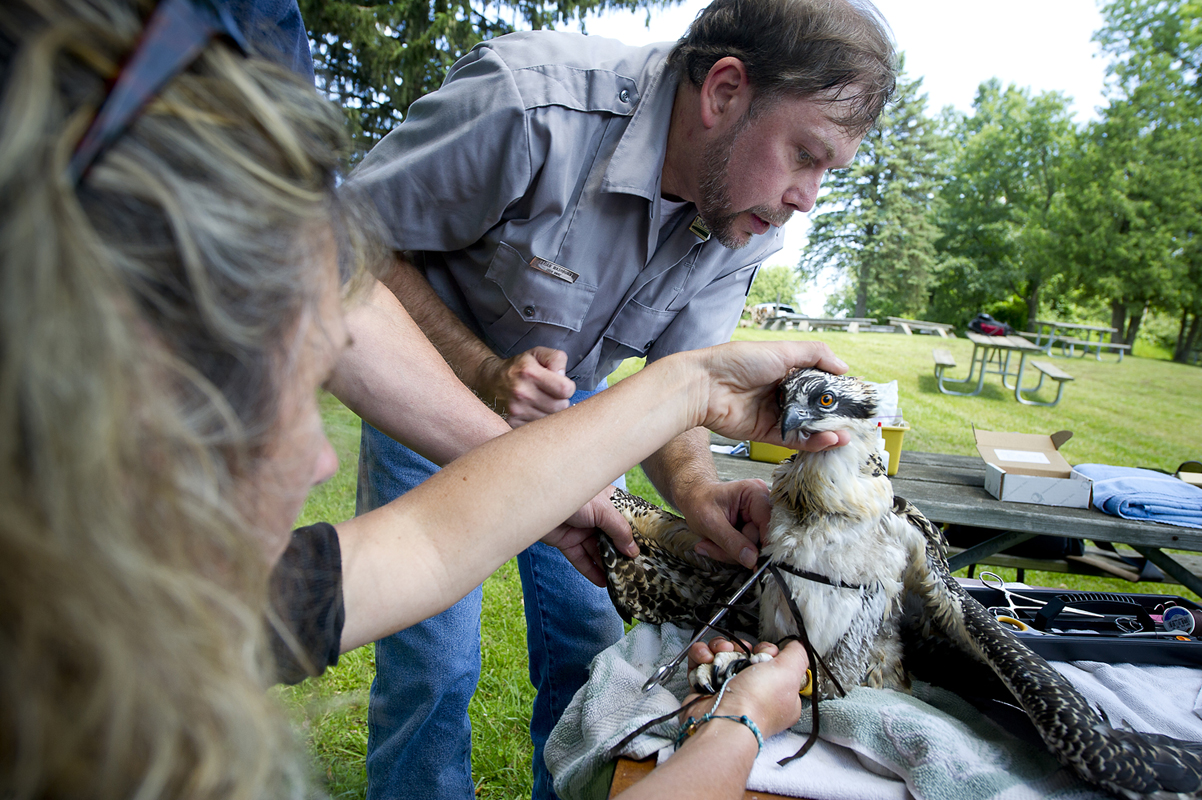
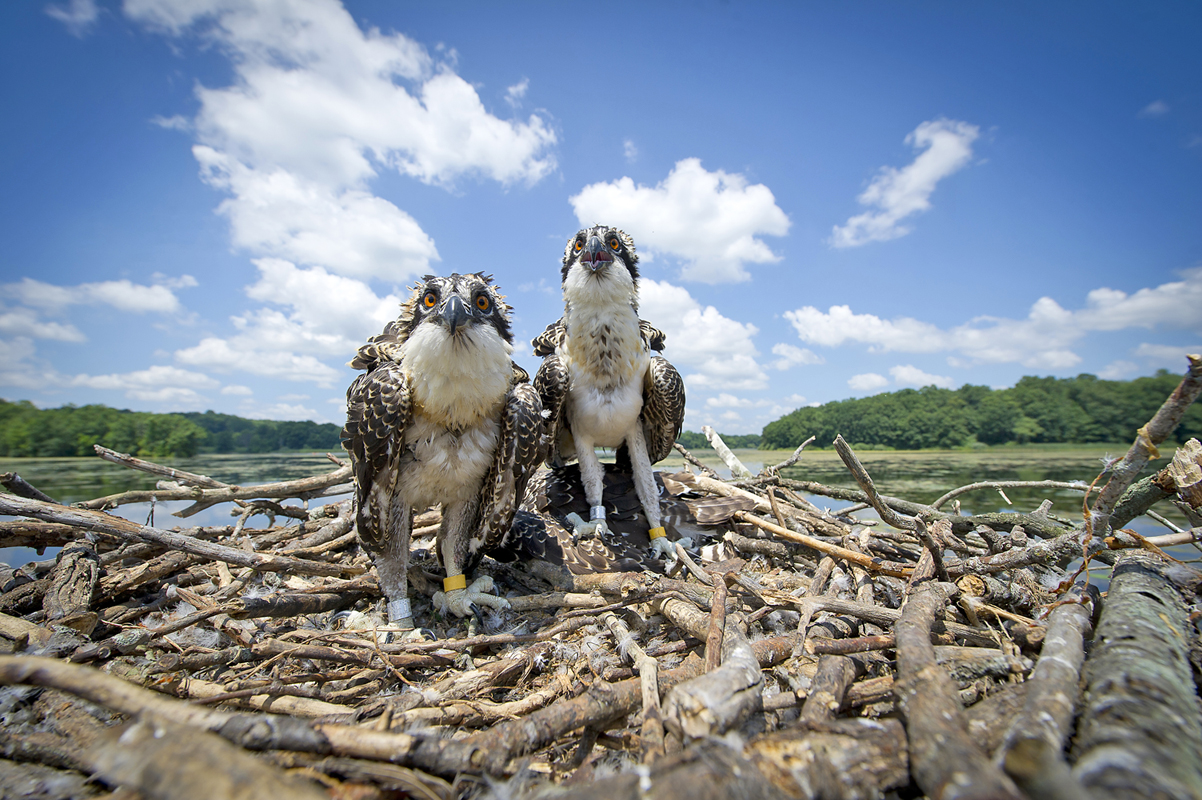
USDA research biologist Brian Washburn is assisted by DNR biologist Julie Oaks in fitting a male Osprey with a GPS transmitter at Kensington Metro Park. Photo: MDNR

USDA research biologist Brian Washburn is assisted by DNR biologist Julie Oaks in fitting a male Osprey with a GPS transmitter at Kensington Metro Park. Photo: MDNR

The movements of three young osprey recently fitted with GPS tracking units by Michigan wildlife officials can be seen on a Google Earth site now being hosted by the grassroots group Osprey Watch of Southeast Michigan.

“OWSEM is going to host the site. Last week it wasn’t updating, but it is working now,” said Julie Oakes, a Southfield based wildlife biologist for the Michigan Department of Natural Resources.

Oakes conceived of the project to track the birds in their home range and along their southern migratory routes, hoping to learn more about their travels with the idea of providing that information to school teachers who could engage students by following the birds.

The osprey’s whereabouts are readily seen on the map site which shows three colored dots, each representing one of the birds. Zooming in on the dots shows the flight movements of each.

The pink dot is Independence, the osprey  at Kensington Metropark outside of Detroit. The yellow dot is Monroe Spark, the young osprey at Estral Beach. The blue dot is Leroy, the osprey that hatched from a nest on a cell-tower in Pinckney.

“There’s not as much water around Pinckney,” said Oakes, “but they are getting their fish somewhere. They’ve raised their young there. In the Monroe area there is all kinds of fish and that bird is moving a lot.”

The young osprey will winter likely in Florida or Mexico. They should return to Michigan on their second year to mate and nest once they sexually mature. The GPS collars are designed to fall off after two to three years.

Posted in Uncategorized | Tagged , , , , , , , , | 4 Comments

Salmon fishing on Lake Michigan producing 20 and 30 pounders

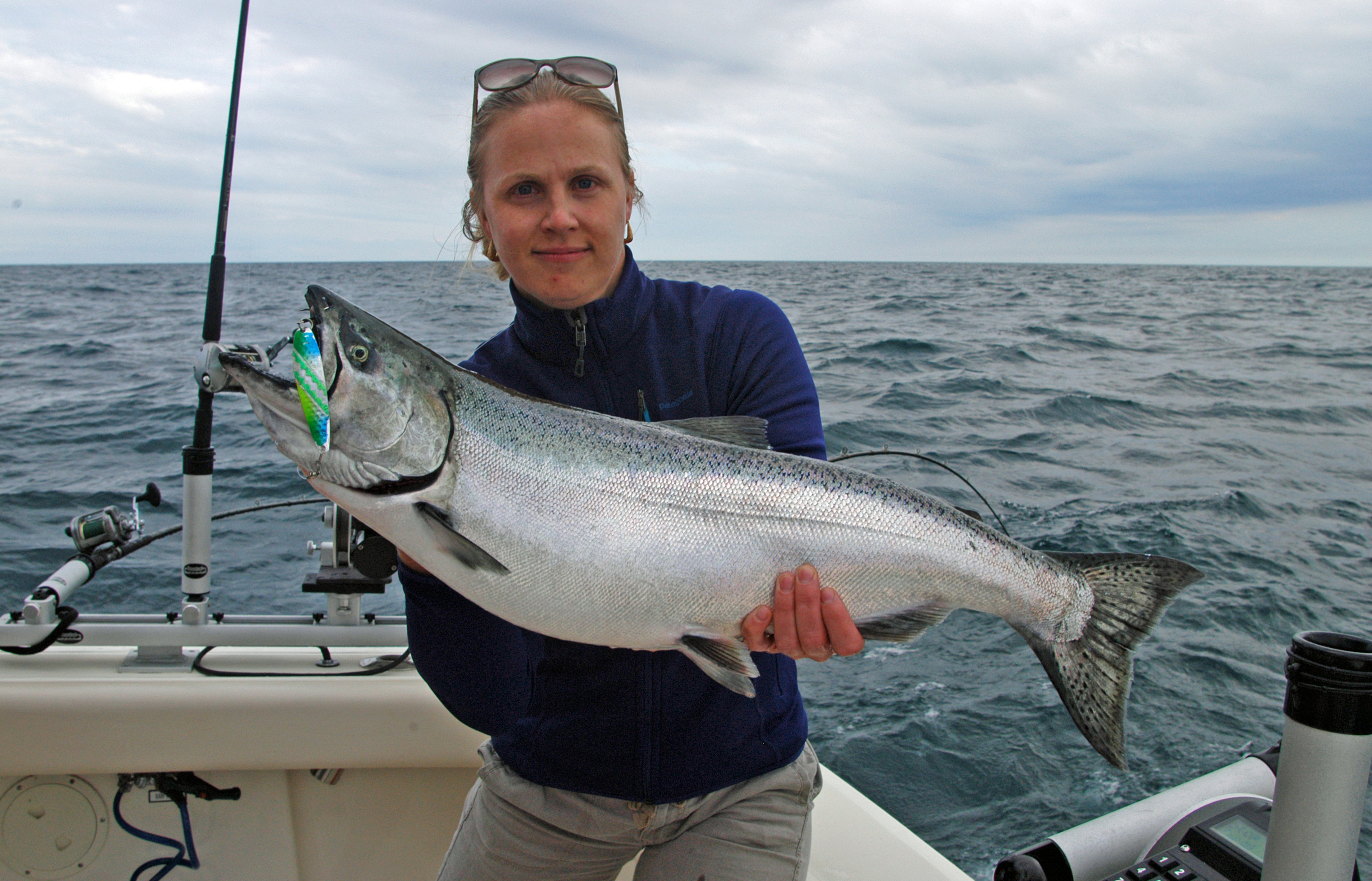
Amber Wiersma hoists a nice chinook salmon she caught on a recent charter fishing trip off Grand Haven on Sea Flea Charters. Photo: Howard Meyerson

Amber Wiersma hoists a nice chinook salmon she caught on a recent charter fishing trip off Grand Haven on Sea Flea Charters. Photo: Howard Meyerson

Howard Meyerson

GRAND HAVEN, MI – It was just shy of 7 a.m. when a rod bucked and caught everyone’s attention.

“There’s one,” yelled Captain Brian Butts, owner of Sea Flea Charters LLC, out of Grand Haven. He had just run the boat a mile-and-a-half offshore to fish. The rods were just getting rigged when the first one went off.

Amber Wiersma came out on the aft-deck to reel the fish in, swaying with the roll of the boat under a slate-gray sky. Within minutes she had it next to the 31-foot Tiara’s hull where April Bosker, a licensed charter captain working as Butt’s mate this day, netted a nice, silver two-year-old Chinook salmon.

The young king had slammed a Blue Skinny Jeans spoon that Butts was trolling. It was the first of 13 fish he and Bosker would boat for the Wiersma family by noon, fish that would range from just a few pounds to as much as 16-pounds. Each family member would get their opportunity to land a big one.

“We’ve been coming out here on the lake since we were kids,” said 34-year old Amber Wiersma, explaining that she wasn’t concerned about the inclement weather. “We do this once a year,” she said referring to her sisters, Lindsey and Ashley, and parents, Bob and Gloria Wiersma, of Grand Haven.

Bob Wiersma said the annual outing on Sea Flea typically results a limit of fish, that is, five fish per person. But catching so many proved more difficult than usual, as has been the case for most of charter fleet this year. Continue reading

Posted in Uncategorized | Tagged , , , , , , , , | Leave a comment

GPS-equipped ospreys released in southeast Michigan

Young osprey in a nest at Kensington Metro Park. The bird on the left has been fitted with a solar powered GPS transmitter.  Photo: MDNR

Young osprey in a nest at Kensington Metro Park. The bird on the left has been fitted with a solar-powered GPS transmitter. Photo: MDNR

By Howard Meyerson

SOUTHFIELD, MI – Three young, southeast Michigan ospreys were fitted with GPS transmitters in July so state wildlife researchers can learn more about their travel routes including where they winter in Central and South America. It is the first time that has been done in Michigan, according to state officials.

“This is going to tell us where the birds go,” said Julie Oakes, a wildlife biologist for the Michigan Department of Natural Resources. “It’s going to give us some idea about their survival and whether their route south is through Florida or Mexico.

“But it is also a way to connect kids with nature and natural resources. We hope to get kids and their teachers using the data we will collect.”

The $15,000 GPS project was funded by grants from American Tower Corporation which purchased two units, and DTE Energy which funded one of the GPS devices. The project is also a partnership with the Detroit Zoo, the Huron Valley Audubon Society and the grassroots Osprey Watch of Southeast Michigan.

GPS backpacks were fitted on 5 ½ half week old ospreys. The birds hatched in nests found at Kensington Metropark, Estral Beach near Monroe, and at Pinckney outside of town on a cell phone tower. Continue reading

Posted in Uncategorized | Tagged , , , , , , , , , | 3 Comments

Bamboo fly rod builder: Wes Cooper honored with MSU heritage award

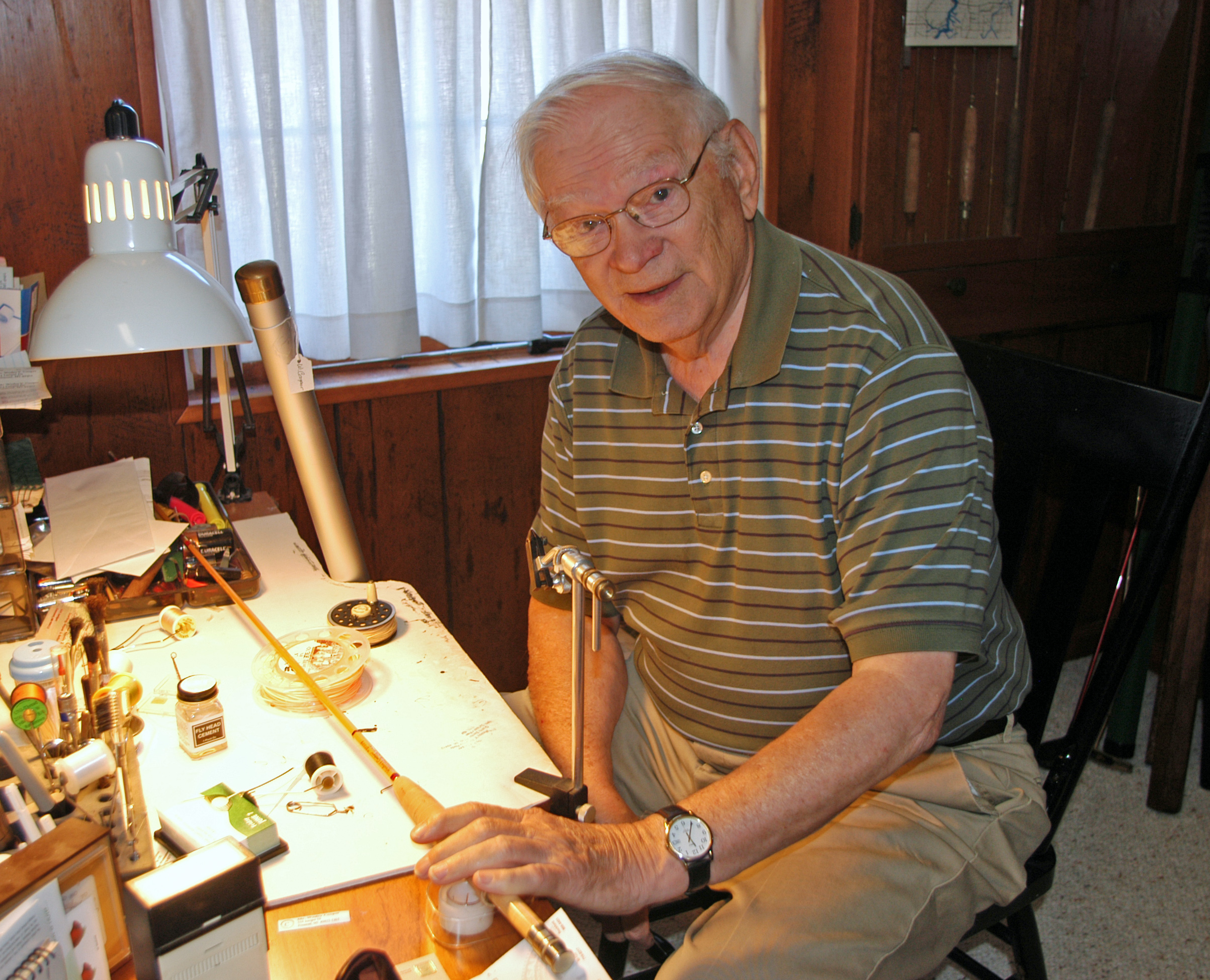
Wes Cooper, of Fremont, was honored by the Michigan Traditional Arts Program Satuday, Aug. 10, for his dedication and excellence in keeping bamboo rod building alive as a tradition. Photo: Howard Meyerson

Wes Cooper, of Fremont, was honored by the Michigan Traditional Arts Program Saturday, Aug. 10, for his dedication and excellence in keeping bamboo rod building alive as a tradition. Photo: Howard Meyerson

By Howard Meyerson

FREMONT, MI – In the quiet of his basement workshop, Wes Cooper has been keeping a 90-year-old Michigan tradition alive – that of hand-building bamboo fly rods in an era dominated by mass-produced fishing poles.

Cooper is a member of a small, but growing fraternity of cane-rod builders in Michigan, anglers who prefer the aesthetics, feel and performance of bamboo over graphite rods. And though some say ‘that is so yesterday,’ Cooper, now 85, says hardly the case.

“There is a bamboo rod building renaissance happening in Michigan,” he says cheerfully. Cooper has mentored at least three young men in recent years that are likely to carry the torch lit in the late 1920’s and 1930’s by famous Michigan bamboo rod builders like Paul Young and Lyle Dickerson, icons among those who relish the rods. He meets regularly with a growing group of amateur and professional rod builders from around the state who share tips and techniques.

“I like the way they cast. Its action is softer than graphite. It casts as far as I ever want to cast and handles fish beautifully” said Cooper, who will be honored for his work Saturday, Aug. 10, in East Lansing where he will be presented with a Michigan Heritage Award by the Michigan Traditional Arts Program at Michigan State University Museum, during the annual Great Lakes Folk Festival there. Continue reading

Posted in Uncategorized | Tagged , , , , , , , , , , , , , | Leave a comment

Endangered mussel delays removal of Lyons Dam

Due to the discovery of federally protected mussls, additional work and federal approval is needed before the 156-year-old Lyons Dam may be removed.  Photo: Susan Craft, Village of Lyons

Due to the discovery of federally protected mussls, additional work and federal approval is needed before the 156-year-old Lyons Dam may be removed. Photo: Susan Craft, Village of Lyons

By Howard Meyerson

The discovery of a federally listed endangered mussel in the Grand River at Lyons will delay state and local plans to remove the Lyons Dam this year. Additional work and federal approval is needed now before the 156-year-old dam can be taken down, according to state officials.

“It puts the plan on hold,” said Jay Wesley, southern Lake Michigan management unit supervisor for the Michigan Department of Natural Resources. “We need a federal permit to do any work there. And that requires surveying the area to get an idea of the size of the population.”

The 9-foot dam at Lyons was slated to be removed this summer. The fish ladder there was to be filled and capped. The dam is considered a hazard and unsafe due to structural deterioration. The village of Lyons has sought funds over the years either to repair or remove the dam.

State biologists found the mussel last year, a small freshwater species called the snuffbox mussel. It was added to the federal endangered species list in 2012. Continue reading

Posted in Uncategorized | Tagged , , , , , , , , , , | Leave a comment