Michigan’s Croff Craft Custom Driftboats; small boats with big attitude

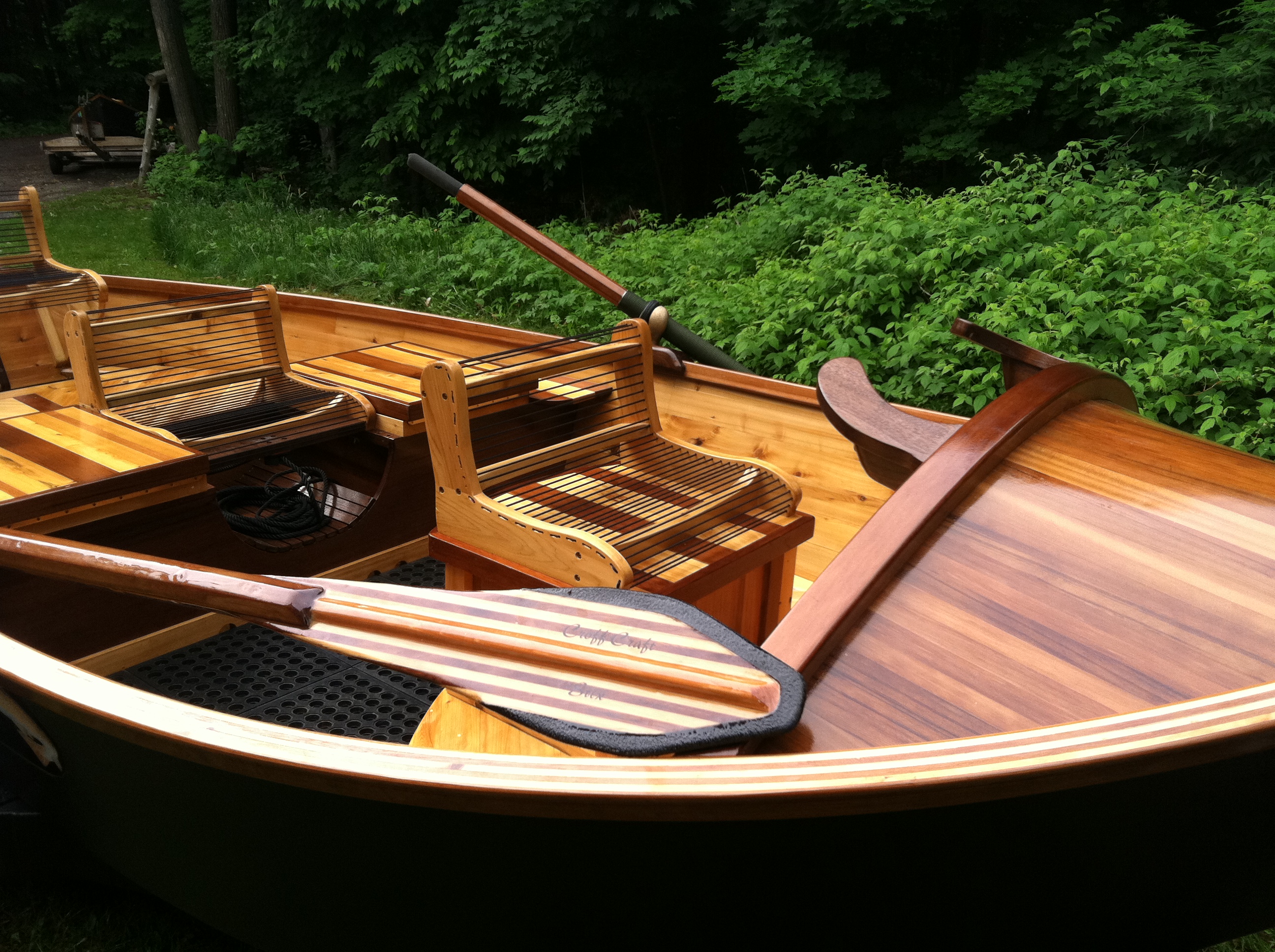
Each of Phil Croff's boats is hand build to customer specifications. Shown is the tradtional model. Photo courtesy of Croff Craft Custom Driftboats

Each of Phil Croff’s boats is hand-built to customer specifications. Shown is the tradtional model. Photo courtesy of Croff Craft Custom Driftboats

By Howard Meyerson

Phil Croff wasn’t planning to start a boat-building business when he constructed his first driftboat in 2006, using Michigan cedar and walnut. He was looking for a safe way to fish rivers at night—a time when big brown trout come out to feed and anglers wade cautiously to avoid stumbling in the dark.

Croff had worked in the construction trade for years as a finish carpenter. He envisioned a small-but-wide and very stable craft, just perfect for the “tip of the mitt” rivers he likes to fish. When others saw what he built, he began getting orders from anglers who wanted one. And so, a new Michigan business was born: Croff Craft Custom Drift Boats. Its catchy slogan is: “Small Boats with Big Attitude.”

Now, seven years later, Croff’s boats are being showcased by Orvis Co., the Vermont-
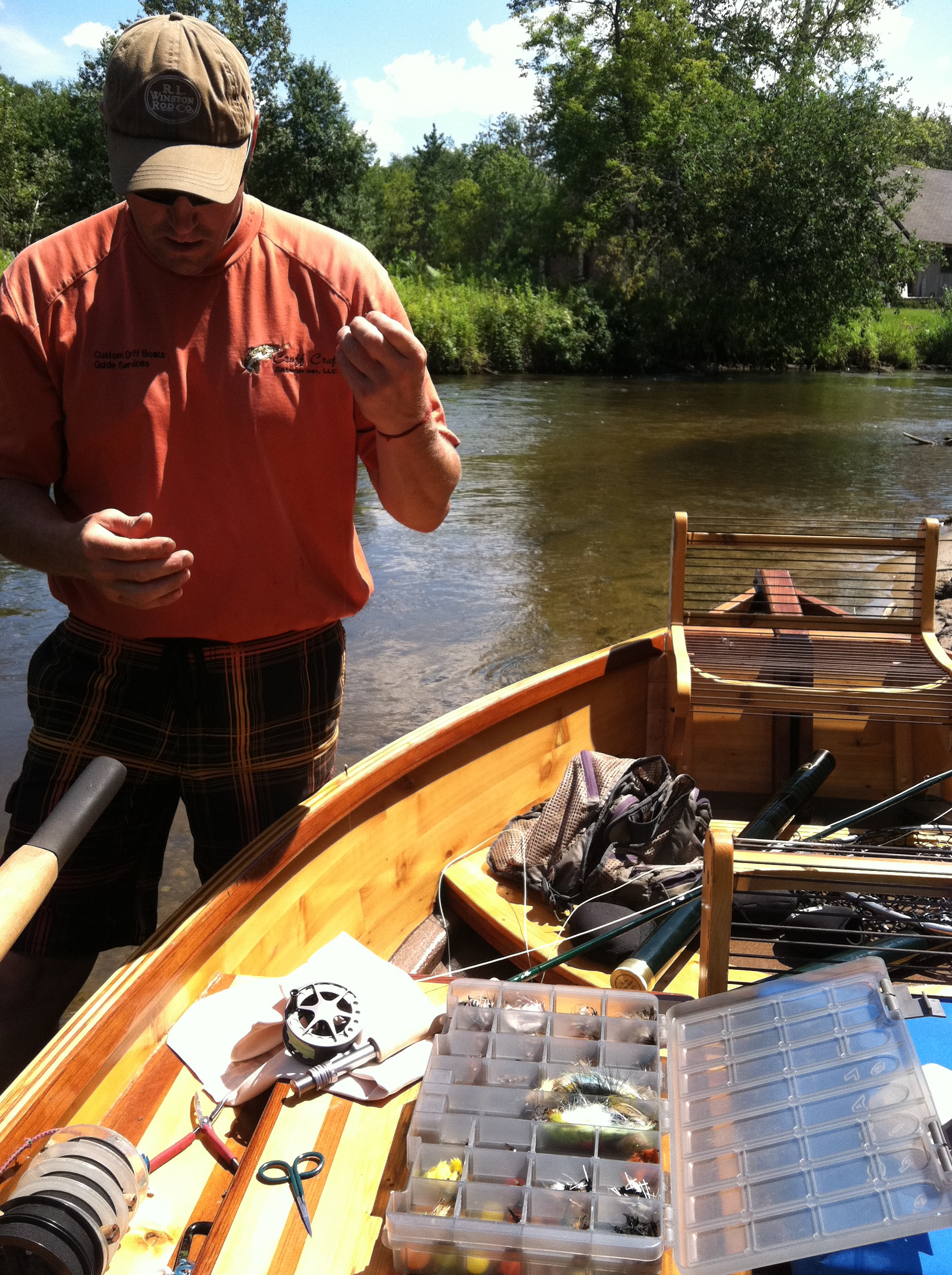
Phil Croff gets ready to do some river fishing while floating downstream in one of his custom driftboats. Photo: Courtesy of Phil Croff.

Phil Croff gets ready to do some river fishing while floating downstream in one of his custom driftboats. Photo: Courtesy of Phil Croff.

based fly-fishing giant, known for its discerning client base. The company’s website features a special 12-foot Orvis Edition Croft Craft that sells for $10,000.

“I had discovered night fishing for big brown trout,” explains Croff, the 43-year-old master wood craftsman from Alanson. “It’s very addicting, but I hated wading at night. So I got online, trying to figure out how to get on the water to do it. The rivers up here are small. There were 12-foot boats out there, but I couldn’t find one stable enough.

“So, I told my wife, ‘I am going to build a boat.’ And her response was: ‘But you don’t build boats.’” Continue reading
Posted in Uncategorized | Tagged , , , , , , , , , | 3 Comments

2013 Salmon Returns: The lowdown on the slowdown

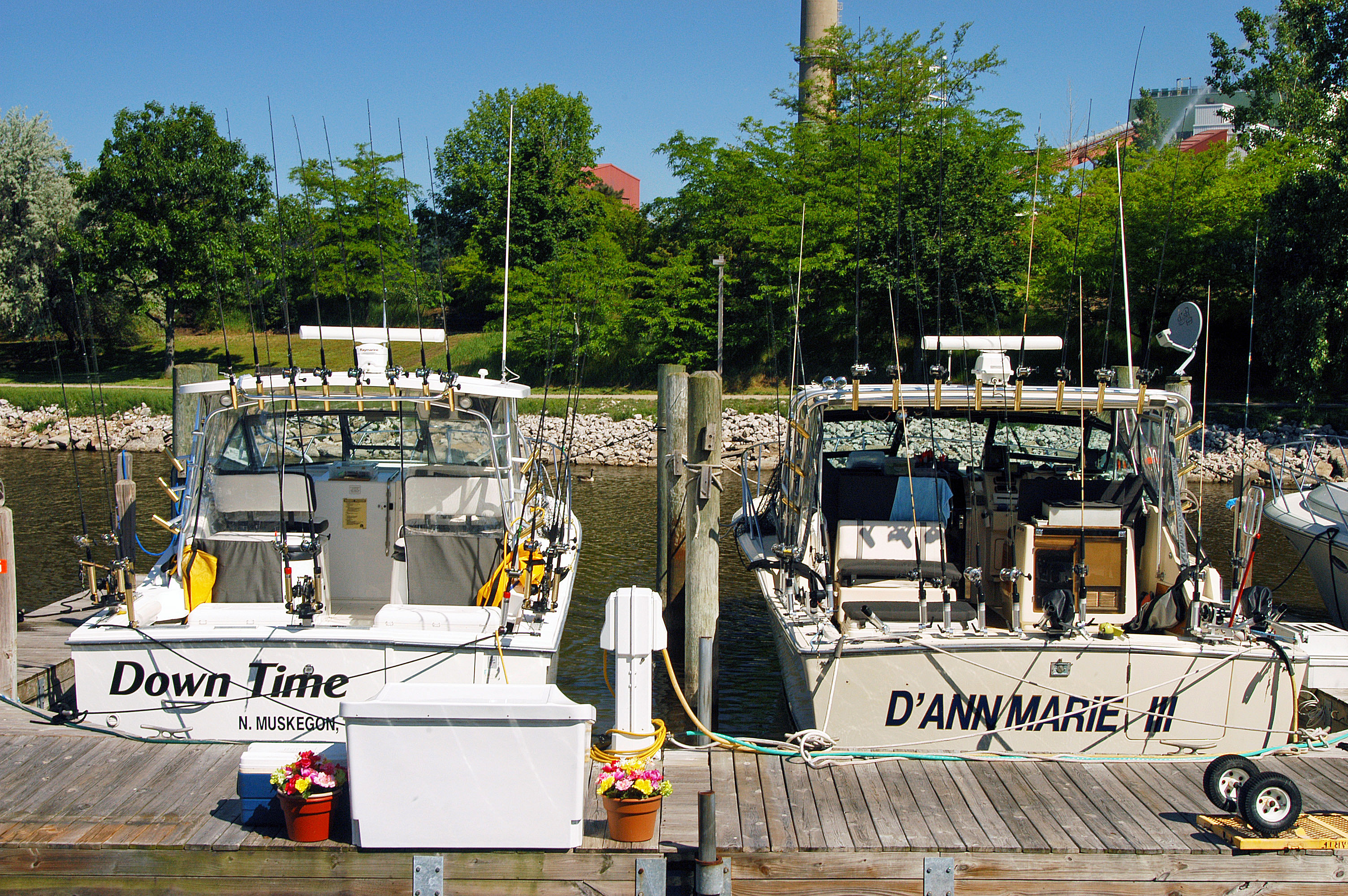
Charter Fishing captains have had mixed results in the 2013 season. Photo: Howard Meyerson

Charter Fishing captains have had mixed results in the 2013 season. Photo: Howard Meyerson

By Howard Meyerson

GRAND HAVEN, MI — Salmon fishing is defined a lot of different ways in Michigan. Much depends on who you talk with and their perspective.

River guides are calling the 2013 fall run an “outstanding,” “banner,” or “great” season. They’ve been excited to see so many big salmon swimming up rivers this year. It’s good for business and clients like it.

Meanwhile Lake Michigan charter captains seem to be less enthused. They’ve called it all sorts of things, both good and bad. Most were happy to see big fish, but salmon numbers were down. And so, to a surprising extent, is the sentiment of many.

The difference is understandable. Charter captains have a longer season to finance, one that spans several months. They have their boats, their docks, their winter storage fees. Most will say their big market is Chinook salmon and many wish to sell limit catches (five salmon per person) all season long. They maintain it’s the numbers that count to keep a customer happy and returning.

River guides, on the other hand, have a shorter salmon season. Their business is more diversified. It begins when salmon converge on rivers in the fall. They sell a day on the water, the experience of finding, casting to and battling a big salmon if a client is so lucky as to hook-up and keep it on. Land two or three and their client is extremely happy. The rest of the year they sell trips for steelhead, trout, or maybe smallmouth bass.

State officials say the salmon season has been all of the above. Mark Tonello, a Michigan Department of Natural Resources fish biologist out of Cadillac, recently addressed the members of the Lake Michigan Citizens Fishery Advisory Council. He presented the salmon weir returns for 2013. The weirs are where the DNR collects salmon eggs for the hatchery program. There are five located on strategic rivers where salmon run. The number collected is compared to other years which indicate any up or down trends. Continue reading

Posted in Uncategorized | Tagged , , , , , , , , | Leave a comment

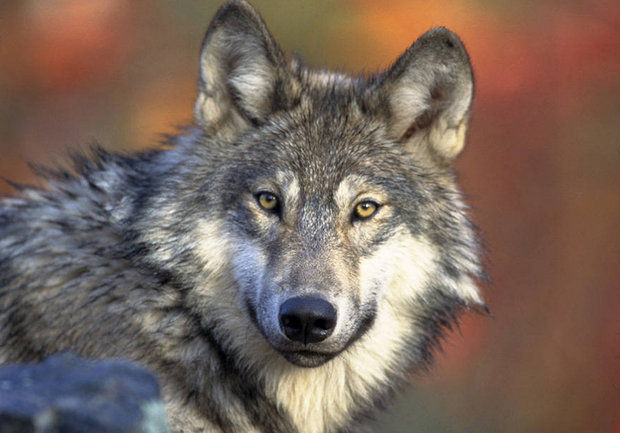
Michigan’s wolf hunt: How half truths, falsehoods and one farmer distorted reasons for historic hunt

Just how justifiable is Michigan’s first wolf hunt? That’s a question that is being Michigan wolf hunt: With licenses set to go on sale this Saturday, opponents continue to cry foul | MLive.comanswered in what appears will be an excellent series of stories that kicked off today in the MLive Media Group newspapers. There’s a lot that bears further scrutiny, from reportedly threatening incidents that never happened to key Michigan legislators trying to backpack paddle about their legislative push, saying they didn’t know what they’d been told was wrong.Read more: Michigan’s wolf hunt.


Posted in Uncategorized | Tagged , , , , , , | Leave a comment

With Deadly Attacks Up, Federal Officials Prepare to Remove Grizzly Protections

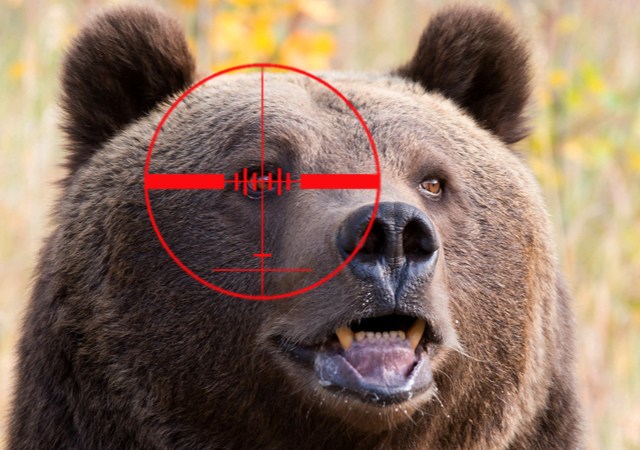
After 30 years of being protected by the Endangered Species Act, grizzly bears in the Yellowstone region have rebounded from a low of fewer than 200 bears to more than 600. Federal officials with the US Fish and Wildlife Service are now working to take the bear off the list, but not everyone thinks that is a good idea, according to a story on Outside Online today.

“It’s taken us 30 years to get to this point,” Chris Servheen was quoted as saying. He is the grizzly bear recovery coordinator with the FWS and is spearheading the delisting effort. “We consider the species recovered.”

Read more: Delisting the Grizzly

Posted in Uncategorized | Tagged , , , , , | Leave a comment

Kirtland’s Warbler makes a comeback, but what’s ahead?

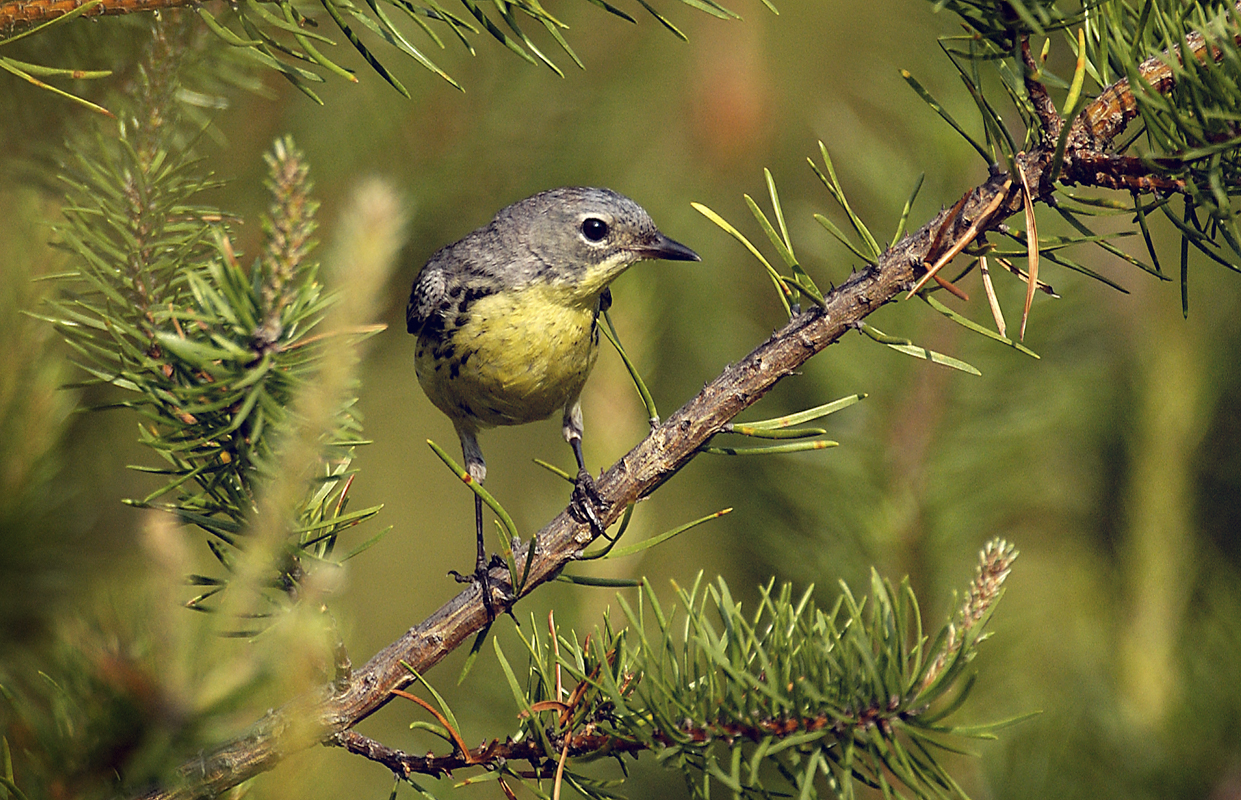
Conservation officials are considering taking the Kirtland's Warbler off the federal Endangered Species List. Photo: Courtesy Michigan DNR

Conservation officials are considering taking the Kirtland’s Warbler off the federal Endangered Species List. Photo: Courtesy Michigan DNR

By Howard Meyerson

I love a good conservation success story and Michigan has several: Wolves are returning; bald eagles are plentiful; wild turkeys are everywhere; and elk are just fine. But, none warms my heart so much as the Kirtland’s Warbler comeback.

The diminutive bird that inhabits the jack pine forests of northern Michigan has now recovered from the brink to such a degree that government agencies and non-governmental groups are talking about taking it off the federal Endangered Species list. They are also discussing what should happen after that.

Observers participating in a recent Kirtland’s Warbler survey found 2,004 singing males; each typically signals a mating pair. That is fewer than 2012 when 2,063 singing males were seen, but far more than 1987 when 167 singing males were observed. That was a low point.

“The recovery plan goal was 1,000 breeding pairs, but there are now 2,090 pairs in Wisconsin, Michigan and Canada. Michigan has 98 percent of the population,” said Abby Ertel, the Kirtland’s Warbler coordinator for  Huron Pines a Gaylord-based conservation organization. Her group is spearheading an effort to assure the birds have ongoing support once they come off the list.

You might wonder what more is needed if the bird has recovered, but the yellow and blue warbler’s success story is directly tied to active human intervention. And most will tell you that intervention has to continue or the success to date will slowly but surely disappear. Continue reading

Posted in Uncategorized | Tagged , , , , , , , , , , | 4 Comments

Pheasant hunting: more birds if you know where to look

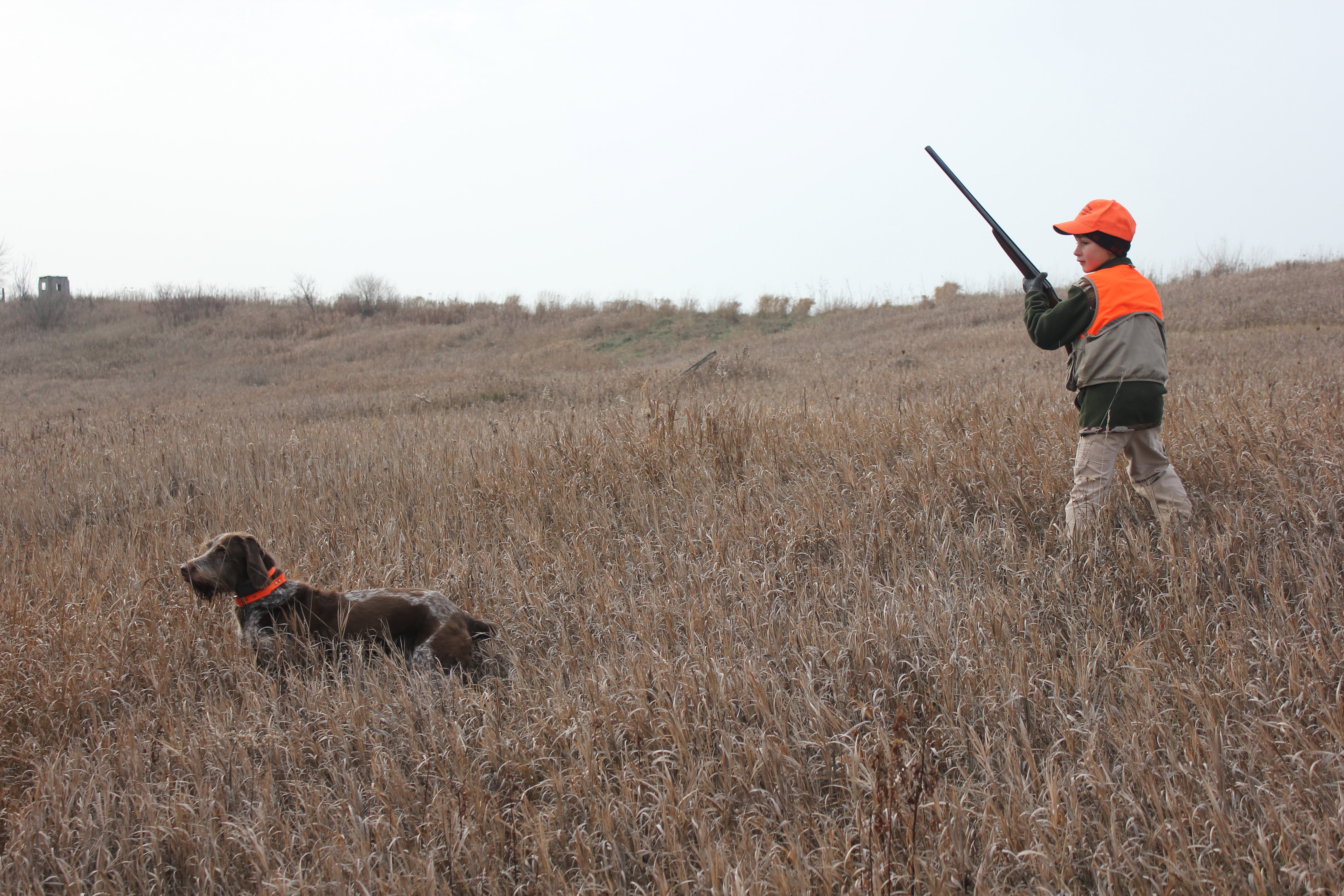
A young hunter (unnamed) looks for pheasant while hunting German wire haired pointer named "Jake" durig a mentored youth hunt put on by the Muskegon County Pheasants Forever chapter earlier this year. Photo: Courtesy Muskegon County Pheasants Forever.

A young hunter (unnamed) looks for pheasant while hunting German wire-haired pointer named “Jake” durig a mentored youth hunt put on by the Muskegon County Pheasants Forever chapter earlier this year. Photo: Courtesy Muskegon County Pheasants Forever.

By Howard Meyerson

After three poor years of nesting success in Michigan, there is good news for pheasant hunting enthusiasts. The population is again climbing, according to state wildlife officials. Pheasant nesting success was good in June.

“I don’t want to sound too optimistic; we are trying to rebuild the population, but I think hunters will see more pheasant this year,” said Al Stewart, the Michigan Department of Natural Resources upland bird specialist. “Our mail-carrier brood counts were the highest they have been since 2004. I do think hunters will see more roosters this fall than two falls ago.”

Pheasant hunting opens in the Lower Peninsula October 20. The 58-day season runs until November 14 and reopens from December 1 to January 1, 2014. Hunting in the Upper Peninsula, which opened on Oct. 10 for pheasants, continues until Oct. 31.

Ben Wickerham, the Michigan representative for Pheasants Forevera national pheasants conservation organization, says he’s heard the same from chapter members around the state. His organization has been working hand-in-glove with the DNR, private land owners, and others in an effort to create pheasant cooperatives, essentially large tracts of land that will contain acres of high-quality pheasant habitat. The program is called the Michigan Pheasant Restoration Initiative .

“A lot more adult birds came through this year’s nesting season,” Wickerham said “I heard about them anecdotally, but the (mail-carrier) brood counts confirmed them.

“We’re hearing that they are showing up in some unexpected places, and not necessarily the usual place where a guy has always had one crowing behind his house.” Continue reading

Posted in Uncategorized | Tagged , , , , , , , , | 3 Comments

Four nuclear power plants on the Great Lakes rank among the nation’s worst for high level safety violations

Posted in Uncategorized | Leave a comment

A good camping summer is a good summer indeed

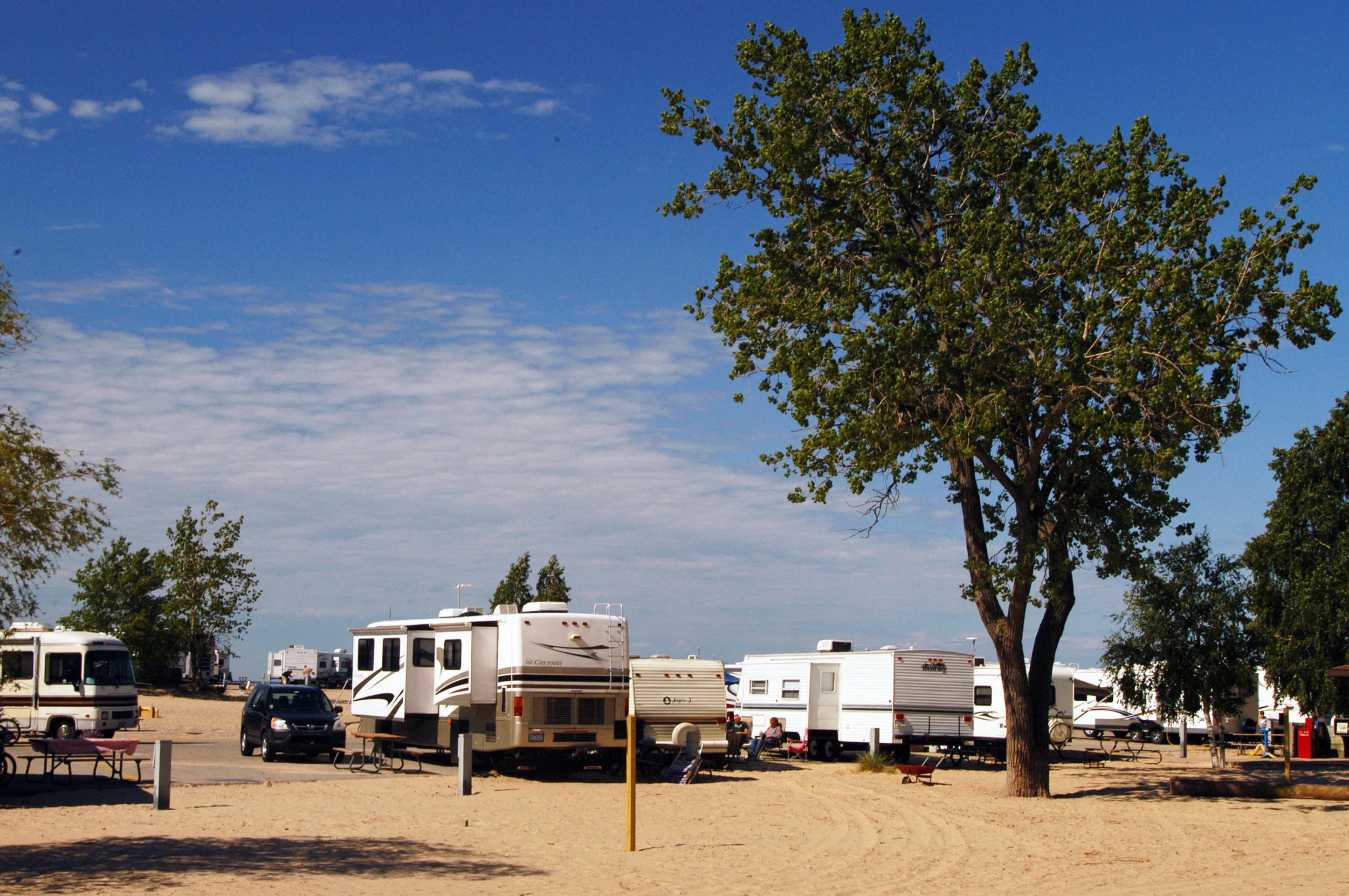
Grand Haven and other state park in Michigan were very poplar this summer. Photo: Howard Meyerson

Grand Haven and other state parks in Michigan were poplar this summer. Photo: Howard Meyerson

By Howard Meyerson

While many have put their tents away and others are thinking about storing their RV’s for the winter still others are taking advantage of Michigan’s fall camping season.

State officials say 2013 has been a good year for camping. State forest campground use was up from last year, and state park campers made a very strong showing.

“This year was good,” said Ron Olson, Michigan’s state park chief. “Last summer (2012) was a banner year for us. We hit a million camp nights, a number we hadn’t seen since 2005.

“Staff also said they hadn’t seen so much day-use of our parks in years. This year we are projecting will be about a million (camp nights) again. Our camping season runs through the end of October.”

The recent rise in camping participation may correspond with the weather and an improved economy. It declined in 2008 and 2009, a period defined by economic hardship for many.

“We were down to 860,000 or 870,000 camp nights at the low-end,” Olson said. “Then things started to come back and last year got to where we were in 2005. We’re pleased with the outcome this year even with the weather being less favorable.” Continue reading

Posted in Uncategorized | Tagged , , , , , , , , , , | 2 Comments

Michigan to get $1M federal funds for recreation

By Howard Meyerson

blueberry.ridge.pathway

Blueberry Ridge Ski Area has applied for a grant to build a warming hut on its cross-country ski trails. Photo: Michigan.org

LANSING, MI – State and county parks along with other community recreation facilities are expected to benefit from more than $1 million in federal Land and Water Conservation Funds that Michigan received this year. The federal funds are distributed by the Michigan DNR as grants to communities that have applied for the money.

“Michigan has done very well with the program over the years,” said Steve DeBrabander, manager of the DNR’s Grants Management Section. “Michigan has issued more of those grants than any other state.”

LWCF funds are known as “pass-through” dollars. They come primarily from fees paid by oil and gas companies for offshore drilling along with the sale of surplus federal lands and taxes on motorboat fuel. The money is distributed through the U.S. Interior Department to all 50 states. It can be used for recreation planning, acquisition of lands and waters, and facility development for state and local projects.

Communities and agencies applying for the funds are required to put up a 50 percent match.

“It’s been a very successful program,” DeBrabander said. “Every county has received those funds.  This year we got 22 applications for a total of $1.8 million, but we have just a little over $1 million and that will be just under $1 million to give out after administrative costs.

“We haven’t made any decisions about projects yet. Those will be announced in October.” Continue reading

Posted in Uncategorized | Tagged , , , , , , , , | 1 Comment

Commission: GL sea lamprey declining

Sea lamprey continue to be a challenge on Lake Erie and Huron, but have declined on other Great Lakes. Photo: US Fish and Wildlife Service

Sea lamprey continue to be a challenge on Lake Erie and Huron, but have declined on other Great Lakes. Photo: US Fish and Wildlife Service

By Howard Meyerson

ANN ARBOR, MI — A draft Great Lakes Fishery Commission assessment of sea lamprey populations in the Great Lakes contains good news and, well, not-so-good news.

Sea lampreys in the Great Lakes basin have declined by nearly 50 percent from 2012. Populations in lakes Superior, Michigan, and Ontario are within target range. Lake Huron lamprey populations are still high, but are trending downward, and those in Lake Erie remain “frustratingly high,” according to GLFC staff.

“This is great news with respect to lakes Michigan, Superior, and Ontario,” said Marc Gaden, spokesman for the commission. “Northern Lake Huron and Lake Michigan have been a real challenge for the last decade or two because lampreys were coming out of the St. Mary’s River in such massive numbers that they were knocking the stuffing out of the Lake Huron and Michigan fisheries.

“Lake Huron is still a work in progress, but we are way above target in Lake Erie,” Gaden said.

The draft 2013 Sea Lamprey Assessment, released in early September, found the total number in the basin declined from 511,000 lampreys in 2012 to 275,000 in 2013. The report, based on computer modeling and the results of marking and recapture studies, also found: “More than half of the total number of adult sea lampreys across the Great Lakes basin in 2013 was attributed to 19 streams.” Continue reading

Posted in Uncategorized | Tagged , , , , , , , , , | 4 Comments