
 There is nothing like hiking in the redwoods to give one a sense of place in the natural world. Photo: National Park Service
Howard Meyerson
After more than 30 years in the outdoor writing business, you would think I'd know better.
There is nothing like hiking in the redwoods to give one a sense of place in the natural world. Photo: National Park Service
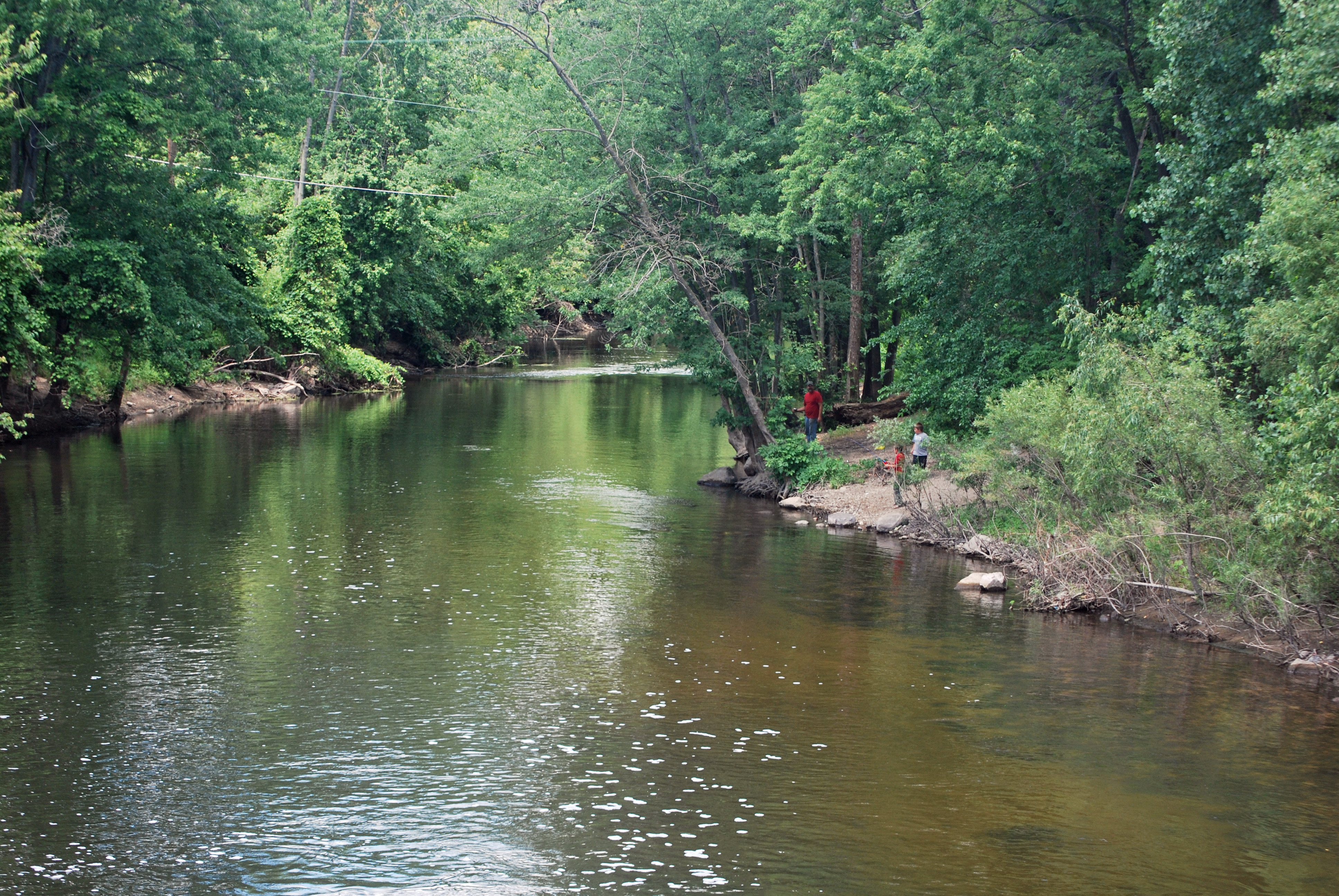
More than 80 paddlers are signed up for the 2012 Thornapple River Expedition. Photo courtesy Cal Lamoreaux
By Howard Meyerson
When Erv Gambee takes a week off in August to paddle the Thornapple River, the Caledonia resident won’t be alone. Gambee, the president of the Thornapple River Watershed Council, will be joined by others — several dozen others.
More than 80 paddlers have signed up for some portion of the 68-mile trip down the Thornapple River — a five-day adventure from Vermontville to Ada being dubbed the Thornapple Expedition. Organizers say the group is likely to exceed 100 when registration for the event closes July 15. The expedition is Aug. 6-11.
“I am looking forward to seeing the river from one end to the other,” said Gambee, one of the organizers. “There will be a lot of free time in the evening. I am looking forward to enjoying the company of the others.”
The concept of exploring the river’s length is modeled after the 2010 Grand River Expedition, a 225-mile trip held every 10 years to raise public awareness about the river’s health. The Thornapple is one of five sub-watersheds for the Grand River; the others are the Looking Glass, Maple, Flat and Rogue rivers. Continue reading
By Howard Meyerson
Saginaw, Mich. — Scientists studying walleyes in Saginaw Bay have long known that they migrate into Lake Huron during the summer months. But the results of new telemetry research using radio-tagged fish shows as many as 2 million walleyes – far more than expected – leave for open waters as early as June.
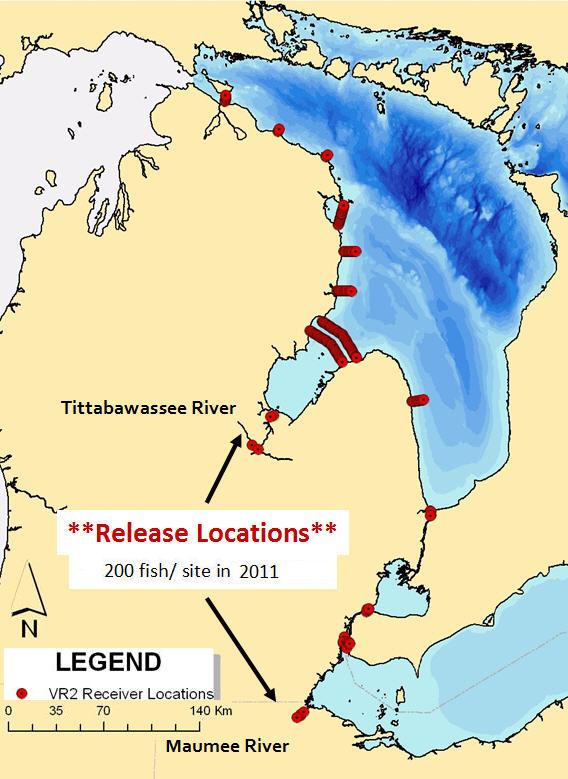
The hydro-acoustic sensors (red) mark the passage of walleye with tiny, implanted transmitters. Map courtesy of the Great Lakes Fishery Commission
“Previously, we had evidence that it was a July or August phenomenon,” said Dave Fielder, a Michigan DNR research biologist at the Alpena Fisheries Research Station. “Based on (previous) jaw-tag returns from anglers we thought 8 percent of the walleyes out-migrated. But we see it’s more like 50 percent.”
Fielder and other scientists do not know why they leave. It may be for cooler waters or for food. The radio-tagging study is providing information about where they go. Strategically placed acoustic sensors on the bottom of Lake Huron are helping researchers track the radio-implanted fish, according to Fielder. The data collected lets them know whether Saginaw Bay walleyes swim south to the St. Clair River or north to Drummond Island.
“Thunder Bay and Alpena anglers know there is (typically) a surge in walleye fishing in June and have said, ‘Oh the Saginaw Bay fish are here.’ I think they are right,” Fielder said. “The Saginaw Bay fish are coming to and through Thunder Bay.” Continue reading
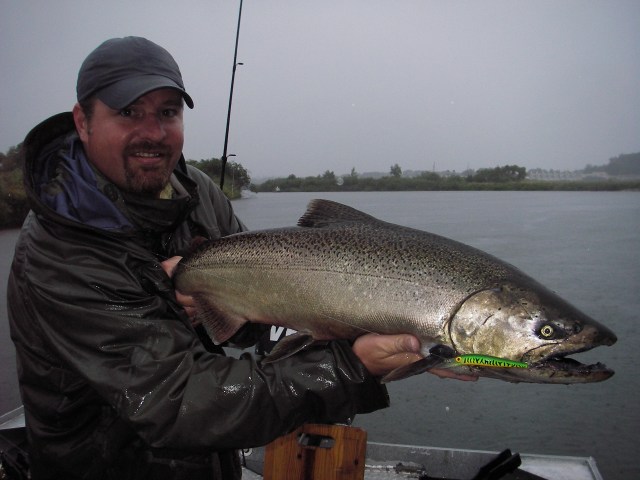
Without stocking cuts, fewer or smaller Chinook salmon could be found in Lake Michigan or its tributaries like the Manistee River where this was caught. Photo by: Howard Meyerson
By Howard Meyerson
A recent survey of Lake Michigan anglers found just over half would cut Chinook stocking by 30 percent and cut coho, steelhead, brown trout and lake trout by 10 percent. That was one of four options presented to anglers this spring as fish managers from the Lake Michigan states wrestled with a need to reduce stocking in light of declining alwewife populations.
Michigan officials say they are inclined to make even steeper Chinook cuts and leave the other species alone.
“Chinooks are the pigs at the table. It makes sense to us to manage the primary predator” said Jay Wesley, the southwest Michigan fisheries manager for the Michigan Department of Natural Resources. Continue reading
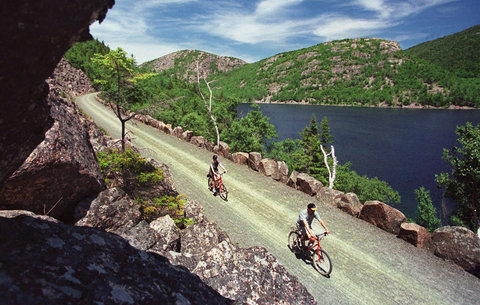
There has been a longstanding debate about bicycles in national parks. Should they or shouldn’t they be allowed? And if so, where? And where are they not appropriate?
Cyclists, particularly mountain bikers, have been pushing for greater access in recent years. Similar questions have surfaced for pack animals, snowmobiles and other motorized vehicles. But some areas of certain parks are intended to provide quiet enjoyment.
Are bikes the nemesis that some say they are? Should they be allowed in all areas of every national park? This story in the New York Times today Making Way for More Bikes in National Parks provides a good look at the questions and the different perspectives.
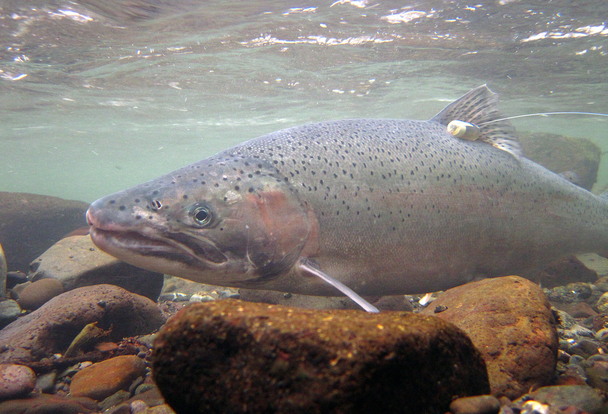
If you’ve ever wondered what is possible once a dam is removed, consider the case of the Elwha Dam, one of two dams being removed in the Elwha River Valley in Washington. This monster steelhead is a wild fish that found its way into the area where efforts are going ahead to recolonize the steelhead. This Seattle Times story Steelhead spawning in the Elwha is an excellent account of what is happening there.
But that story is just a tiny piece of what is considered to be the largest ecological restoration being done in North America. The Times also published this great series worth reading: Elwha: The Grand Experiment to tear down two dams and return an Olympic wilderness to its fomer glory.

If you ask someone whether rock climbing is prohibited in Cuba, the answer is likely to be ‘No, it is not.” At least that is what Alex Lowthere reports for the New York Times today. But follow it with another question like: “Can I climb?” The answer remains: “No.” So locals and others take it upon themselves to go where the guards aren’t.
Is Cuba a tourism mecca? Not for climbers it isn’t. At least, not yet.
Read more: Rock Climbing Cuba.
I suppose it shouldn’t come as a surprise. We’re warned all the time about the possibility that various diseases can be spread in close, confined quarters like airplanes which have less  than ideal air circulation and filtration.
But scientists are now saying the same applies to bat colonies that have been wiped out by the white-nose syndrome, a fungal condition that has killed millions of bats in recent years.
A story today on Smithsonian.com reports that a study in the journal “Ecology Letters” discusses findings that show the most social bats, those that hibernate in big colonies, are those most stricken by the disease. Solitary hibernators are less affected. One species: the little brown bat, changed its behavior to “ensure a greater survival rate. Read more: WNS Kills Social Bats Most.
After more than 30 years in the outdoor writing business, you would think I'd know better.
Protecting Michigan's Natural Heritage Since 1952
Adventure Travel Photography Blog
Every Day is a Gift!
Walks Stories and Nature
we travel, then walk, on a budget
Information and discussion on legislation of interest to Michigan paddlers
News and Views of the Outdoors
Reclaiming the Raisin-Grand Water Trail
Drink Local, Eat Local, Create Local
October 11 & 12, 2014 in Calhoun County, Michigan
Michigan's Premier Trail Resource
A great place to explore
All things eBird in Michigan
Just another blog
Explore. Fish. Hunt. Live
Gail Mooney - Insights from a professional photographer and filmmaker

 The Outdoor Journal