Food for Thought

One doesn’t normally find a frog inside a pitcher plant. They are carnivorous. They survive by attracting insects which fly in and land and can’t get out and then get digested by the fluids and bacteria in the plant. So, is this one smart frog –  or is it a frog in trouble?

Photo courtesy of US Fish & Wildlife Service

Posted in Uncategorized | Tagged , , , | 2 Comments

Salmon update: Michigan likely to take big stocking cuts

By Howard Meyerson

Michigan is likely to make big reductions in the number of future Chinook salmon it plants in Lake Michigan. Final decisions about that and a lake-wide stocking strategy are expected yet this month by the Lake Michigan committee of the Great Lakes Fisheries Commission, according to state officials.

The decisions follow a year of evaluating options designed to create a sustainable salmon fishery given the fluctuating alewife forage base. Committee discussions in June narrowed the field of stocking options to two choices: a 50 percent reduction in Chinook stocking or a 30 percent Chinook cut and a 10 percent cut for other stocked species.

“The pressure is on. They (other Lake Michigan states) were asking Michigan to take all the cuts. I wasn’t willing to do that,” said Jay Wesley, the Michigan Department of Natural Resources southwest Michigan fisheries supervisor coordinating the process for Michigan. Continue reading

Posted in Uncategorized | Tagged , , , | Leave a comment

North Country Trail: America’s longest footpath celebrated at national conference in Michigan

North Country Trail Association volunteers constructed this half-mile boardwalk in the Huron Manistee National Forest over a very wet section of trail. Photo: Howard Meyerson

By Howard Meyerson

LOWELL, MI — If you ask Dave Cornell about long-distance hiking, the 73-year-old Delton resident is unequivocal about its place in life.

“Hiking has made a difference. It saved my life. There is nothing like strapping on a backpack and climbing up a mountain to see your place in life.

“I was a lawyer in my first life. I am a hiker in my second life,” said Cornell, an at-large director for the North Country Trail Association and past president of its national board of directors.

Cornell retired from law in 1993. He then took four summers to hike the 2,184-mile Appalachian Trail, an experience, he said, like no other.

He will be one of 200 long-distance hiking enthusiasts from seven states that will converge on the southern Michigan town of Augusta on Aug. 1-5 when the North Country Trail Association holds its national conference. Continue reading

Posted in Uncategorized | Tagged , , , , , , , , | 1 Comment

Wild & Scenic: The Betsie River is a special place

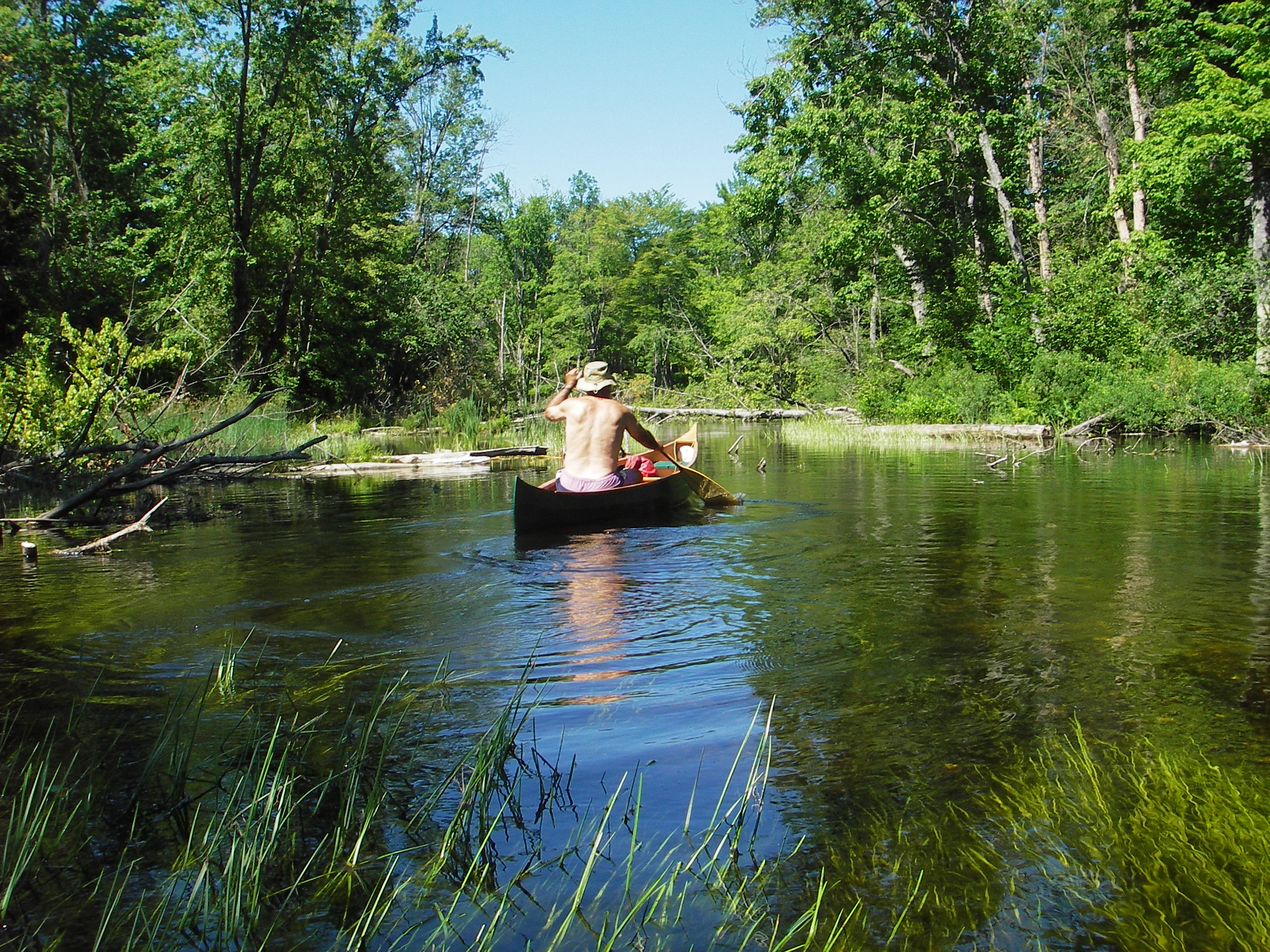
Fritz Seegers of Kalamazoo heads downstream on the Betsie River on a hot summer day. Photo: Howard Meyerson

By Howard Meyerson

THOMPSONVILLE, MI — I was drifting with the current when I saw them ahead: two 4-foot-tall sandhill cranes. Each was stalking the shaded shallows, methodically looking for something to eat.

I signaled my buddy, who put up his paddle and began to drift quietly, too. We were mesmerized by the birds, their crimson crests a bright contrast to the lush green foliage lining the river banks.

I suppose we shouldn’t have been surprised to see them. The upper stretch of the Betsie River is known for its wildlife. We had launched from Grass Lake State Forest Campground just downstream from the Grass Lake State Wildlife Flooding. That area is known for its waterfowl and birds.

But the cranes are always special to see. And they would be just the start of a day full of deer along the banks, trilling red-winged black birds, kingfisher antics and scores of luminous, emerald damselflies.

The Betsie is one of Michigan’s better-known Wild and Scenic Rivers. It was designated in 1973 under the state’s Natural Rivers Act, an auspicious piece of legislation that put a zoning framework in place to protect the natural beauty of special streams such as the Fox and Two-Hearted rivers in the Upper Peninsula and the AuSable, Jordan, Rifle and Boardman rivers, to name a few in the Lower Peninsula. Continue reading

Posted in Uncategorized | Tagged , , , , , | 1 Comment

Early goose season on tap, new shot-size rules

By Howard Meyerson

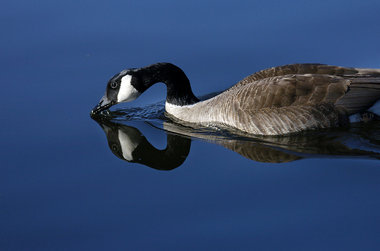
LANSING, MI — Michigan’s resident Canada goose population is doing just fine, and hunters will have a shot at them again come Sept. 1. In fact, they are likely to have more birds to shoot.

Michigan’s Natural Resources Commission recently approved the state’s early goose season for 2012 as part of an early waterfowl hunting package of rules. The season will be Sept. 1-10 in the Upper Peninsula, Huron, Saginaw and Tuscola counties, and Sept. 1-15 in the rest of the state.

“All indications are that the population is growing,” said Barb Avers, the waterfowl specialist for the Michigan Department of Natural Resources. “The 2012 Michigan Canada goose population estimate is about 279,000. This is a 36 percent increase over 2011 and 30 percent above the long-term average (since 1991).

The early goose season targets resident Canada Geese populations rather than migrants that arrive in Michigan later in the year. The resident geese are considered a nuisance due to their abundance in parks, golf-courses and agricultural lands. Continue reading

Posted in Uncategorized | Tagged , , , | Leave a comment

Explorer Pushes the Boundaries

Explorer Pushes the Boundaries of a Human-Powered Watercraft - NYTimes.com

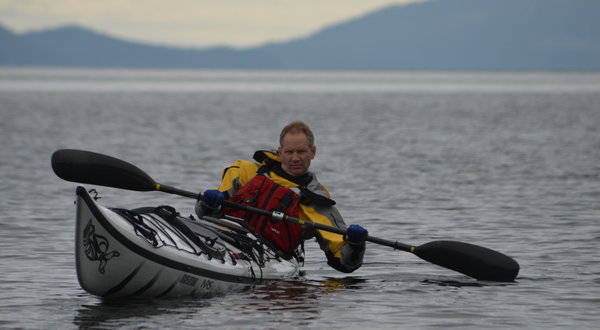
A 48 year-old paddler, Wave Vidmar, is about engage in a serious undertaking: paddling solo for 3,000 miles across the Pacific Ocean from California to Hawaii. Vidmar, who plans to leave from Sausalito, figures the trip will take from 45 to 60 days.

“I’m definitely scared,” Vidmar said in a story by the New York Times today. “There are times that I realize this is not a small undertaking.”

The Times story said Vidmar plans to consume 5,500 calories a day. He’s no stranger to long-distance solo adventures, having once skied to the North Pole. At night he will inflate pontoons to stabilize his kayak so he can slip down into it and sleep.

Read more: Explorer Pushes the Boundaries

Posted in Uncategorized | Tagged , , , | 2 Comments

Beautiful Birds: Great Blue Herons

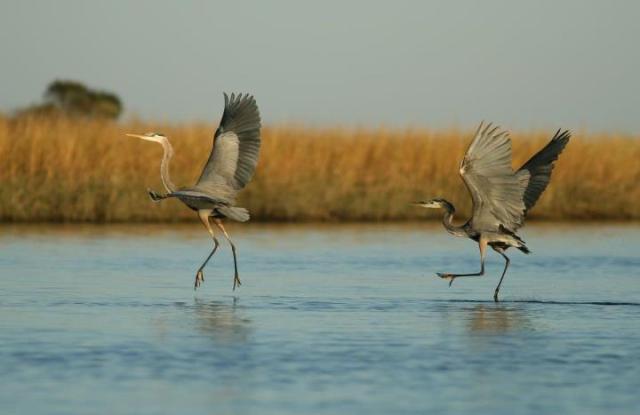
Great Blue Herons are magnificent birds.

Photo by Walt Spencer found at: Choctawhatchee Audubon Society on Facebook.

Posted in Uncategorized | Tagged , , | 2 Comments

My Kind of Place: The Nooksack

Ruth Creek, a tributary of the North Fork of the Nooksack. Photo by Rich Bowers

I’ve never been here. But now that I know, I am likely to look for it.

Found:  NooksackWildAndScenic, a river in Washington State. American Rivers, the non-profit river conservation group is seeking federal Wild and Scenic status for the river which has been studied as a candidate for that status. That designation would protect it from rampant development.

American Rivers describes the river as “flowing from the high snow fields and glaciers of Mt. Baker, Mt. Shuksan, and the Twin Sisters range in the North Cascades, the Nooksack River system is home to all five types of salmon, bald eagle, black bear, cougar, elk, and many other fish and wildlife.” For more information see: American Rivers.

Posted in Uncategorized | Tagged , , , , , , | 1 Comment

Allow how many eagles to die?

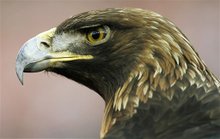
Utilities are looking to extend the length of a special permit they get that allows for incidental golden and bald eagle kills from wind turbines. The US Fish & Wildlife Service has posted a plan on the Federal Register  to extend the public comment period about lengthening the permit period from five to 30 years and allowing the permit to be passed from one party to another.

The American Bird Conservancy has said that is a bad idea in a story today by UT San Diego. Too much can happen to eagle populations in that length of time and a 30 year permit does not allow for adaptive rules or protections.

I fully get why a wind-turbine company may want a clear path for 30 years. But that’s too long.  The system should have checks and balances. A shorter permit period would allow for modifications if problems arise.

The expansion of wind energy is good, but we don’t let hydro-power go unchecked and grind up tons of fish without recourse. Hydro-facilities have to consider fisheries impacts in order to get a license. Utilities shouldn’t have a 30 year blank check on eagles.

Read more: Proposal for eagle-kill permits.

Posted in Uncategorized | Tagged , , , , , | 3 Comments

Osprey population bouncing back in southern Michigan

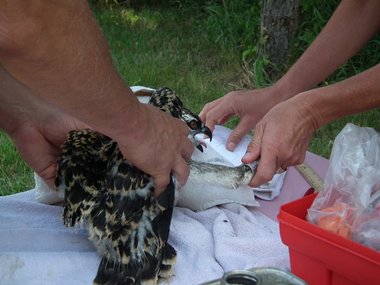
Michigan wildlife officials say ospreys are on the rebound in southern Michigan. Researchers have discovered 49 active osprey nests this year compared to one in 1999.

Wildlife staffers with the Michigan Department of Natural Resources began to relocate osprey to the southern part of the state in the late 1990’s.

Read more: Osprey population bouncing back.

Posted in Uncategorized | Tagged , , , , | Leave a comment