Anglers Miffed: Michigan proposes 10-fish category for brook trout in U.P.

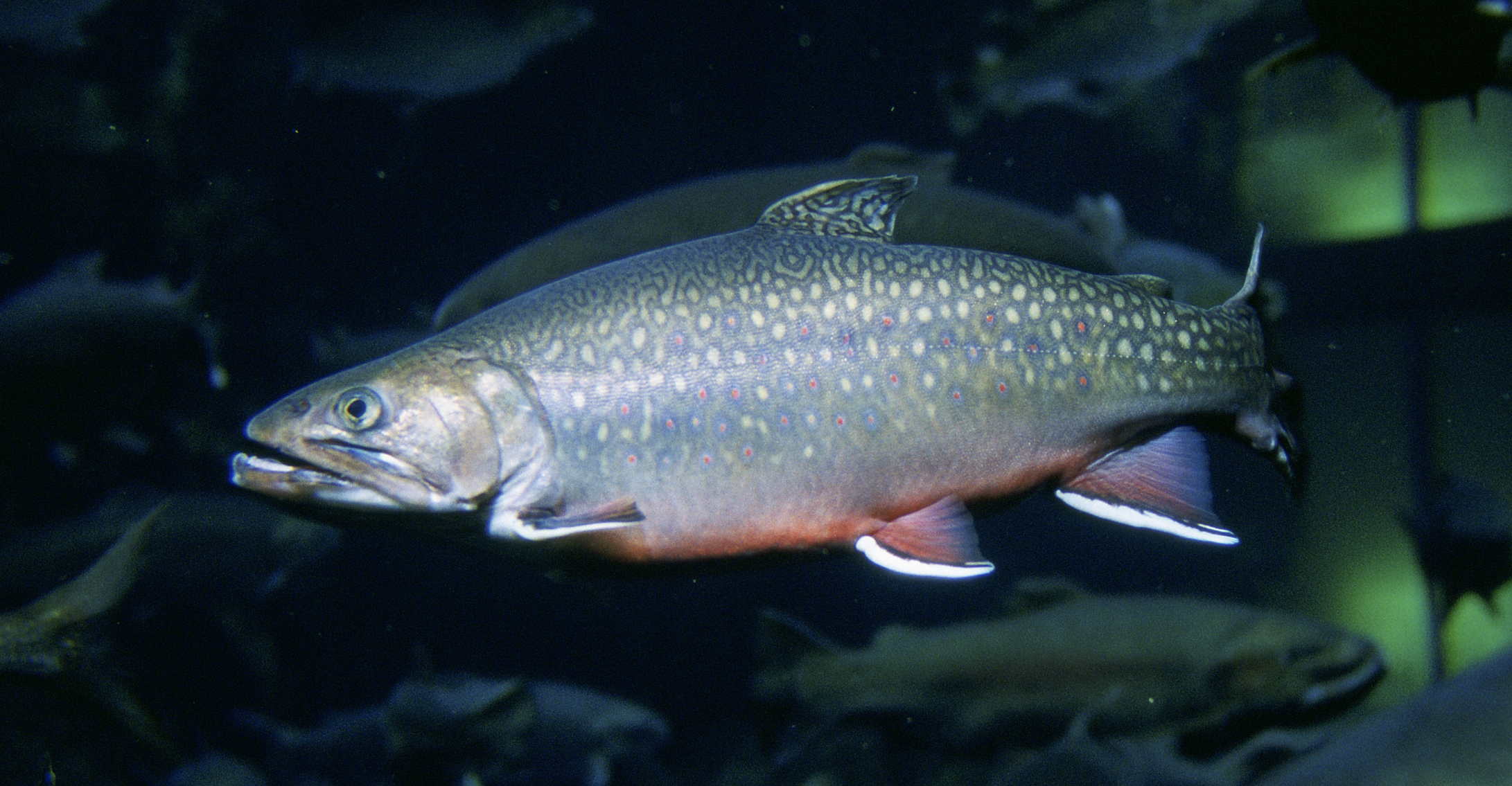
Anglers would be able to keep 10 brook trout per day on Upper Peninsula streams being proposed.
Photo: U.S. Fish & Wildlife Service

By Howard Meyerson

Ontonagon, Mich. — Michigan may be adding a new trout steam category in 2013, created specifically for 10 test rivers where brook trout limits will be doubled to 10 fish per day. The fast-tracked proposal was presented to the Natural Resources Commission at its October meeting in Ontonagon. A final decision is expected in November.

The creation of the special category has some anglers upset. They contend it runs counter to an August recommendation by the Michigan DNR Fisheries Division to keep a 5-fish daily limit in place and scientifically study a handful of rivers to determine the impact of a 10-fish limit.

“I don’t like it,” said Bryan Burroughs, executive director for Michigan Trout Unlimited and a member of the state’s cold-water steering committee, which develops trout stream regulations for the state.

“We shrunk the regulations by 50 percent and a lot of folks spent a lot of time doing that,” Burroughs said. “Now some of the NRC folks have their own interest in adding complexity. We got yelled at for over-complex regulations, so why are we increasing trout regs by 20 percent when the public said no?” Continue reading

Posted in Uncategorized | Tagged , , , , , , , | 1 Comment

Refocusing: State trust fund money may go to more city parks

Will Michigan’s oil and gas royalties be spent on southern Michigan urban parks? That just may be the case, according to an excellent story today in  Bridge.  Author and journalist, Jeff Alexander, documents the changes being proposed and provides a look at less than choice decisions being pushed by Michigan legislators and various attempts to divert the money from its intended uses.

Posted in Uncategorized | Tagged , , , | Leave a comment

Tracking Invasives on the Net

A new cyber strategy is being employed to combat the spread of invasive species in the Great Lakes region – using a web crawler to search the Internet for outlets that are selling invasive fish, plants and other species.

The Great Lakes Commission received a $400,000 grant from the Great Lakes Restoration Initiative to develop a system for tracking sales of non-native species, according to a story today at Great Lakes Echo. The story reports that researchers have been able to buy Eurasian milfoil, Asian Carp and yellow flag iris online. 

Posted in Uncategorized | Tagged , , , , , , , | Leave a comment

Michigan pheasant numbers up, but CRP lands in flux

By Howard Meyerson

Another Michigan pheasant hunting season opened Saturday in the Lower Peninsula, and there is good news and bad for hunters this year.

There are more birds out there, according to state officials. And Michigan’s pheasant restoration initiative is making progress.

But federal funding for the nation’s Conservation Reserve Program is expected to shrink, which, in turn, will affect how much habitat is available for pheasants. CRP is U.S. Department of Agriculture program that helps pheasant, ducks and other species by offering farmers financial incentives to protect wetlands, reduce erosion and create wildlife habitat.

Congress has proposed lowering the program cap from 32 million acres to 25 million acres nationally. That reduction, and the consolidation of many federal conservation programs, comes about as members of Congress work to reduce spending and streamline government.

The situation has been made bleaker by Congressional inaction that stalled the program; the 2008 federal farm bill that authorizes CRP expired on Sept. 30. The new farm bill has not been approved. It won’t be acted on until after the elections, if then.

Politics being what it is,it is anyone’s guess what Congressional priorities will be at that time. But one thing is sure, if Congress doesn’t act by New Year’s, its back to square one with a new set of players in 2013.

“CRP is in a state of flux right now” said Al Stewart, the Michigan Department of Natural Resources upland game bird specialist.

“They’ve put everything on hold. People still have CRP contracts, but they have stopped funding it so people are trying to figure out if their contract is still valid.” Continue reading

Posted in Uncategorized | Tagged , , , , , | Leave a comment

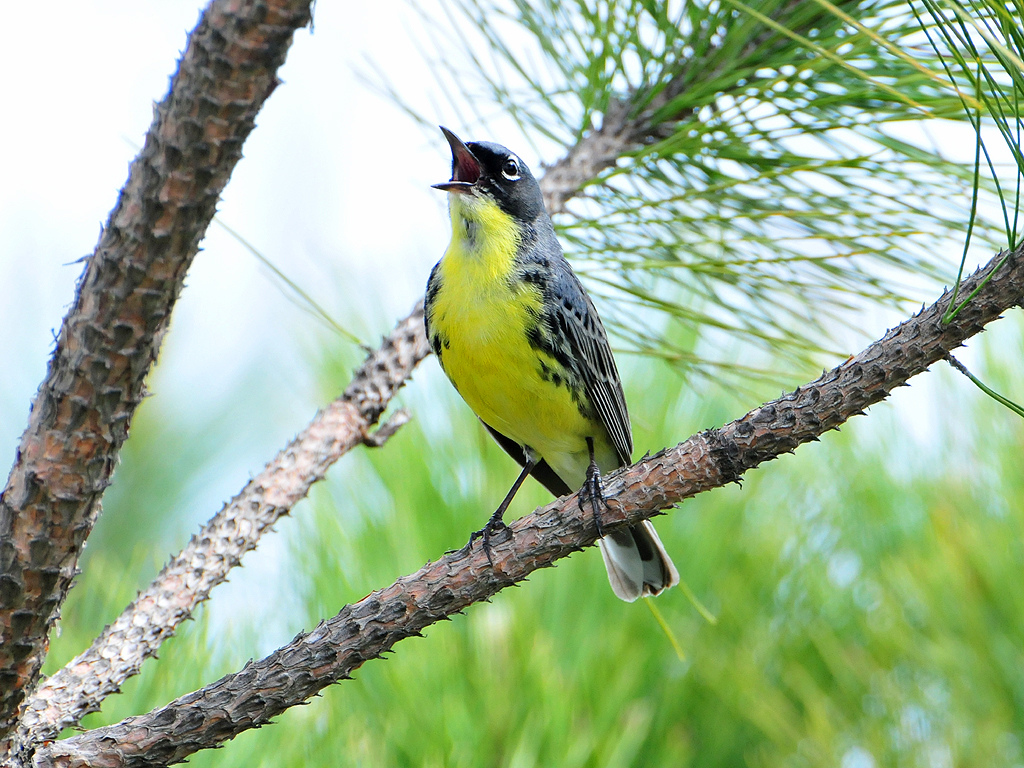
Singing Praise: Kirtland’s Warbler reaches new highs

Kirtland’s Warblers are at their all-time high in Michigan. Photo: U.S. Fish & Wildlife Service.

Michigan’s Kirtland’s Warbler population has reached an all-time high, according to Dan Kennedy, the Michigan Department of Natural Resources endangered species coordinator.

“We are witnessing a conservation success story,” Kennedy said. The agency recently released the results of its annual Kirtland’s Warbler survey. The warbler is a federally endangered bird.

Surveyors, including biologists, researchers and volunteers,  observed 2,063 singing males during the official 2012 survey period. That compares to 1,805 males  in 2011. DNR wildlife officials say it is the largest single-year jump since 2007.  At low ebb, in 1974 and 1987,  only 167 singing males were found in Michigan.

Singing males were found in 12 northern Lower Peninsula counties this year Another 38 were found in seven Upper Peninsula counties.

The warbler’s comeback is attributed to active jack-pine management on state and federal lands. The warblers are ground nesting birds that prefer four to 20-year-old jack-pine. Approximately 3,000 acres  is cut and replanted every year. The process mimics what once happened naturally, but caused by  fires on the landscape before fire-suppression measures became the norm.

Posted in Uncategorized | Tagged , , , , , , , | 1 Comment

A Whopper: New Michigan record muskie caught

Joseph Seeberger (at center in photo above) caught a state-record Great Lakes muskellunge on Saturday, Oct. 13, 2012. Photo courtesy of Michigan Department of Natural Resources

By all accounts it is a whopper. Michigan’s Department of Natural Resources just confirmed the catch of a new state-record Great Lakes muskellunge.

The fish was caught Saturday, Oct. 13, 2012 by  Joseph Seeberger of Portage, Mich.. He was fishing  Lake Bellaire in Antrim County with friends. Seeberger hooked the 58 pound, 59 inch long fish. It had a girth of 29 inches and took nearly two hours to land, requiring  the help of friends.

DNR staffers say the previous state-record Great Lakes muskellunge was caught by Kyle Anderson of Rapid City, Mich., on Torch Lake in Antrim County on Sept. 27, 2009. That fish weighed 50.5 pounds and measured 56.13 inches.

Posted in Uncategorized | Tagged , , , , , , | Leave a comment

Avian botulism kills off hundreds of loons and other birds

Eleanor Comings, a volunteer for the Sleeping Bear Dunes National Lakeshore, has found dozens of dead loons while walking the beach. In the last few days, nearly 300 dead or dying loons and other fish-eating birds have been counted. / DAN RAY/SLEEPING BEAR DUNES NATIONAL LAKESHORE

Nearly 300 loons and other birds have been reported dead along the shores of Sleeping Bear Dunes National Lakeshore. The Detroit Free Press today reported that southwest and northwest winds in recent weeks caused the birds to wash ashore.

Botulism first surfaced as a major concern in Lake Michigan in 2006. Biologists explain the surge in botulism deaths this way:  Zebra and quagga mussels filter plankton out of the water causing greater clarity. Sunlight is able to penetrate further and large mats of algae form on the lake bottom. As those mats decay they become depleted of oxygen and bacteria then thrives. The bacteria then accumulates in the mussels which filter the water.

Round gobies feed on those mussels in and around the algae mats and pick up the bacteria. Loons and other fish-eating birds, like cormorants, grebes and gulls pick up the gobies and get poisoned.  Botulism affects the nervous system leaving the birds paralyzed. Scientists believe that many drown. Michigan’s oldest banded loon, The Patriarch, died as part of the mass die-off.

Read more: Avian Botulism 

Posted in Uncategorized | Tagged , , , , , , , , , , , , | 4 Comments

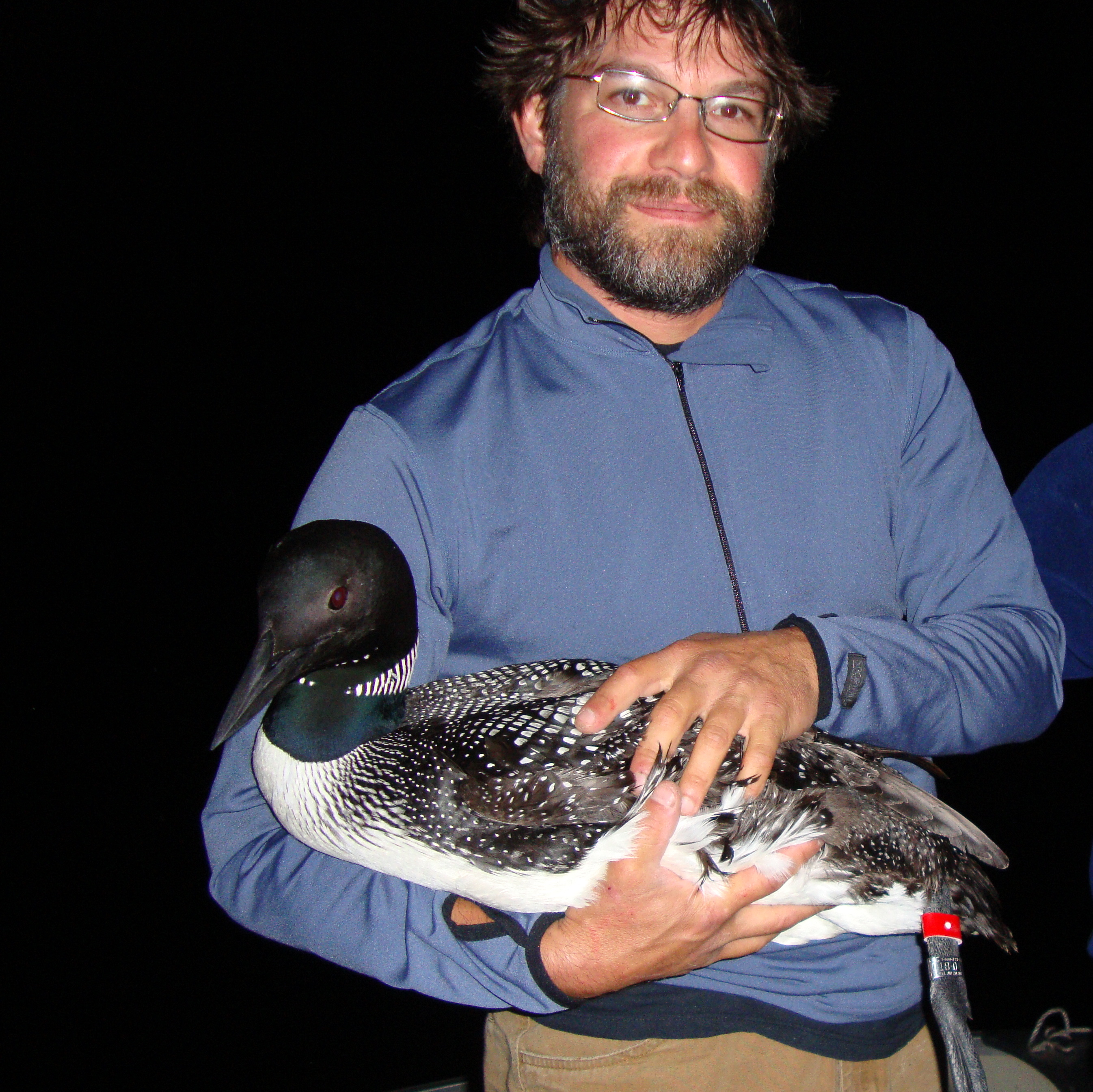
Michigan’s oldest banded loon dies from avian botulism

Researcher Joe Kaplan holds Michigan’s oldest banded common loon in 2010. The bird was recently found dead from Avian Botulism on a Lake Michigan Beach. Photos courtesy of The Loon Network.

Michigan’s oldest banded loon died last weekend on a Lake Michigan beach, according to  Michigan Audubon Society which reported that the 21-year-old loon died from avian botulism.

The loon is known as “The Patriarch.” It was born in 1991 to a pair that nested on Clam Lake in Antrim County. It was banded that year and became one of the first common loons banded in Michigan. The work was done by Western Michigan research biologist, Dave Evers.

MAS staffers reported this week that The Patriarch spent several of its juvenile years on the Gulf of Mexico before returning to Michigan where it established territory in Antrim County near the mouth of the Intermediate River.  It returned there for several years and later moved to the south arm of Bellaire Lake where it mated successfully from 2004 to 2012.

The Patriarch was re-captured and re-banded in 2010 by Joe Kaplan, a research biologist with Common Coast Research and Conservation Inc., of Escanaba Michigan. When captured again for study in 2011, it was in good health, according to Kaplan who said it flew more than 42,500 miles during its lifetime of north-south migrations. It produced 16 chicks, of which six have been banded.

The Michigan Department of Natural Resources Wildlife Disease Laboratory in Lansing reported that the loon died from Avian Botulism It was found on a Northport beach in Grand Traverse Bay. Botulism is carried in the fatty tissues of some fish that loons eat.

Memorial gifts may be sent to the LOON NETWORK, P.O. Box 117, Alden, MI 49612 or donations can be made online at www.commonloon.org.

Posted in Uncategorized | Tagged , , , , , , , , , , , , | Leave a comment

Innovation: Cardboard bicycle prototype developed

Now this is innovative – a cardboard bicycle. For real. It’s made of cardboard, not just a print. It’s a real working cycle. The cardboard is coated with a waterproof resin and then painted.

The bike, called Alfa, weighs 20 pounds and can support up to 480 pounds. Israeli inventor Izhar Gafni says it should sell for $20. That’s a steal if it really works.  Read more: Paper Bike.

Posted in Uncategorized | Tagged , , , | 1 Comment

Gallery: Wooden canoe gathering on the AuSable River

This gallery contains 12 photos.

When members of the Wooden Heritage Canoe Association got together on the AuSable River near Grayling Michigan recently, their boats spoke to the timelessness of wood, beauty and good design. All photos Copyright © 2012 Howard Meyerson

More Galleries | Tagged , , , , | 1 Comment