Spring fishing in Michigan: High stream flows may affect young trout

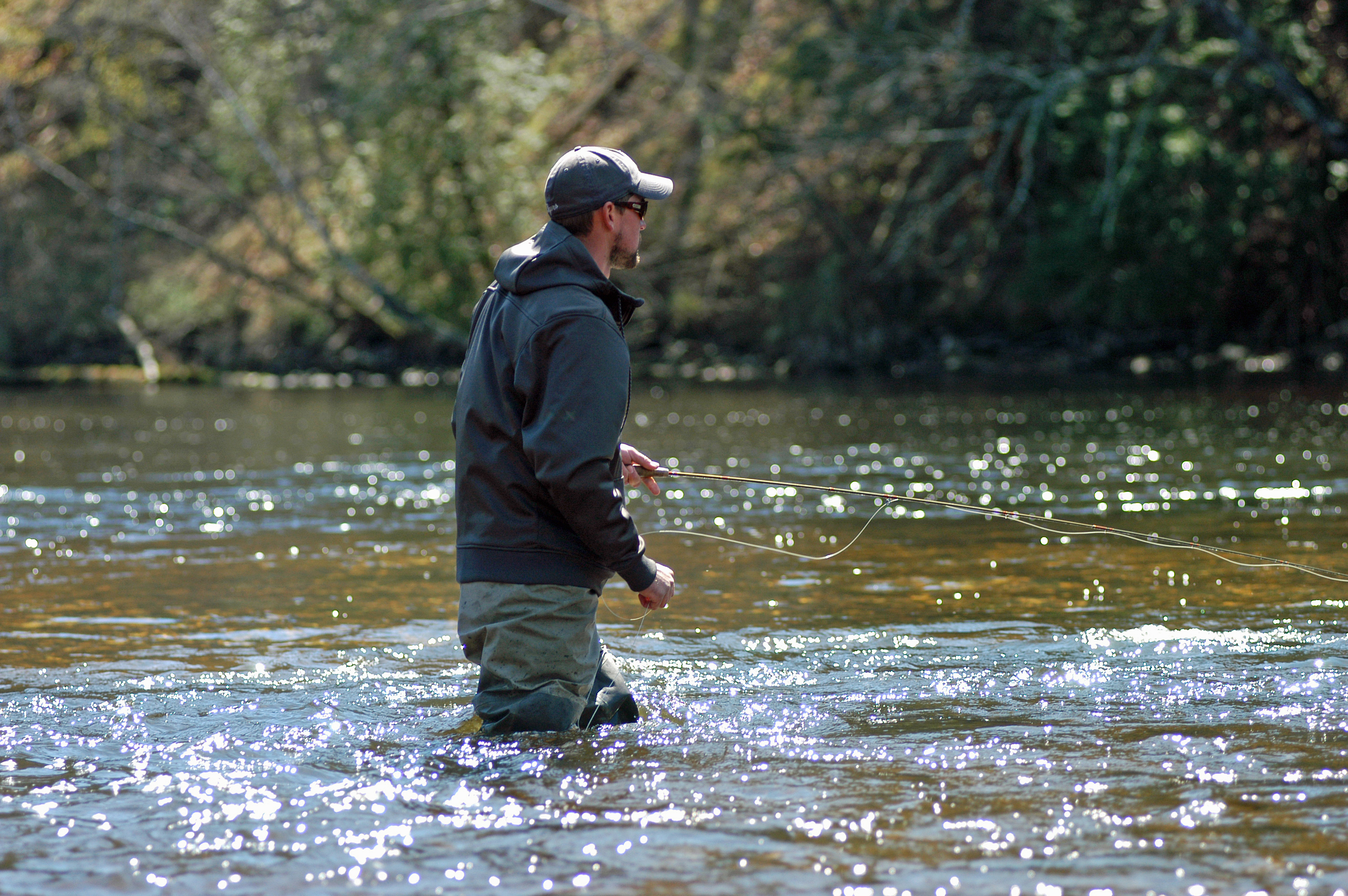
Trout fishing season opened statewide April 26, 2014 on many rivers and lakes, but some rivers, like the Muskegon River (shown) have been open all year. Photo: Howard Meyerson

Trout fishing season opened statewide April 26, 2014 on many rivers and lakes, but some rivers, like the Muskegon River (shown) have been open all year. Photo: Howard Meyerson

By Howard Meyerson

Michigan’s trout fishing season opened April 26 on more than 1,400 rivers and streams. Add nearly 200 others open year-round, and by any account, there is a lot of water to explore.

Personally, I am ready. It’s been a long winter. I just need some cooperative weather. It’s hard to beat being out on rivers at this time of year.

But, what of this year with its crazy, cold weather, deep snows and spring flooding? Will the fishing be good? That’s a question state fish managers are waiting to answer.

Several biologists have mentioned the possibility that some trout populations may suffer a setback. Just which, how many, or how severely, is only speculation right now. Late summer surveys will shed light on the question.

But, past studies by Michigan DNR researchers have shown that trout fry, the newly hatched trout, are highly vulnerable to the conditions seen this winter and spring. Continue reading

Posted in Uncategorized | Tagged , , , , , , , , | Leave a comment

Lake Erie walleye, perch limits unchanged

By Howard Meyersoneb650ac08e2ab0c5bafeacce3ab88da0

MONROE, MICH. — Lake Erie anglers can once again catch 50 perch and six walleyes per day. Fisheries managers from Ontario and states bordering the lake recently met to determine the allowable catch for both species. The Lake Erie Committee recommended a total allowable catch (TAC) of 11.081 million pounds of yellow perch and 4.027 million walleyes in 2014.

“Things won’t be a lot different from last year in the western basin (where Michigan anglers fish),” said Mike Thomas, a fisheries research biologist at the Michigan DNR’s Lake St. Clair Fisheries Research Station.

“The population estimate for age-2 walleyes this year is not very different. The same goes for perch.” Continue reading

Posted in Uncategorized | Tagged , , , , , , | 1 Comment

A good day spent fishing for brook trout

 Big brook trout on tiny flies. Photo © 2013 Howard Meyerson

When streamers didn’t work, a tiny size 22 Copper John did the trick. Photo © 2013 Howard Meyerson

Posted in Uncategorized | Tagged , , , , | 2 Comments

Big Fish: Wood carver enjoys fishing for those fish he carves

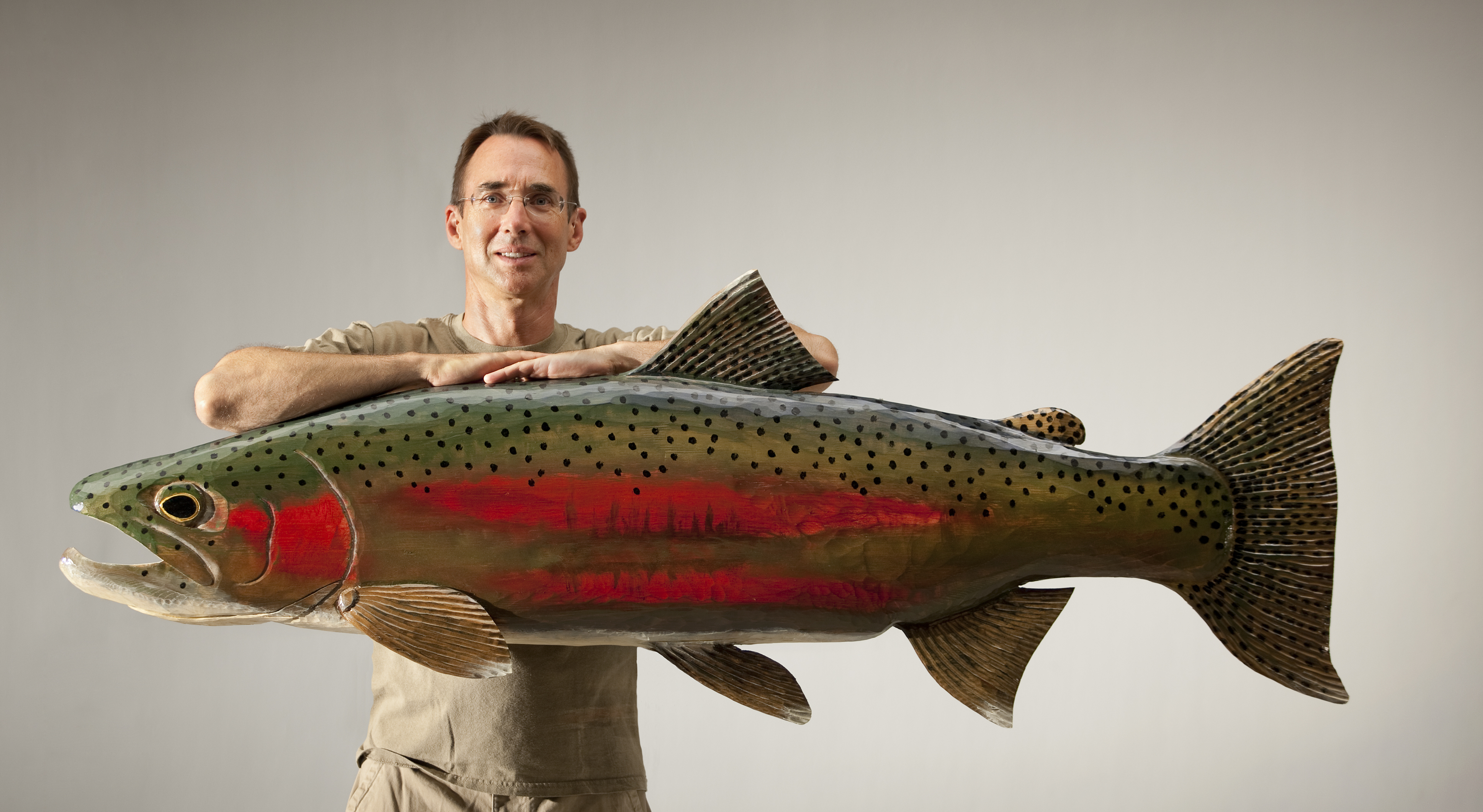
Bob Batchik created this giant steelhead carving as a commissioned work for musician Huey Lewis. The wood fish hangs over the front door of  the musician's California studeo. Photo: Courtesy of Bob Batchik.

Bob Batchik created this giant steelhead carving as a commissioned work for musician Huey Lewis. The wood fish hangs over the front door of the musician’s California studio. Photo: Courtesy of Bob Batchik.

By Howard Meyerson

SYLVAN LAKE, MI — Bob Batchik has long been hooked on fish and fishing: bluegills, trout, bass, pike and perch. He isn’t fussy. He likes them all – particularly if he has a carving knife in hand.

An avid fly angler and suburban Detroit graphic designer, Batchik has carved out a niche and built a business creating colorful, sometimes super-sized, fish carvings that become bold adornments for client’s gardens, fences, cottages and cabins. A larger than life steelhead he carved in 2012, hangs over the door of Huey Lewis’s California music studio. The popular musician found Batchik’s work on the Internet and commissioned him to create the fish.

“I like the old way of doing things,” notes Batchik, 55, who grew up near Pontiac and later attended Northern Michigan University where he got a fine arts degree. “I put down the (electric) Dremel tool years ago and decided to be a hand-tool guy. Each tool leaves unique marks on wood. I stopped sanding things smooth so, if you get close enough, you can see it was hand-carved.”

Batchik, lives in Sylvan Lake with his wife, Mary. He carves 25 to 30 fish every year, working in his garage woodshop. Some are highly detailed, custom creations. His website (sunfishwoodworks.com/)  shows his carvings and creative furniture designs. They include fish rocking chairs and a glass-topped table with a massive carved wooden earthworm base, and benches and chairs to match. Continue reading

Posted in Uncategorized | Tagged , , , , , , , , , | 3 Comments

Michigan fishing guide spotlighted on World Fishing Network

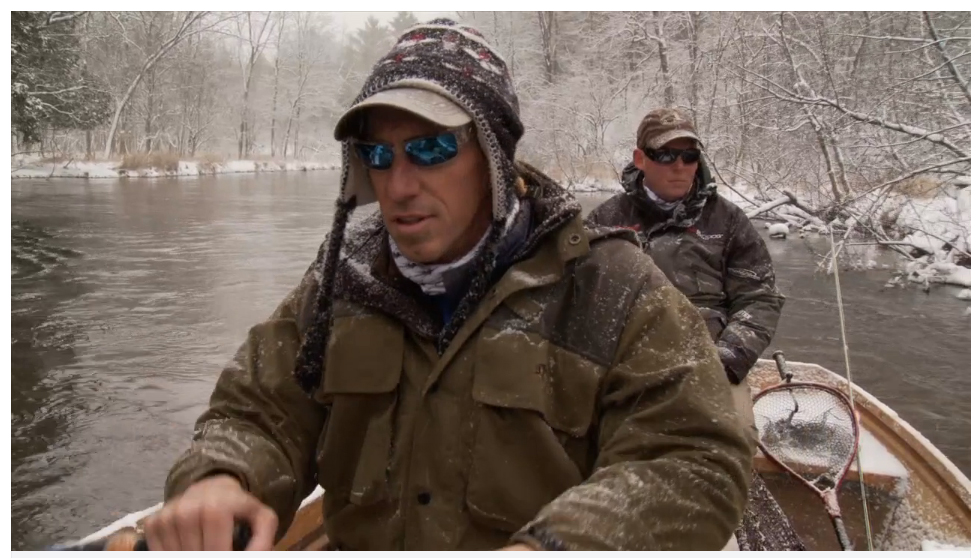
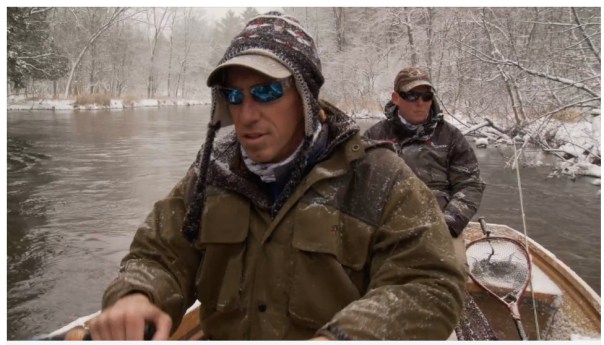
Fishing guide, Frank Willetts (front) and "Guided" show host Mark Melnyk (rear) take a trip down the Pere Marquette River during a shoot for the upcoming episode. Photo courtesy: Mark Melnyk.

Fishing guide, Frank Willetts (front) and “Guided” show host Mark Melnyk (rear) take a trip down the Pere Marquette River during a shoot for the upcoming episode. Photo courtesy: Mark Melnyk.

Frank Willetts had it good in the automotive industry, at least good by standards that most seem to value. The Commerce Township native had the big house, the family  and stature of  running a plant in Mexico. His life was a whirlwind, but good living doesn’t come without a cost. Then his seven-year-old daughter said something that ripped him apart…

Willetts is a fly fishing guide today and owner of the Pere Marquette River Lodge,  a popular Orvis-endorsed fly fishing outfitter that services the PM river, home to world-class brown trout and steelhead fishing. He  recounts the story of finding his bliss, and angst he had to deal with until that time, during a 30-minute episode of  “Guided,”  a World Fishing Network reality television show that begins its second season Saturday. Show host and producer, Mark Melnyk, explores the life questions with Willetts as well as the spectacular fishing found on the Pere Marquette River.
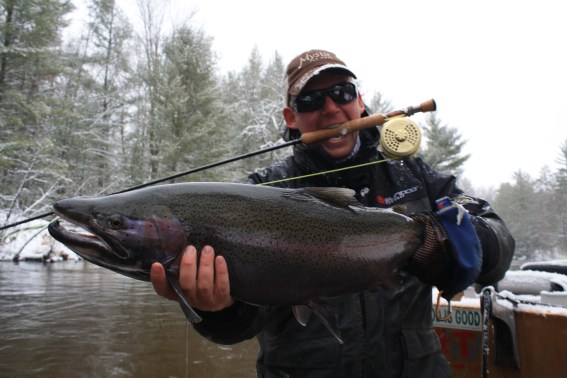
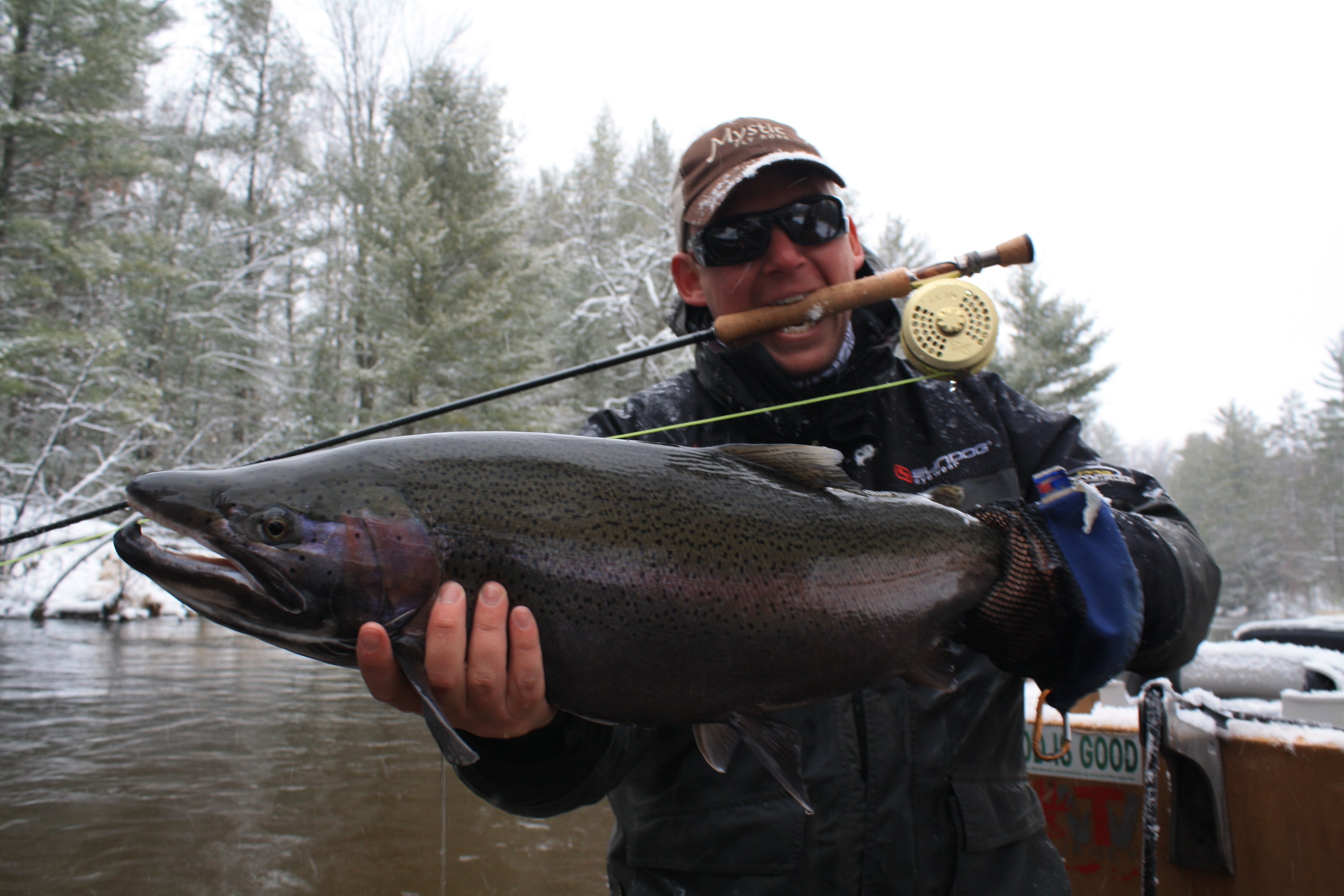
Show host, Mark Melnyk, hoists one of many steelhead that were caught during the shoot. Photo: Courtesy Mark Melnyk.

Mark Melnyk, hoists a steelhead caught during the shoot. Photo: Courtesy Mark Melnyk.

“I knew I liked Frank Willetts the moment I layed eyes on him… standing well over 6 feet tall, rake thin and a pony-tail which rivals that of Willy Nelson, he extended his hand saying hello on that beautiful September day,” writes Melnyk in a blog post on Mark Melnyk Outoors . “The lodge was rocking! People were everywhere putting on waders, lacing up boots, buying flies and generally talking fishing. The shop was alive.  Frank instructed us to ‘Get some rest boys, tomorrow is a big day’ – we all obliged.”

Be sure to check out Melnyk’s blog for more photos and videos. The Pere Marquette River Lodge episode airs  several times. You will find it on the World Fishing Network which  is carried by several television providers in Michigan.

________________________________

 Pere Marquette River Lodge  air-times (eastern-time) on “Guided.”

  • Saturday, April 19 @ 12:00 p.m.
  • Saturday, April 19 @ 9:00 p.m.
  • Sunday, April 20 @ 2:00 a.m.
  • Tuesday, April 22 @ 11:00 a.m.
  • Tuesday, April 22 @ 8:00 p.m.
  • Wednesday, April 23 @ 12:00 a.m.
 

Posted in Uncategorized | Tagged , , , , , , , , , | 5 Comments

Birds aplenty at annual bird watching festivals

Bird watchers gather to see migratory species each spring at the Festival of Birds held at Point Pelee National Park in Leamington Ontario. Photo: Howard Meyerson

Bird watchers gather to see migratory species each spring at the Festival of Birds held at Point Pelee National Park in Leamington Ontario. Photo: Howard Meyerson

By Howard Meyerson

It is getting to be that time of year when migratory birds return to Michigan in abundance, a period when fields, forests and meadows are thawing, when early spring plants begin to show, and when breeding birds, just returning from the their winter travels, begin to look for suitable nesting sites and habitat.

More than 500 bird species return to the Upper Midwest each spring, according to the U.S. Fish and Wildlife Service. Great flocks pour into the region following historic flight paths, called flyways. They sweep in along the Great Lakes and Michigan shorelines, bound for points north, often stopping to rest on prominent points of land. Others arrive as a wide front spread over the landscape. They too will find respite in the forests, farm fields and marshes along the route.

Any and all of those locations can be a good for seeing birds. Michigan, and nearby states and provinces, offer numerous opportunities for excellent spring birdwatching. Allegan State Game Area alone is reported to have 136 different bird species, while Metro Beach Park, on Lake St Clair, has been reported by birdwatchers to have 227 species.

That says nothing of Pointe Mouillee State Game Area, in Monroe County which is considered one of the top birding spots in the state – or Whitefish Point Bird Observatory, near Paradise in the Upper Peninsula, which is known to be one of the best in the country. Tens of thousands of birds arrive at Whitefish Point every spring during their migration north. Continue reading

Posted in Uncategorized | Tagged , , , , , , | 1 Comment

Officials consider changes to lake trout regulations

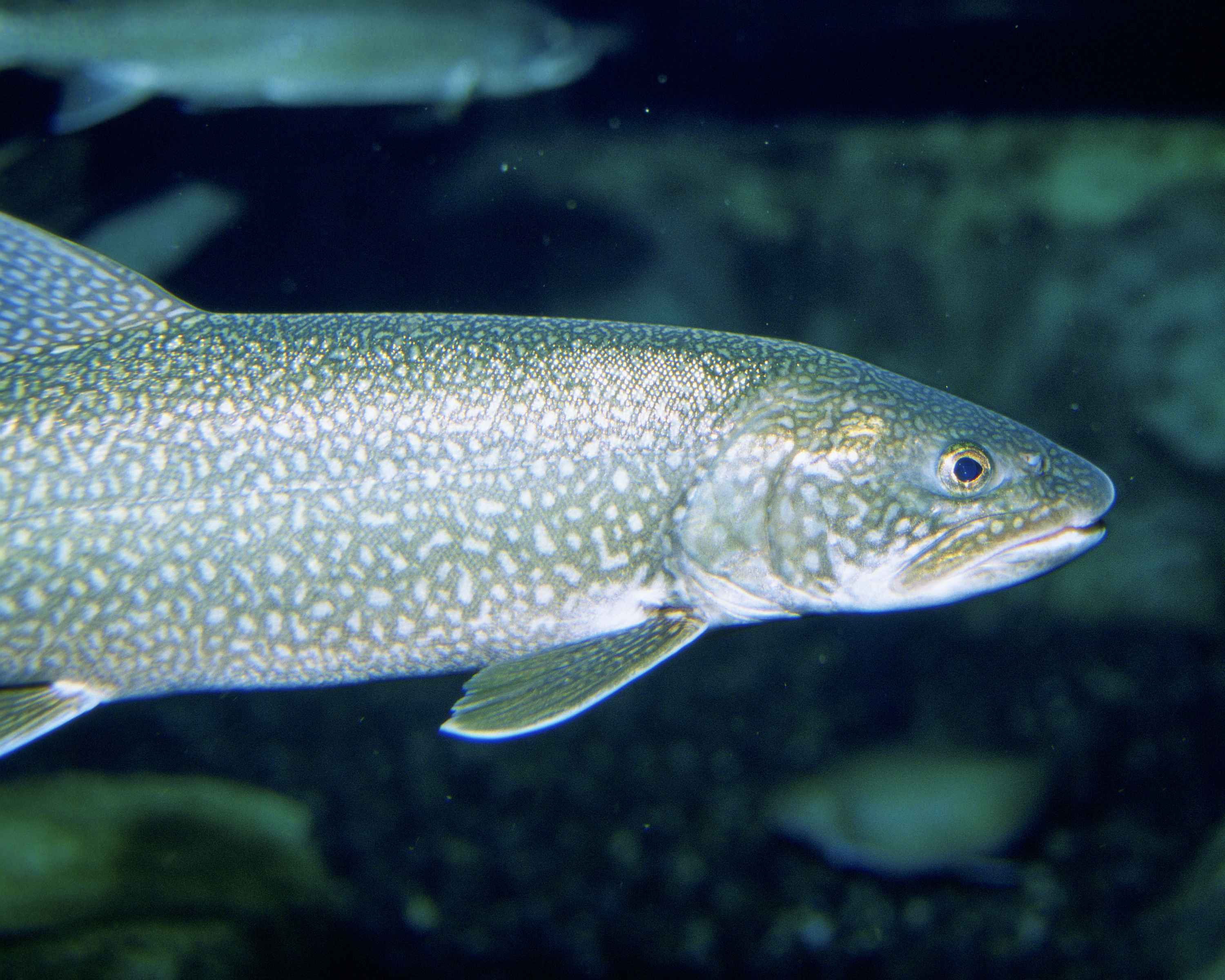
Lake trout are becoming more abundant in southern Lake Michigan. Photo: US. Fish & Wildlife Service

Lake trout are becoming more abundant in southern Lake Michigan. Photo: US. Fish & Wildlife Service

By Howard Meyerson

Lake Michigan anglers can expect rule changes ahead for lake trout all along the Lower Peninsula shoreline. State fisheries managers want to liberalize fishing in the southern basin and reduce fishing pressure in northern waters.

“We’re interested in lowering the minimum size for lake trout from 20 inches to 15 inches,” said Jay Wesley, the southern Lake Michigan fisheries supervisor for Michigan DNR. “Lake Huron and other Lake Michigan states already have lower size limits. This will bring our regulations closer to theirs.”

The proposed change would affect Lake Trout Management Units MM 6, 7 and 8, meaning all Michigan waters south of a line between Arcadia and Frankfort. Lakes Huron and Superior already have 15 inch size minimums. Indiana has a 14 inch minimum and Illinois and Wisconsin have 10 inch minimums.

Lake trout have become increasingly abundant in southern Lake Michigan, due, in part, to near-shore stocking by the Michigan DNR, which stocks 80,000 lake trout annually.  The U.S. Fish and Wildlife Service also stocks them each year. The federal agency stocks approximately 2.7 million yearlings each season, lake-wide, along with 252,289 fall fingerlings.

Lowering the size limit would make them more available to southern lake anglers from Muskegon to New Buffalo, Wesley said.  A final decision on the rule would come from the Natural Resources Commission this fall and take effect in 2015. Continue reading

Posted in Uncategorized | Tagged , , , , , , , , | 1 Comment

Nongame Wildlife: State effort to be revised and focused

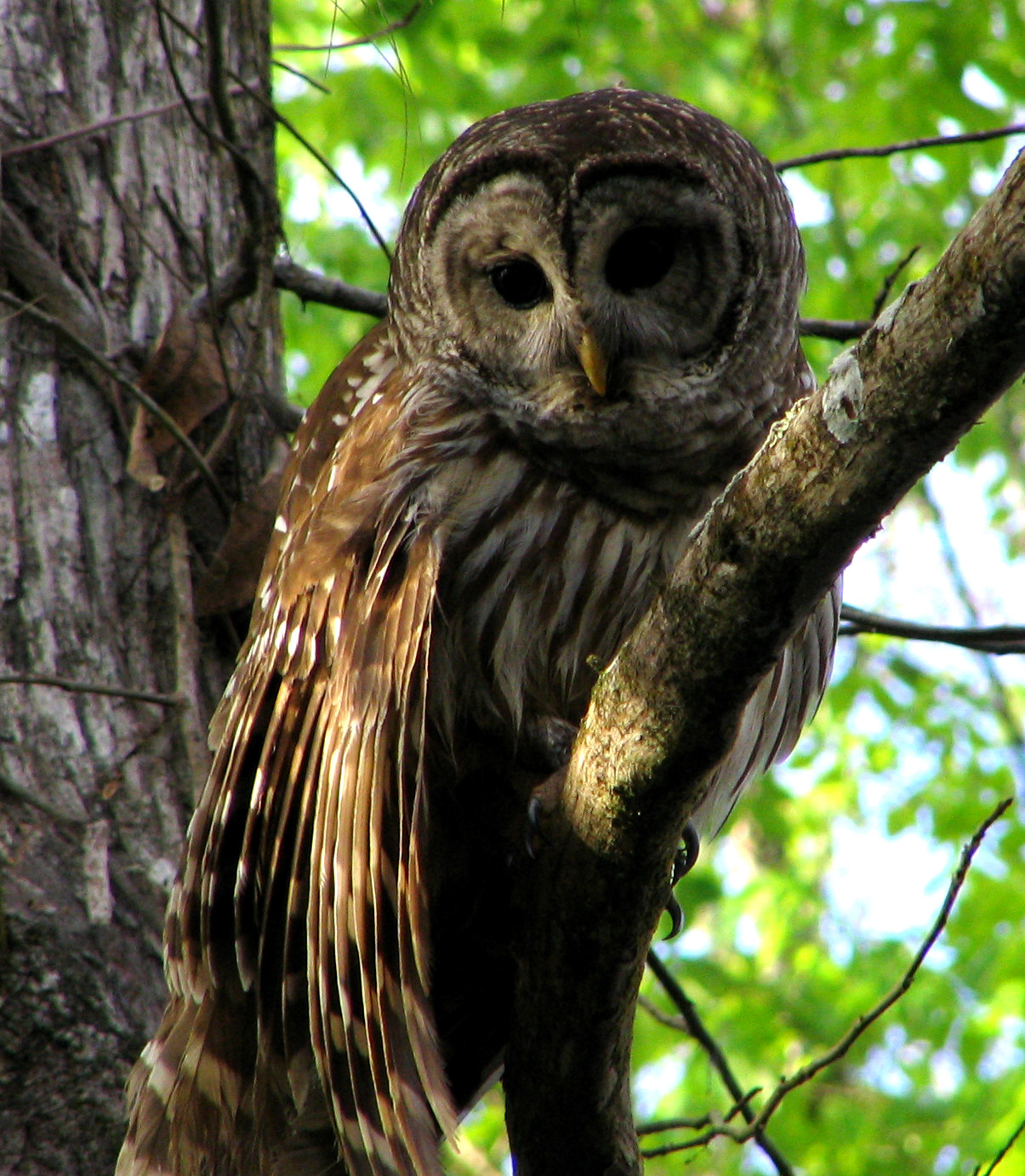
Barred owls are among the birds that will benefit from collaborative funding of grassland restoration in the Huron-Manistee National Forest. Photo:  Wikimedia Commons

Barred owls are among the birds, animals and insects that benefit from nongame management. Photo: Wikimedia Commons

By Howard Meyerson

One of Michigan’s more important wildlife initiatives, Michigan’s Nongame Wildlife Program, celebrated its 30th anniversary in 2013. It was a quiet celebration by all accounts, a contrast to its early years when the Michigan Department of Natural Resources (DNR) would have trumpeted its successes: reintroduction of peregrine falcons, creation of a statewide wildlife viewing guide, and construction of nesting platforms for ospreys, to name a few.

State wildlife officials contend that nongame work continues for a variety of species. The work is more diffuse and expensive than in the past. Some is focused habitat work for species such as the Kirtland’s Warbler. Some is broader grassland work for pheasant restoration, which helps both game and nongame species. Wildlife management, they say, is now accomplished using an eco-system approach, which benefits all species.

Critics, however, worry about the nongame program’s seemingly diminished capacity, the absence of dedicated staffing, a lack of research, and reduced visibility. “I get the sense that the DNR is challenged when talking about nongame species. They don’t have the support that game species do,” said Brad Garmon, director of conservation and emerging issues for Michigan Environmental Council. “We want it to be an agency that appeals to birders and non-motorized users too. From our perspective those are things to celebrate, things that will attract people who come to do the Pure Michigan thing.” Continue reading

Posted in Uncategorized | Tagged , , , , , , , , , , , , | Leave a comment

Branching Out: Muskegon Conservation District is at the root of environmental health

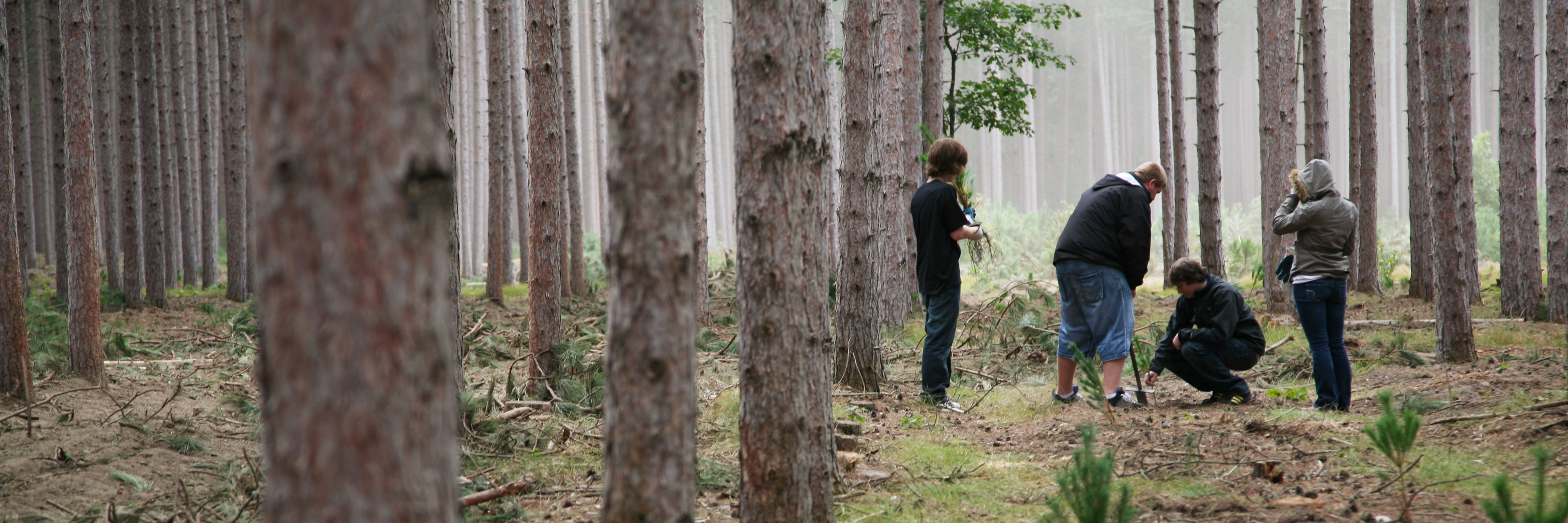
Muskegon Conservation District works with school groups on reforestation projects. Photo: Courtesy MCD.

Muskegon Conservation District works with school groups on reforestation projects. Photo: Courtesy MCD.

By Howard Meyerson

Once the daffodils break ground and tiny, purple Hepaticas brighten forest floors, Jeff Auch’s phone will begin to ring in earnest. The callers may be gardeners or land owners seeking advice about woodlots or wildlife, but most will be looking to buy seedling trees – literally thousands – to plant in their yards and back forties.

Auch is the executive director for the Muskegon Conservation District (MCD), an organization that works to solve a myriad of local conservation problems. Tree planting and reforestation work are core parts of its mission. The organization’s spring tree sale has been popular for 75 years.

Planting trees helps to reduce carbon dioxide concentrations, one of the primary greenhouse gasses causing climate change. It helps birds and animals by restoring degraded habitat and controlling soil erosion.

“What’s funny is that forestry is a smaller part of what we do,” Auch says. “Shoreline habitat, wetland and lakeshore restoration are bigger program areas, but in terms of the acreage that is affected, it’s one of our largest projects.” Continue reading

Posted in Uncategorized | Tagged , , , , , | Leave a comment

Come Spring: The walleye move out of Saginaw Bay sometimes traveling hundreds of miles

Acoustic telemetry transmitters (also called “tags’) are inserted into the body cavity of walleyes. If you catch a walleye with a transmitter, call the phone number on the tag to receive a $100 reward! (Courtesy | Sean Landsman)

Acoustic telemetry transmitters (also called “tags’) are inserted into the body cavity of walleyes. If you catch a walleye with a transmitter, call the phone number on the tag to receive a $100 reward! Photo: Courtesy | Sean Landsman, Great Lakes Fishery Commission.

By Howard Meyerson

Saginaw Bay is known as a walleye fishing haven. Literally millions of walleyes spawn there each year. State fisheries managers say the 1,143 square-mile bay is the single-most important place for walleye production on all of Lake Huron.

But every spring, just about now, many of those walleyes begin move out into Lake Huron on a journey, one that may take them hundreds of miles away. Researchers studying their whereabouts are increasingly coming to know that old “marble-eyes” is a true traveler.

“They move throughout Lake Huron,” explained Todd Hayden, a Great Lakes Fishery Commission researcher at the U.S. Geological Survey’s Hammond Bay Biological Station, on Lake Huron. “We find them as far north as the Straits, and have detected them under the Mackinac Bridge. We also find them south of Saginaw Bay near the Blue Water Bridge (at Port Huron).”

Just why they go remains a mystery, but Hayden and others hope soon to have more answers. Hayden is embarking on the third season of a three-year study. What has been learned so far, from one year of processed data, is 56 percent of the Saginaw Bay walleye moved out into the lake; six percent turned left and headed north to Thunder Bay and beyond.

Hayden’s research relies on radio-telemetry to track 245 radio-tagged walleye from the Tittabawassee River. Another 200 from the Maumee River on Lake Erie also have implanted radio-transmitters. Their travels are recorded by a network of submerged hydro-acoustic receivers. The devices pick up the transmitter signals. When Hayden and other researchers download the data, they get a clear picture of the route the fish are travelling. Continue reading

Posted in Uncategorized | Tagged , , , , , , , , , | 1 Comment